





























Mateo Lenoble on the LatAm AI player acquisition revolution
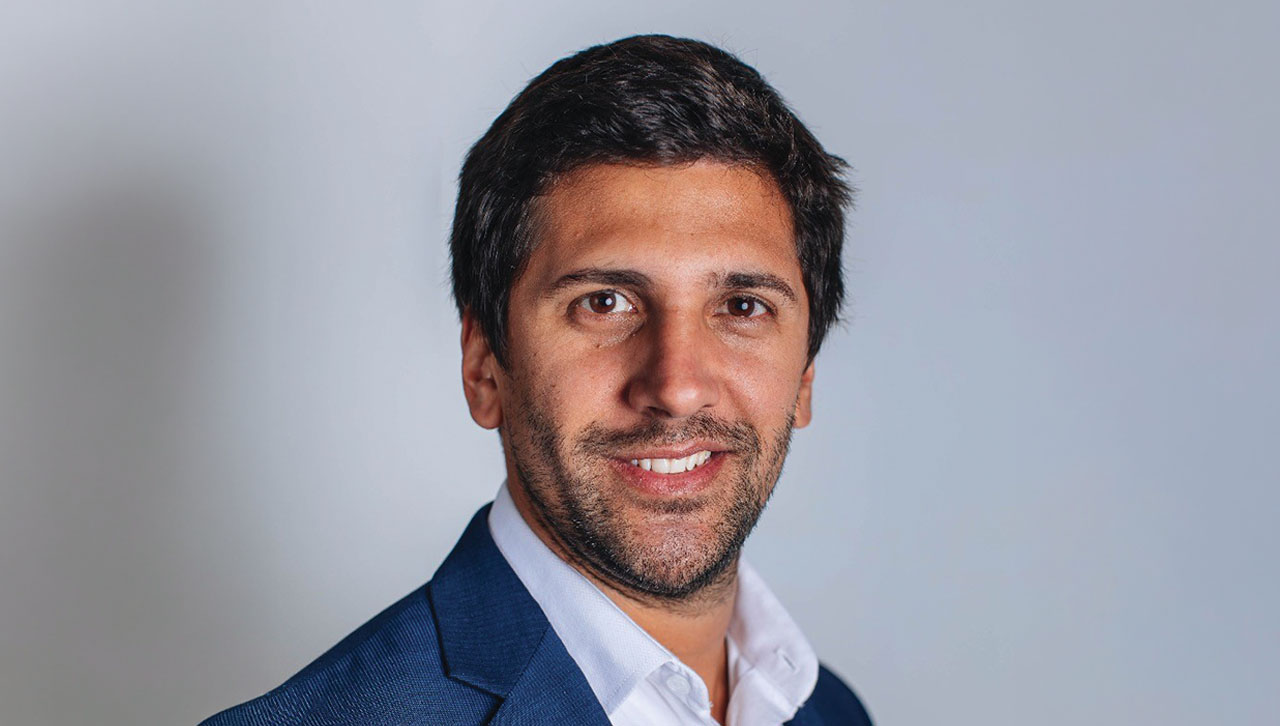
Mateo Lenoble, Head of Sales LatAm at Kambi, talks AI, retention and the World Cup.

It’s 2026 – sports trading has advanced significantly. How does Kambi approach pricing and risk in LatAm?
Kambi has been active in Latin America for more than a decade, so our approach to pricing and risk is built on deep experience in one of the world’s fastest-growing regions for regulated sports betting. Our philosophy remains consistent with our global strategy: all pricing, trading and risk are managed in‑house, combining expert traders, advanced automation and official, diversified data sources to ensure high uptime and reliability of supply.
This in‑house control is a major differentiator. Many competitors rely on external feeds, especially around major tournaments, and that can lead to fluctuating quality and reduced flexibility. Because Kambi owns its entire trading stack, our partners get high‑quality pricing from a single source that can adapt to their own strategy whilst simultaneously benefiting from being actively managed and traded on Kambi’s extensive global liquidity.
How much of that involves AI?
AI is now central to Kambi’s trading function. We first deployed AI‑driven trading at the 2022 World Cup and have rapidly expanded its coverage. In 2025, AI accounted for 49% of all bets on the Kambi network, and we passed the 50% threshold earlier this year with the 2026 World Cup set to be the first major tournament fully traded by AI.
As our CEO Werner Becher has often said, AI isn’t a buzzword for Kambi – it’s embedded throughout our trading operations as the sportsbook offering expands to the point where it can no longer be traded by humans alone. And we’ve already proven the benefits of this AI-led approach. It delivers faster market creation, greater efficiency, enhanced risk management and stronger pricing accuracy, all of which translate into higher operator margins and a more engaging product for bettors.
How much has AI usage increased in trading recently, versus other areas of the industry?
While many operators and suppliers focused their efforts on marketing or CRM, we prioritised AI investment directly into trading which we see as the engine room of any successful sportsbook. That early focus means AI now powers more than half of all bets across our network, with coverage expanding into ice hockey, tennis and basketball, complementing the crucial role of our expert traders who add a critical layer of quality control.
Because Kambi processes billions of bets a year and operates across more than 50 operators globally, we have the scale, liquidity and historical dataset needed to unlock AI’s full potential in trading. Only a handful B2C operators in the industry can match this.
How will this summer’s World Cup impact operator strategies across LatAm?
The 2026 World Cup will be the biggest betting event ever staged, with 104 matches over 39 days
Football remains the region’s dominant sport, and with Brazil’s regulated market launching last year, operators are increasingly focused on localization, flexibility and speed.
Delivering a deep, high‑quality product will be essential, whether that’s advanced player props and extensive Bet Builder product or strong live uptime, low countdowns and fast settlement. These strengths are central to Kambi’s offering: depth for seasoned bettors and intuitive, high‑appeal markets for newcomers who will join in huge numbers over the tournament.
Are you expecting even more of an increase given the North America/Mexico element?
Absolutely. This is the first World Cup hosted across the US, Canada and Mexico – and the first in the US since 1994. Soccer interest in North America has grown, but it still hasn’t reached peak maturity, making this a rare and powerful acquisition moment for operators. In Mexico and the wider LatAm region, engagement will be very strong, driven by deeply rooted passion for the sport. Combined, these audiences create an unprecedented opportunity for regulated sportsbooks.
Is there anything Kambi does particularly differently to the rest of the market when it comes to pricing?
Kambi’s advantage comes from the combination of fully in‑house trading and data management, the strength of our global network and the flexibility we give partners. We process more than 1.5 billion bets a year across more than 50 operators on six continents, generating €17bn ($20bn) in annual liquidity that informs our pricing and risk decisions.
No other sportsbook provider operates a network of this size or data richness, and when combined with tools like price differentiation and bespoke risk management strategies, our partners can tailor margins and pricing to their local market needs while benefiting from world‑class accuracy, consistency and stability.
Can this World Cup be about retention in LatAm, or will it still primarily be an acquisition tool?
It will drive both, but long‑term retention will define the biggest winners. While the World Cup always produces enormous acquisition spikes, the real challenge is keeping players engaged once the tournament ends. Kambi’s philosophy is built around sustained product depth leading to greater ROI versus other operators and suppliers who will see this slip as customers drift post-tournament.
Unlike competitors who rely on temporary feeds that disappear post‑tournament, our AI‑powered football offering maintains breadth and quality across domestic and international competitions, helping operators convert World Cup enthusiasm into long‑term engagement.
Final word: Who wins the World Cup?
As a Uruguayan, my heart says Uruguay lifting a third World Cup – and the first since 1950 – would be incredible, but at odds of 51.00 the chances are, unfortunately, slim. Kambi currently has Spain priced as favorites at 5.50, followed by England at 6.50 and France at 8.00. Ultimately, we think the customer will be the real winner of the World Cup given the quality and depth of the product on offer for the tournament.