





























Sally Gainsbury explores what can Australian RG learn from overseas?
Travel broadens the mind: Director at Gambling Treatment, Research Clinic and Professor of Psychology at the University of Sydney, Sally Gainsbury, explores the harm prevention techniques and themes of her recent global travels

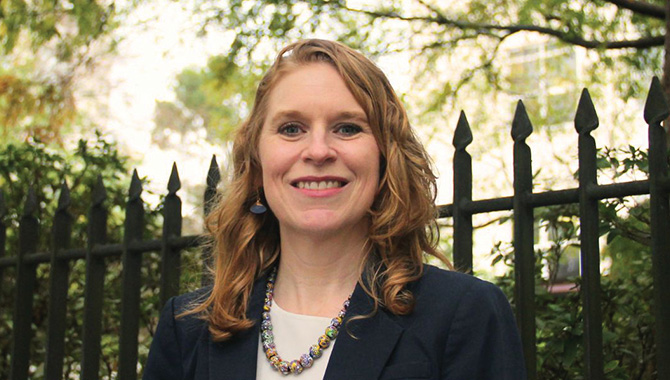
Recently, you travelled internationally to learn about how to create digital interventions to prevent gambling harm. Can you tell us about your experience, key takeaways and what inspired this journey?
I was fortunate to be awarded a 2024 Winston Churchill Fellowship to travel internationally and learn from a broad range of experts about the best ways to create a digital intervention to prevent gambling harms. I travelled to Canada, the UK, Netherlands, France and Spain and met with clinicians, policy makers, industry operators, researchers and treatment providers among others.
I have a background in treatment and clinical psychology, so I focused on learning about how to engage people who do not think that they need to change their behaviour. One takeaway came from hearing from Dr. Neven Ricijas and Dr. Dora Dodig Hundric from the University of Zagreb who have developed two programmes for young people to prevent gambling harms. They focus on building core skills such as critical thinking and considered behaviours.
My conversations with clinicians also touched on this – that some of the skills relevant to changing how people gamble have broader implications. This got me thinking about how even if gambling is not leading to harm for some people, many could still benefit from increasing their ability to be self-reflective and intentional with their online spending behaviours. This has led to the product that I am developing, Bet Well. Bet Well is not a tool to help people change their gambling behaviours, it is intended to shift how they think about their gambling; to be aware of how much they are spending and whether this is consistent with their intentions and within the broader context of their lives. In this day and age of digital transactions, enhancing digital financial capabilities is something that many of us could benefit from working on.
How did you find different jurisdictions are now approaching the challenge of digitising education initiatives around gambling harm prevention?
There are, unsurprisingly, many differences across the world. Spain and France are requiring all operators to provide them with data. This is a very interesting development but, as of yet, I’m not sure whether they are planning on making this data available for research purposes. Spanish gambling regulators are taking an innovative step of developing a platform for all bettors to be able to view their gambling data to see their overall results. They have also developed an algorithm that all operators will be required to implement to detect risky gambling. This is very interesting and I will look to see what happens when these policies are rolled out.
In the UK the environment was very uncertain with a lot of public commentary and seemingly adversarial relationships between stakeholders. I was impressed that the Netherlands is funding an independent research organisation to focus on research to evaluate and inform policies. It was also great to see a high level of cooperation between gambling operators in the Czech Republic. Obviously there are different environments internationally which shape these conditions, but from a harm minimisation viewpoint, greater data sharing and constructive, cooperative conversations between stakeholders are beneficial.
What is one thing you think Australia specifically could teach other markets about harm prevention and one thing you think it needs to take on board?
Australia is progressive in some areas. For example, there are requirements for land-based venues to monitor and intervene when a customer has been playing EGMs in a manner that is indicative of harm. However, this policy is not always followed, and it places a lot of responsibility on venue employees without changing the systemic environment and massive numbers of EGMs. I have heard many people say it, but the sheer volume of EGMs in Australia and their distribution throughout communities is unique and has the potential for widespread harms.
However, Australia does have treatment options available with a dedicated funding stream. This is focused on those people who have already experienced severe negative consequences, but it is important nonetheless and impressive given the broad geographic distribution of the population. In terms of prevention, similar to Spain, the Australian Commonwealth has provided a way for all online bettors to see their net outcomes through mandated activity statements. This is an important step towards
informed gambling.
Did you find that players’ receptiveness to new digital gambling harm intervention was different by geographical region? If so, how?
Everyone is struggling with how to balance a secure, protected regulated online gambling offering with the presence of offshore operators. One group I wish I had more time to speak with during my travels is consumers; I didn’t have many opportunities to speak with people who are using gambling products. This is a consumer group whose voice is often missing in the conversation. My research indicates that customers are often fairly tolerant of interventions designed to minimise harms, as they understand that some people benefit from these. I would encourage policymakers and operators to do more testing to see how customers respond to harm minimisation interventions with clear communication of their intention and the benefits. My hypothesis is that, if communication is clear, there would be greater acceptance of these than people think.
In what way(s) can you now measure whether a digital harm prevention technique has been effective or not?
It is critical to define what any intervention is aiming to do. We need to think about specific behaviours we are trying to influence, or before that even attitudes or thoughts. Most practices are not going to ‘stop gambling problems,’ but together they play a role. In my research trials I look at behavioural shifts through account data; however, we also include self-report of perceptions and intentions. People may not always need to change their behaviour, or the shifts may be subtle; but whether they are betting in line with their pre-set intentions is a hugely important outcome.
What would you say has been the most exciting development you have observed in digital harm prevention in recent years?
I am very interested to see what happens with the new Spanish regulations, including how they are implemented. I would love to see a state-wide roll out of account-based gambling in New South Wales, where I am based. Currently, account-based gambling is required in the casinos, but hotels and clubs have no restrictions; meaning that there is a huge disparity. Account-based gambling (i.e., mandatory player cards) does not have to require any restrictions but would allow customers to track how much they are spending. They could set limits or notifications if they wish. I think this would have a strong impact on customers due to people thinking more about how much they want to spend.
Do you believe AI has the potential to revolutionise RG and harm prevention in time?
I am very interested to see what happens with the new Spanish regulations including how they are implemented. I would love to see a state-wide roll out of account-based gambling in NSW (where I am based). Currently account-based gambling is required in the casinos, but hotels and clubs have no restrictions, meaning there is a huge disparity. Account-based gambling (i.e., mandatory player cards) do not have to require any restrictions, but would allow customers to track how much they are spending. They could set limits or notifications if they wish. I think this would have a strong impact on customers due to people thinking more about how much they want to spend.
Overall, in what way do you feel your recent travels have changed your perception of harm prevention and its evolution into the digital era?
It was a privilege to be able to undertake the Churchill Fellowship which I hope that I made the most of. I will soon release a video report of the trip featuring many of the people who were so generous with their time and knowledge. Travelling recently has definitely shifted how I am thinking about harm prevention. It is not all about changing or restricting behaviour – the first step is to shift how people think to be more critical of what they see and intentional in how they act based on their own situation knowledge.