





























Andrew Vouris exclusive: Australia, New Zealand and winning... but not at all costs
Andrew Vouris, Entain Australia & New Zealand CEO, speaks exclusively with Global Gaming Insider Editor Tim Poole. The exec discusses the pivot to a wider sports betting portfolio, while also assessing the general Australian – and New Zealand – landscape.

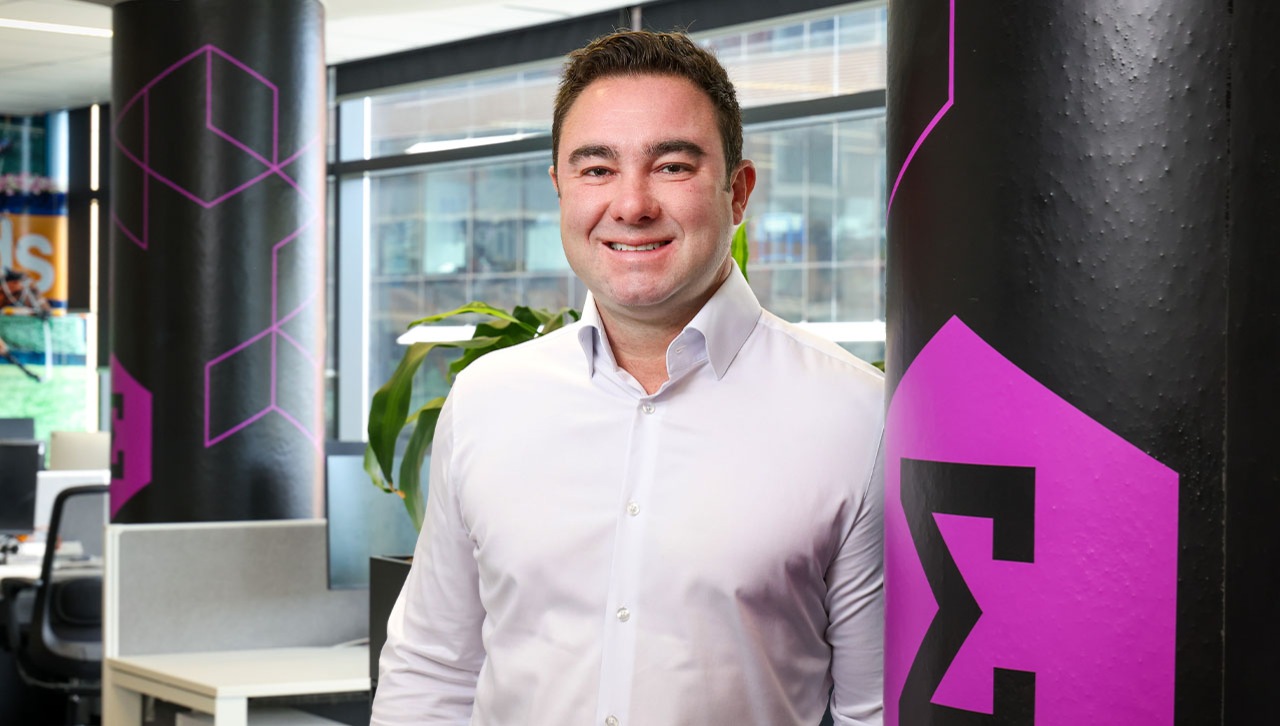
Thanks for joining me, Andrew; since you became CEO on a permanent basis in September, what are your early reflections?
We’ve got a great business here. It’s about us being a disciplined business. Everyone went through a period of growth during the Covid-19 pandemic, and I think there was a point in time where we tried a number of different things post-Covid. We embarked on a Venues strategy. We also had the complexity of standing up in New Zealand, which is no mean feat. We got into a racehorse ownership strategy, which was Ladbrokes Racing Club.
What Dean Shannon – the Founder, who I know very well – started with was the product, the digital product and, when you’re doing all those additional things, you don’t go back to where the actual game is.
The game is: whoever’s got the best product wins. So it was important for me to look at what we are here to do. We’re here to sell bets, right? That’s our job. If we can get back to the core of what we do here, I think we’ve got a fantastic business. A lot of the other things we embarked on were very cash-intensive, very labour-intensive – and not where the market was. It became clear to me that if we go back to the core of what we’re here to do, the team we have here and the digital architecture we have will enable us to be really competitive again. We can go back to being the leader we should be.
Given those aims and only a few months to action them so far, how achievable has that strategy been and how would you rate the progress to date?
Well, we’ve achieved so much in such a short space of time. We’ve removed about AU$70m ($49.4m) worth of costs out of the business. So, from a group perspective, we’re getting back on track for the expectations we have of being a cash-generative business. We have actually closed down Entain Venues, so that’s been sold. In terms of the racehorses, I sold 33 racehorses in this period of time, which was no mean feat!
In terms of business performance, we’re in a business that was really very racing-dominant. We were racing or sports, and that was a mantra in our business; we’re now unashamedly racing and sports, and the results from that are pretty exceptional. We’re seeing the racing business grow: it has grown 11% year-on-year; so racing, which was in decline, is now back in growth. Then we pivoted in New Zealand: we had both brands pointing at racing.
We’ve now got both brands showing our capability in sport. The New Zealand racing business is growing at 22%, but sport is growing at 55%. So it’s a testament to the strategy we’re deploying for sure.
Taking that growth into account, how do you assess your position within the Australian landscape?
We’re third in the market. Sportsbet, which is owned by Flutter, is the dominant market leader. They’re about 40%+, we’ve got about 17% of the market and Tabcorp on the digital market side’s probably got about 20%. Our opportunity is to get number two in a short to medium space of time; that’s our ambition. And I think we win in that space by upgrading our sports capability.
You don’t get this paradigm of ‘well, can we win if we’ve got a compliance culture?’ For me the balance is win, but we want to showcase our capability in compliance
You mention Tabcorp and you’ve got history there, spending over nine years with the operator. What were your biggest learnings in that time and takeaway points, particularly when it comes to retail versus online?
I was Deputy CEO of the Wagering & Media business, so my portfolio was everything wagering and media: digital, retail, fixed-odds, and then I ran the Sky channel. All the domestic operations of the Wagering & Media business at Tabcorp were under my portfolio. As far as retail goes, it’s a bit of a different customer segment. It generally skews older, as you can imagine. But it’s a very expensive channel to run. It’s bricks and mortar, and if you want to undergo a full retail transformation, well, you can imagine what that looks like I think Tabcorp has anywhere between 1,200 and 2,000 stores. And they want to embark on a retail transformation project.
There’s always tension because the Sky Channel business would sell the media rights to the retail outlets, that was a huge cost on retail and then you’re saying ‘well you can claw it back through wagering channel sales.’ Sometimes that mix doesn’t pay for itself on its own, or especially on the longer tail of retail. Tabcorp is experiencing growth in retail at the moment and they’re trying to renegotiate terms there. It’s got upsides, but I think it’s probably had a bit of a tailwind from BetStop.
On the flip side, in New Zealand retail, where we have a monopoly, we’re seeing 21% growth in that space, so it seems like retail is having a kick along in both jurisdictions. We’ve done a full brand new refit as Entain joined that market. There are some similarities between the two jurisdictions, but there are also some significant differences.
Land-based casinos are obviously a different sector entirely but something we are looking at closely in this magazine. Do you keep an eye on how that segment is progressing from afar?
It’s a bit of a different world to me, but we look at them more from a regulatory point of view. Where the regulators are saying ‘we need the casino that’s handling cash to operate in this manner,’ we try to understand; because we’re an adjacent industry and potentially those same concerns a regulator would have on the cash handling.
Although, we think they’re very, very different customers. The bet sizes are extremely different, but we do just watch out – because it’s important we understand where trends are happening in that space.
A mantra of yours is “win but not at all costs.” That line of thinking is perhaps synonymous with Australian gambling – there’s been plenty of research from the likes of Professor Sally Gainsbury into responsible gaming. Australians, traditionally, are some of the biggest gamblers in the world – how does that impact day-to-day strategy?
I think Australians have just always grown up with gambling and it’s been a part of our pub culture, which is a little bit different to the rest of the world. We’ve got standalone shops, but most of the action is in pubs and it’s complementary to what everyone else is doing in a pub. The ‘win but not at all costs’ for me is about... A lot of the time, when compliance comes in, it’s seen as a handbrake, right?
You don’t get this paradigm of ‘well, can we win if we’ve got a compliance culture?’ For me the balance is win, but we want to showcase our capability in compliance. So it’s getting that mix right. I 100% want to make sure we’ve got the best self-service, safer gambling tools available for customers, and also that we’ve got a team that’s capable of intercepting customers where they potentially don’t see the dangers they’re putting themselves into.
Then on an AML/CTF risk front, again, we want to lead in that space and, historically, we’ve closed cash channels down that the rest of the market hasn’t. We’ve turned off customers who potentially continue to bet in the rest of the market, because we don’t think they meet our current risk appetite for that customer base. We’re making sure we get the mixture right of winning, being competitive and trying to gain market share, versus also leading in the compliance space. That is what ‘win but not at all costs’ means to me.
Everyone has fallen into line and adapted, but what’s happened is that live betting volume in Australia is unlike anywhere else in the world
Whenever I speak to executives within the Australian gaming space, I always have to bring up the fact in-play sports betting is still illegal – except for over the phone. That’s always blown my mind, given that, by the time you make a call, the game may have changed enough to make the bet worthless. I almost don’t have a question here… but how is this still the state of play?
It’s essentially a legacy regulatory position that was locked in during a period when the digital betting landscape looked very different, and frankly, the political appetite to revisit it just hasn’t been there. What’s interesting now is that Tabcorp’s move to create a digital in-store betting product is starting to naturally prompt the question of whether the original policy rationale still holds – and hopefully that opens the door to a broader conversation about whether live betting online should be reconsidered. The challenge in the meantime is that the black market doesn’t operate under any of those constraints…
The challenge I have is: you’ve got a black market that’s growing, and it’s growing very bloody quickly. Those black-market operators, they don’t have a live and play click-to-call betting product. They are just betting live, right? And so when we talk about the differences between regulated white-market operators, that’s just another challenge for us to overcome. Let alone they’re not paying tax, they’re able to offer bonuses and generosity to customers to a larger degree than us.
Strategically, how much of a hindrance is the live betting situation in Australia? Has the regulated market simply adapted, or does it continue to hold the sector back?
Everyone has fallen into line and adapted, but what’s happened is that live betting volume in Australia is unlike anywhere else in the world. Compared to markets like the UK or US, it’s a much smaller part of the overall mix here. In New Zealand, where customers can bet in-play more freely, live betting makes up a significantly bigger part of our business than it does in Australia. That comes down to customer friction.
By the time a customer gets onto an operator, the prices may have changed, something may have happened in the game, and suddenly they no longer want to place that bet. As a result, live betting is a smaller part of the portfolio in Australia than it is in New Zealand or most other global markets.
That’s a good segue into New Zealand... Could you walk me through Entain’s current position there, especially with the regulatory developments underway?
New Zealand is about to regulate online casino, and the current suggestion is there will be up to 15 licences available. We’re already one of the largest employers in the gambling category in New Zealand, with around 400 staff based there.
At the moment, if you want to offer online gaming services, you can’t reside in New Zealand, which creates an unusual setup. Our parent company is an expert and market leader in this space, so we will absolutely be applying for licences. We believe we’re well positioned to cut through in that marketplace as a reputable, licensed operator, while also delivering significant economic value through local employment – arguably more than any other operator in the market.
I saw recent reports suggesting Entain may apply for three licences. That’s specifically for online casino, correct?
Yes, that relates to online casino. In the other segments of the market – online sports betting, online racing, retail racing and retail sports – we already hold a monopoly position.
So, aside from exciting developments ahead, is it largely a waiting game for now?
It is still early, but what’s important is that New Zealand currently has a very large grey-market gaming sector, and they’re now taking steps to regulate it. I think that’s fantastic. Bringing that market into the light creates transparency around money flows and ensures reputable operators can provide services to New Zealand customers. I think that’s exactly the right way to approach regulation.
It’s easy to see comparisons with Ontario, given Canada’s previous grey-market challenges pre-regulation... Yes, definitely. I think Paul James, CEO of the Department of Internal Affairs, has said they’re looking closely at markets like Canada and learning from those examples. They’re using that experience as one of several data points when shaping how they regulate the New Zealand market.
Finally, is there anything else you’d like to highlight – and any key final messages you’d like readers to take away?
I think it’s important for us to get back to being innovators in this space. When you look at where our digital assets are heading, we’re about to embark on territory others haven’t explored yet – and we’re very proud of that. One of the things we’ve focused on is maximising the value of our sponsorships. Where we do have sponsorship assets, we intend to leverage them more aggressively than we have in the past. You’ll start to see those show up more prominently in digital channels, and we believe we’re going to be quite disruptive and innovative in that space.
We’re already seeing significant early results from those initiatives. It’s especially important to deliver in a World Cup year – you only get that opportunity once every four years; so you need to make it count.