




























Wild beauty, wild regulation: Exploring the landscape of Montenegrin regulation
Bojana Corovic, iGaming B2B Consultant and Global Gaming Insider contributor, discusses a historic legislative act in Montenegro. But what does this mean in practice?

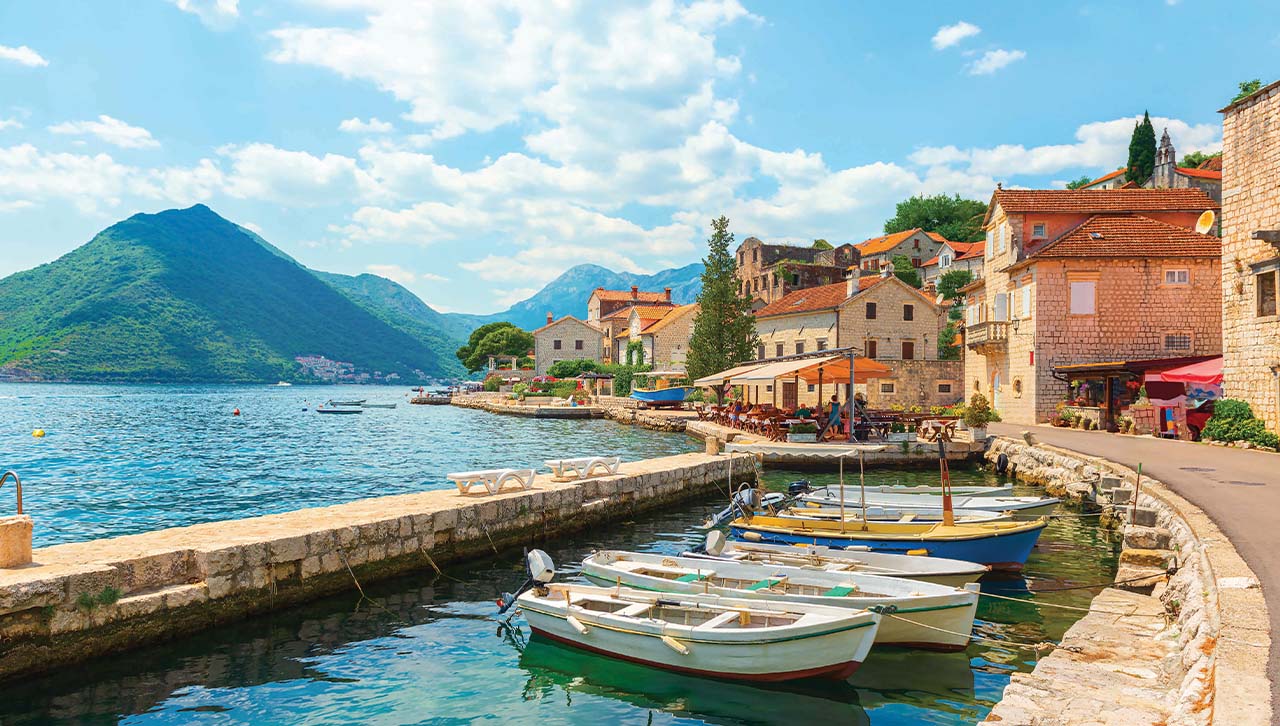
Type “Montenegro gambling licence” into a search engine. The first thing you will see is not regulation. It is nature. Pristine Adriatic coastline. Untouched mountains. Luxury bays carved into dramatic cliffs. Turquoise rivers cutting through ancient canyons. The algorithm, apparently, cannot separate the country from its scenery.
And that is actually a perfect metaphor for what follows. Because Montenegro, viewed from altitude, is stunning. Low corporate tax. EU candidate status. A Government that just passed its first major gambling legislation in 20 years. A strategic location at the heart of a region the iGaming industry is suddenly paying serious attention to. The aerial view is genuinely attractive. Get closer, though – the way you do when you actually try to operate there – and the picture changes. The roads do not match the landscape. The infrastructure does not match the promise. A licence that exists as a legal document but arrives without a verifiable format, without a compliance seal, without the recognition that game providers and payment processors require to do business with you.
Two decades without a new law
For years, Montenegro operated in a regulatory grey zone that everyone in the industry could see and nobody seemed in a hurry to fix. Casinos concentrated in tourist towns along the Adriatic coast. Betting shops multiplied faster than coffee bars. Offshore operators quietly served Montenegrin players from jurisdictions with no meaningful connection to the country. The market existed. The regulation did not keep pace.
That changed in August 2025 – at least on paper. Montenegro’s Finance Minister Novica Vuković described the new Games of Chance Act as “the first such legislation in 20 years – a clear sign that the state has the strength and will to regulate this sector.” The Ministry declared it a symbol of institutional strength and political will to bring order to a sector that had long operated outside effective control. Strong words. But what does the law actually do – and does it solve the real problem?
What changed
The headline changes are significant on paper. The new Act eliminates the concession model entirely, replacing it with a licensing framework. Casino licences are now valid for 15 years, with betting and slot machine licences lasting eight years. The minimum share capital requirement for betting and slot machine operators has increased from €75,000 ($88,000) to €200,000. Online operators now face a 10% tax on net gaming revenue. Player winnings above €300 are taxed at 15% personal income tax, collected directly at payout. There are genuine consumer protection improvements too: underage betting is now explicitly criminalised, advertising on television and radio is restricted between 6am and 10pm including during live sports, and operators are required to contribute to addiction treatment programmes.
But then there is a provision that will raise eyebrows across the industry: new regulations ban certain electronic payment methods including Apple Pay and PayPal for gambling transactions. In 2026. In a country actively pursuing EU accession... The same EU whose digital single market policy actively promotes frictionless electronic payments across member states. The contradiction is difficult to comprehend.
The gap between a licence and a usable licence
Here is where the gap between regulation and market reality becomes impossible to ignore. A Montenegrin gambling licence exists as a legal document. But, in practice, operators report that it arrives without a verifiable digital format and without a website compliance seal. There is nothing to display to players, nothing recognised by game providers during onboarding, nothing that payment processors accept as proof of regulated status. The licence is legally valid inside Montenegro. It is commercially limited everywhere else.
There is also the question of what the licence physically looks like. When it arrives, the operator receives a PDF with an official seal from the Gambling Administration and signs a contract with the regulator. The physical licence itself – the document that must be displayed on the premises – is a yellow laminated piece of paper. In 2026, in a country actively pursuing EU accession, that is what regulatory legitimacy looks like on the ground.
This is not a minor administrative detail. In the international iGaming market, a licence is only as valuable as its recognition. Game providers will not supply content to operators who cannot demonstrate compliance through a recognised seal or verifiable certificate. Payment processors require documented regulatory status before opening merchant accounts. Players increasingly check for visible compliance indicators before depositing.
A licence that satisfies none of these practical requirements is a document, not a business asset. The aerial view looked so promising. Up close, however, the road has no surface...
The banking situation compounds this further. Officially, no bank in Montenegro will open an account for a gambling operator. If an operator finds a connection that allows an account to be opened informally, they still cannot obtain a foreign currency account – meaning cooperation with international payment processors is effectively impossible through legitimate banking channels. An operator can hold a valid Montenegrin licence and still have no legal mechanism to receive money from abroad.
The mountains are magnificent. The bays are extraordinary. The rivers are among the most beautiful in Europe. Yet the roads, as anyone who has driven them will tell you, are still a work in progress
Why the Western Balkans are attracting attention anyway
Despite this regulatory complexity, the Western Balkans are generating genuine iGaming industry interest – and the numbers explain why.
Serbia’s iGaming market is projected to grow at a CAGR (compound annual growth rate) of 9.1% between 2024 and 2030, with net gaming revenue for 2024 reaching approximately €142.9m. Bulgaria’s gambling revenue is expected to reach $602.9m in 2025. Albania, which lifted a five-year ban on sports betting in February 2024, is projected to reach $202.9m in gambling revenue for 2025.
The Balkans are experiencing a boom in iGaming – a region where land-based gambling has not truly been challenged during the past decade, but where the online sector is only now reaching a critical market share. Growing middle classes, rising internet penetration, young populations with a strong affinity for sports betting, and markets dramatically less saturated than Western Europe – these are exactly the conditions that attract operators looking for sustainable growth.
Montenegro sits within this broader regional story. A small domestic market, yes ‒ but strategically located, with a competitive 9% corporate tax rate, and a Government that has now demonstrated it can pass meaningful gambling legislation for the first time in a generation.
The question is whether the regulatory framework can evolve quickly enough to match the commercial opportunity.
The structural problem the new law does not fix
The 2025 Act introduces real improvements ‒ AML alignment, enhanced player protection, advertising restrictions that bring Montenegro meaningfully closer to EU standards. But it does not address the fundamental constraint that limits the jurisdiction’s potential for international operators.
An online gambling licence in Montenegro can only be issued to operators who already hold a land-based gambling permit. A standalone online licence does not exist. To operate legally online in Montenegro, an operator must first establish a physical gambling venue in the country.
For a tourism-driven land-based casino economy, this requirement has a certain logic. For an international online operator evaluating jurisdictions in 2026, it is a dealbreaker. The practical result is that serious online operators continue to license from Malta, Gibraltar, Curaçao, or Anjouan. The technical integration requirement adds another layer of opacity. Operators must connect their platform directly to a monitoring system operated by a company that holds a state contract for game supervision. The identity of that company – believed to be a Serbian firm – and the technical specifications of the integration are not publicly documented. Operators discover the details only after they are already in the licensing process.
The industry association Montenegrobet was direct in its assessment of the new law. The group criticised it as a “proclamation on expulsion,” warning that by removing key legal protections and introducing regulatory burdens out of step with EU standards, the law may unintentionally drive players and companies into the unregulated sector. That is a striking statement about legislation introduced specifically to reduce the grey economy. When the regulated operators are warning that new regulation will push activity underground, something in the design needs revisiting. The instability is not theoretical. The new Games of Chance Act came into force in 2025 – and a new proposal for further amendments has already appeared. Operators who licensed under one framework may find themselves navigating a different one within months of launch.
What a functional framework would look like
Montenegro has genuine advantages as a licensing jurisdiction ‒ and it would be unfair not to acknowledge them. It boasts: competitive tax rates, a streamlined application process by regional standards, EU candidate status providing a credible long-term reform trajectory and a government that has demonstrated legislative capability in this sector after two decades of inaction.
What it needs is a standalone online licence that the international market can actually use. One with a verifiable digital format. One with a compliance seal that game providers recognise during onboarding. One that payment processors accept as proof of regulated status. One that players can verify on a website before they deposit.
Without that, Montenegro will continue to occupy a curious position in the iGaming landscape – a jurisdiction with a new law, a growing regional market, real commercial advantages on paper and licences that exist as documents but struggle to function as business assets in the international market.
The mountains are magnificent. The bays are extraordinary. The rivers are among the most beautiful in Europe. Yet the roads, as anyone who has driven them will tell you, are still a work in progress. And so, too, is the regulation. But at least now – for the first time in 20 years – someone is building.