





























Greg Giordano: Counteracting the 'cowboy attitude' of prediction markets
Global Gaming Insider’s Kirk Geller speaks with McDonald Carano Partner Gregory Giordano, discussing the biggest legal and regulatory talking points in Nevada, as well as the role of private equity in gaming, and Tilman Fertitta…

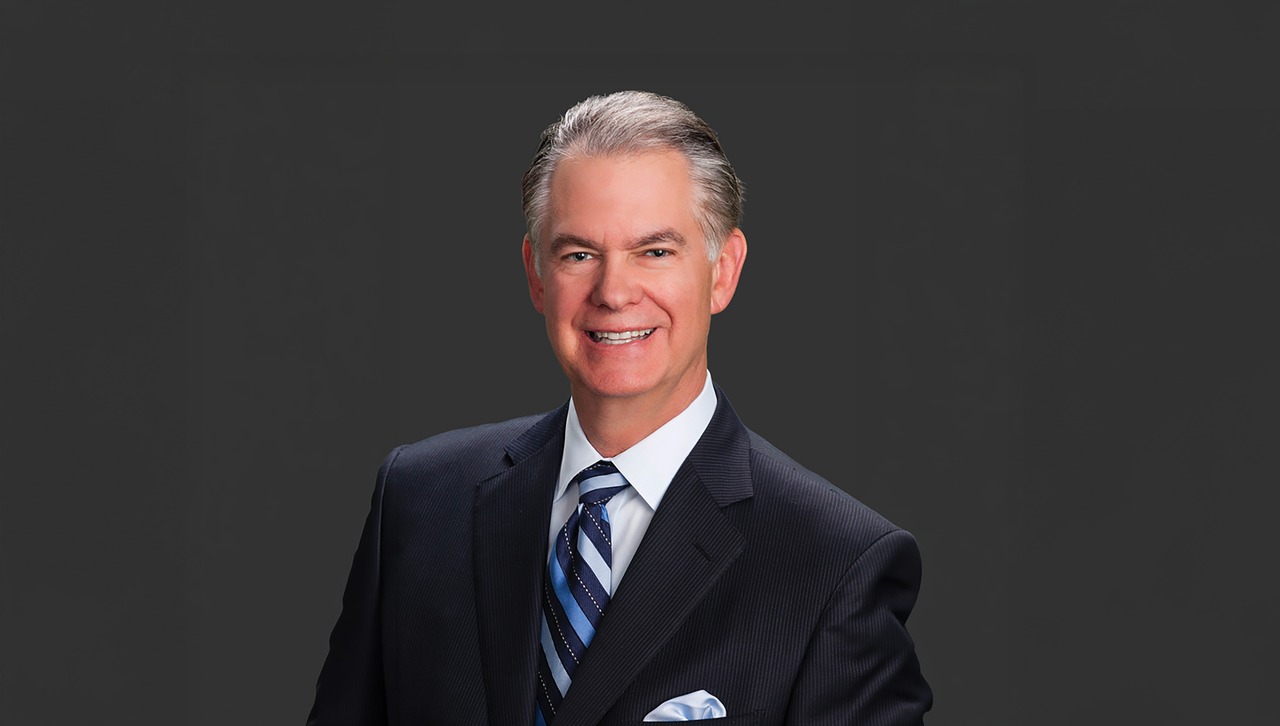
Having worked for the Nevada Gaming Control Board and Nevada Gaming Commission before becoming a private practice attorney, how did that experience offer an introduction to gaming?
It was excellent. I first started out as a Deputy Attorney General in the Gaming Division back in November of 1986, so it’ll be 40 years this November of being involved in gaming law. I was there for about two and a half years and, at that time, the outgoing Chairman and incoming Chairman of the Gaming Control Board asked me to come over from the AG’s office – and become the Chief of a new Corporate Securities Division they were forming.
I was the first Chief of the Board’s Corporate Securities Division for four years and today that’s now a section of the Investigation Division. It’s not a division itself anymore, but they conduct all the investigations and monitoring of publicly traded companies, mergers and acquisitions and financings. In 1993, I left the Board and became a private attorney with Lionel Sawyer & Collins, and that’s when I began my private practice of gaming law.
What first sparked your interest in gaming and eventually led to focusing your legal career around the industry?
I knew I wasn’t a government bureaucrat lawyer. I didn’t want to be a government lawyer forever! I was in the AG’s office, I was doing well… but I said, ‘well, where’s the best place to go that would be the most – frankly – financially rewarding and most viable in private industry?’ And it struck me to work in gaming. That’s how I gravitated to the Gaming Division and became a gaming lawyer. It’s funny, a good friend of mine was the Division Chief at that time and when I first came over he and the Attorney General asked ‘Are you willing to change your last name?’ Being Italian and Giordano, I suppose I could be a mobster. That was their joke.
As I got into gaming, it was really the best place for me to leave the AG’s office for and eventually land. When I was offered the Corporate Securities Division Chief position, that struck me as a really good opportunity, because then I’d have both the legal experience in gaming plus the practical experience of being a regulator, making me even more valuable to private industry. And that turned out to be exactly the case. I was the only gaming attorney who also had experience as a regulator at that time.
How do your day-to-day responsibilities currently involve gaming and how have you seen the industry fluctuate since you first started?
It has fluctuated a lot. It’s still dominated by publicly traded companies, especially from the standpoint of revenue. I think around 64% of all gaming revenue comes from publicly held companies, so that’s been really good. But the industry’s changed.
Commodities are orange juice, pork bellies, gold, platinum, wheat, corn. Those are commodities, not gaming
You’ve got private equity companies and private investors buying MGM and Caesars – if those get approved and go through. The biggest change, I think, is the involvement in and the role of private equity companies in the gaming marketplace.
Which obstacles to gaming legality do you believe are the most threatening right now?
We are involved with some litigation and have filed amicus briefs on behalf of the Nevada Resort Association in the Kalshi prediction market industry in Nevada. I think that’s a very, very dangerous, very bad development with them thinking they can just run amok and not be involved in gaming regulation. There’s a whole bunch of protections of the public built into gaming regulation. And what they’re doing is saying, ‘hey, we can do anything we want, we’re going to take wagers from 18-year-olds’ and so on. It’s very, very dangerous. It should not be allowed, whether by courts or by Congress or whoever, but it shouldn’t be allowed. They’re just very, very dangerous activities.
Illegal offshore online gaming is another problem, it always has been. And people have called me on the phone and said, ‘hey, I didn’t get paid by these guys, what can I do?’ Pretty much nothing. That’s the risk of doing business with an unregulated gaming company. When you deal with regulated gaming companies, you have patronage procedures and other ways to protect you and your wager.
Is it then fair to assume there’s no chance your law firm would ever work with a prediction-market operator?
We can’t right now because it’d be a conflict of interest. We represent the industry in respect to some of this litigation and all our attorneys in my gaming practice group are opposed. Prediction markets aren’t really illegal in Nevada. If they would come in and file an application to get licensed as a sportsbook, they’d be able to do that. But they refuse to do it thinking they only need to be federally regulated; what they’re doing constitutes federally controlled securities like swaps and commodities, which is BS!
Commodities are orange juice, pork bellies, gold, platinum, wheat, corn. Those are commodities, not gaming. It’s ridiculous. How did Congress intend for that to be a commodity? It’s just a real cowboy attitude. Anything goes in the wild, wild West.
Does your experience with Nevada regulators help provide a balanced understanding of gaming?
You know how the inner workings of the agencies work. How things happen, what type of things you’re looking for, what the procedures are, how the agents conduct their work and their investigations. My job as a gaming lawyer is to help structure transactions that receive approval and make them the least expensive, easiest possible to get through the system. Also, to then act as an intermediary between the licensee applicant, my client and the gaming authorities, to ensure that investigation goes smoothly. That their investigators’ requests are complied with quickly, completely and accurately. At the end of the day, we’re successful.
The biggest change, I think, is the involvement in the role of private equity companies in the gaming marketplace
By knowing how the regulators work, my job acting as an intermediary is much easier because I can explain the process to applicants who have no clue what it’s required, why they need to act in certain ways and how they need to respond to requests for information and so forth. These people are my friends, as well; I’ve known them for years. Supervisors, Chiefs, Deputy Chiefs, there’s a degree of trust between me and them. I trust them to do a good job, but they also trust me as a straight shooter not to do anything like turn an agent around or embarrass them.
Which moments in your career helped deepen your knowledge of gaming?
Through my involvement with some very good gaming law firms in Nevada, first Lionel Sawyer & Collins, then other firms and now with McDonald Carano, I was able to work on all the biggest mergers and acquisitions with other partners and colleagues. Whether it be MGM acquiring Mandalay Bay, or IGT’s acquisitions, those are all clients my firm worked with. We still have clients that are involved in those, but more on the seller side, as opposed to buying. That’s been most gratifying to build those big transactions that really had an effect in Nevada.
Are you able to provide thoughts on the potential acquisition of Caesars by Fertitta Entertainment?
It’s interesting. I really can’t speak on it because Caesars is a client of our firm, but I think it’s kind of funny. Here you have Mr. Tilman Fertitta coming to Nevada, he’s got his cousins here running Red Rock Resorts. So you wonder how they’re going to deal with it. I’m not sure how they’ll get along with Tilman becoming a bigger player in Las Vegas.
Certainly, they’re in different markets. Red Rock Resorts focuses on the local market, so there’s not much overlap between the two of them, but it’s interesting how the family gets together and how they’ll get along in Las Vegas. All three of them in the room!