
































CEO Special: Kenneth Manuel's Gila River journey from slot floor to top floor
Gila River Resorts & Casinos CEO Kenneth Manuel tells Global Gaming Insider’s Kirk Geller his story, from working on the slot floor to eventually leading his reservation’s biggest economic engine.

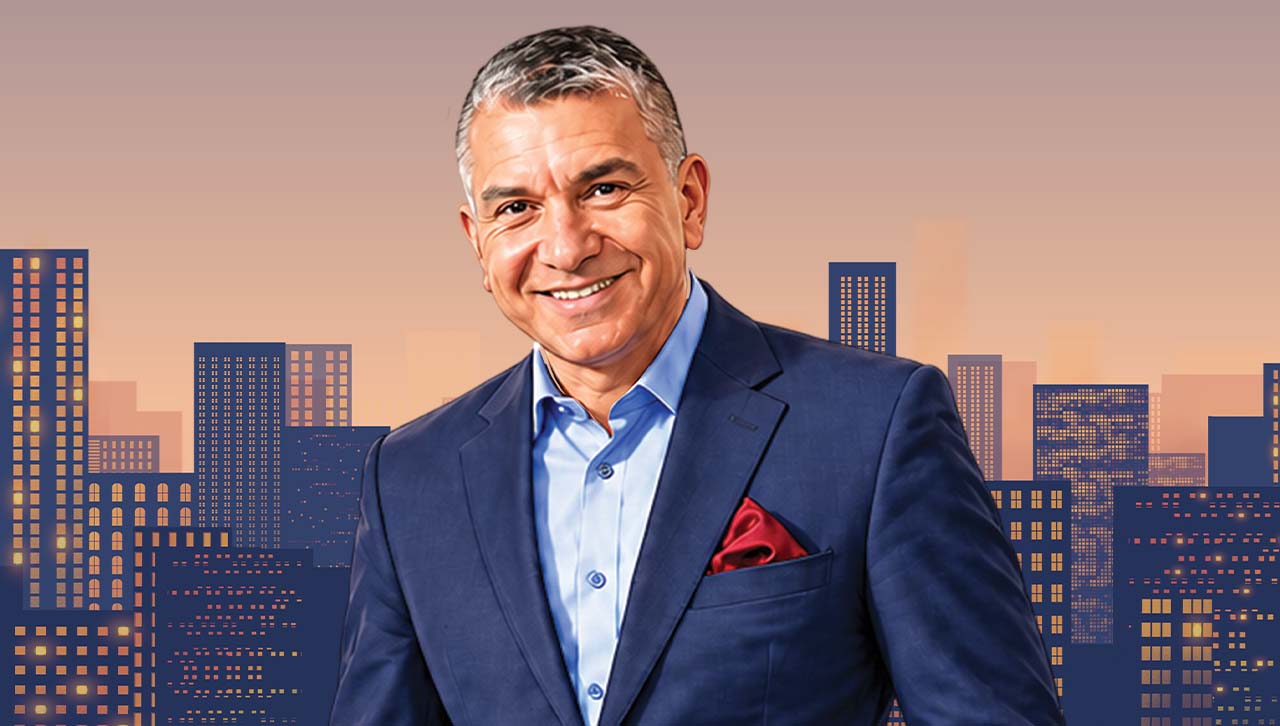
The story of the Gila River Indian Community dates back as far as 6,000 years, featuring tales of how the reservation eventually established and maintained its economic independence in Arizona. Much of its history – similar to fellow Tribes across the US – was built upon overcoming obstacles, all while attempting to safeguard the values that had been passed down for generations. Such narratives helped inspire numerous Tribal members. One of them was Gila River Resorts & Casinos CEO Kenneth Manuel, a native of the reservation’s District Four community – Stotonic.
Even as a lifelong member of the Tribe, though Manuel’s passion for gaming and hospitality was more of a “right place, right time” scenario, having begun his career on the slot floor of the original Lone Butte Casino property in 1994. And he’s far from the first executive to tell us similar. While the future CEO had “no aspirations for anything larger than what I was doing at the time,” his commitment to hard work and leadership agreed to disagree.
Catching the eye
At just 21 years of age, Manuel had already captured the attention of those leading the Gila River Indian Community and its gaming operations, beginning his journey. Bringing along the “ethics taught to me by my parents and family members,” Manuel rose to hold the Supervisor, Manager and Acting Director titles for Lone Butte Casino’s slot department, overseeing the same sector he had started in just a decade earlier. Working in slots came with overlaps across fellow Gila River departments, however, helping Manuel establish the relationships that came to support his transition to CEO, and which still last to this day.
The Gila River Resorts & Casinos CEO tells Global Gaming Insider: “You interact with so many different departments. You’re interacting with the security departments, with all of the operational departments that exist in our hospitality industries. Food and beverage, cage cashiers, surveillance, just to name a few. That enabled me to have direct contact and established relationships with those folks, and today many of those still exist at our properties.
“That’s truly one of the unique things about my experience; I’ve grown up here. I know I may not fit the mold of traditional corporate CEOs, but I’m pretty happy about my path and where I’ve landed today. I still have those same relationships, and what’s really interesting is a lot of the folks I worked alongside throughout my early career, some of their children are now working for our properties; which is both exciting and tells the tale of how old I am.”
I take my role very seriously, because as a member of the Gila River Indian community, there’s so much pride in the decisions I make on a daily basis
Manuel’s rise to leadership did not come without studying, as he attended management programs at both the University of Nevada, Reno and Cornell University. Former Gila River Gaming Enterprises CEO John James had “built a path” for the young Manuel. On top of his lessons in Reno and at Cornell, Manuel is also a product of Gila River’s Pathways Mentorship Development Program, which has no issue highlighting the “taxing” effect gaming and hospitality can have on those aspiring for leadership positions.
Having “seen and experienced” the program’s success firsthand, Manuel cautions that much of leadership is being “open to constructive criticism.” He explains: “What I do share with all of these individuals who are members of the Gila River Indian Community is ‘don’t be afraid to work hard.’ You have to be able to show commitment… to show colleagues you’re not afraid to work hard. Also, be open to new ideas and to constructive criticism. That is important when you’re coming up through the ranks. One of the hardest things to do as an early leader is to take constructive criticism.
“Folks will take it as something along the lines of being scolded. Historically, us as Tribal members and as Tribes, we tend to take things a little harshly when in fact this program, which is supported by other community members and leadership roles, places a strong emphasis on success. We want folks to succeed, but we can’t hide the fact that this industry can be pretty taxing. We’re open 24 hours a day, seven days a week. But I encourage all community members who are in this role to really look at this as an opportunity to grow as a leader.”
Climbing the ladder
Asked at the time if he wanted to “move up” by Gila River leadership, Manuel decided to “go ahead and run with it” by joining the Tribe’s Sheraton Grand at Wild Horse Pass property. Here, he found himself knee-deep in the hospitality side. Coming off a role in which he interconnected with various departments, Manuel was able to easily transition during his latest career pit stop.
I encourage all community members who are in this role to really look at this as an opportunity to grow as a leader
Veering off the gaming highway could only last for so long, though, as Manuel quickly steered back by joining the Gila River Gaming Enterprises Corporate Board of Directors at the start of the 2010s. Serving on the Board for just over seven years, the future Chief Executive was only then starting to realize a future in Gila River leadership could be on the cards. Backed by loved ones and Tribal leaders “who propelled me, believed in me and prompted me to move into C-suite,” Manuel was eventually named Gila River Resorts & Casinos CEO in 2017 after a 23-year journey within the Tribe’s workforce.
There is no doubt Manuel paid his dues on the way to becoming top of Gila River’s gaming food chain. The same man who was walking the slot floor at an age barely old enough to purchase alcohol was now overseeing a multi-property enterprise, surrounded by the same people who nurtured him since day one. At the time of Manuel’s hiring, Gila River Resorts & Casinos owned and operated three casino properties – Lone Butte, Wild Horse Pass and Vee Quiva – but later debuted its Santan Mountain location in 2023 under his leadership.
To begin his tenure, Manuel put forward the same ideology that had carried him for 20+ years and began integrating himself across each of the operator’s gaming destinations. “I’ve established an approach [based upon] the rule of treating people how you want to be treated. That resonated with me back in the day, and it still resonates with me today. It’s something I preach to my executive team,” Manuel tells Global Gaming Insider.
“Any opportunity I get to visit the sites, I’m not just walking into an office… I’m engaging with the team. I want to know how they’re feeling and any of the challenges they’re facing because I was once in that role. I was on the gaming floor. And if there’s a way I can improve their wellbeing, if there’s something they’re dealing with on the floors or in the operational departments that I can improve, I want to find a way to do that.
“It’s been one of my recipes for success, and I believe having that rapport with my team is extremely important. I think listening is a tactic that has maybe gone by the wayside in terms of leadership, and I never want to lose sight of how I came up and the things that helped me become a success.”
Off the beaten path
Located in a market somewhat overshadowed by the bright lights of Southern California and Las Vegas, Manuel was determined to find a way to let Gila River shine while finding a balance. A balance between casino entertainment – and the family aspect that drives Tribal properties across the US. Noticing how organizations such as Gila River “focus merely on the casino floor,” Manuel pushed for his Tribe to “think outside the cookie-cutter box” and develop the same amenities that drive Arizona locals to its neighboring competition.
“I didn’t want us to pigeonhole ourselves into something small; I wanted Gila River to be known for building fully integrated resorts with entertainment (and) additional amenities that guests typically travel to Las Vegas for,” Manuel says. “The Gila River brand in Arizona has truly evolved. I didn’t want to just be known as a casino property. I wanted us to be known for something more than that. We don’t do things the same way we used to, and I, for one, am very proud of that.”
While such aspirations have come to light for Manuel, they were not achieved without some unforeseen obstacles along the way. Chiefly, the Covid-19 pandemic in 2020 brought forth difficulties Manuel was simply unaccustomed to, including having to shut the doors of each property for multiple weeks. Of course, the whole world was in the same position.
I didn’t want to just be known as a casino property. I wanted us to be known for something more than that
Now as the leader of his Tribe’s biggest economic arm, Manuel looked around as many of the same faces he grew up with wondered when they’d be able to return to work, as well as how they would be protected from the outbreak. Leading amid the uncertainty, Manuel helped Gila River Resorts & Casinos re-open by July 2020, offering enhanced safety measures to ensure the health of its team members and clientele.
Post-pandemic potential
Looking back, although the pandemic shut normal life down for an extended period – and the difficulty of the period cannot be overstated – the aftermath produced an extended period of “pent-up demand.” Coming out of the pandemic, Manuel wasn’t just looking to stay complacent, as evidenced by the eventual launch of Gila River – Santan Mountain less than three years later. Prior to the Tribe’s fourth hotel-casino making its official debut, Gila River’s Wild Horse Pass property underwent an $180m expansion in 2022, exemplifying the type of post-Covid attitude Manuel wanted to initiate for his organization.
Not all of Gila River’s expansion efforts focused on new integrations, however, as the Tribe also called back to its gaming origins with the re-introduction of bingo post-pandemic. Spending the last 10 years “enhancing, revamping and elevating” the Gila River brand, Manuel says the operator is “always looking to expand.” Not looking to forego humility as CEO, though, Manuel notes how the operator’s 3,000+ team members serve as the “backbone and foundation of what we do.”
The Gila River Indian Community features more than just a history of self-preservation and economic independence, as the reservation has long welcomed to its neighboring territories and fellow Tribes. As far back as the mid-1800s, travelers seeking out fortune from the California Gold Rush suffered from dehydration, starvation and injuries from battle, but were saved by the Tribe’s ancestors who offered food such as wheat, corn, beans, pumpkins, watermelon, squash and peas.
Much of the same practices are still used by Manuel and the Gila River Indian Community today, having generated over $2bn in economic impact for surrounding Arizona cities over the course of its 30+ year history. Through its State Shared Revenue Grants Program, Gila River distributes 12% of its annual gaming revenue share to cities, towns and counties for public services such as economic development, education, healthcare, public safety and transportation. As CEO, Manuel has also helped establish Gila River’s presence in the local community through partnerships with the Arizona Cardinals NFL franchise, Phoenix Suns NBA team and Arizona State University.
Finding a competitive edge
For the Gila River Resorts & Casinos CEO, it all comes back to how his path first originated. Working on the same casino floors that have seen millions – potentially billions – of different feet walk across it, Manuel doesn’t let any of them pass without being impacted in one way or another. Even as he focuses on how the Gila River brand will grow in the future, challenges and competition remain firmly on Manuel’s mind. “One of the challenges we’ve had in the state of Arizona (is) population growth in terms of just keeping up with demand. Seeing the population growth and being able to keep up is something the team constantly struggles with,” Manuel reflects with Global Gaming Insider.
“We’re also setting ourselves up for the future in terms of infrastructure. Our IT team is always trying to remain ahead of the curve. They’re always at the table looking at ways to set us up for success in the future. A message I share on a regular basis and have always relayed to my team is: how do we create a sustainable competitive advantage? A lot of folks get intimidated by that, but I challenge my team because I don’t want to hear about the old ways. I want to hear how we’re going to move forward in the future. It’s served me well – and it’s something I’ll continue to push with the team.”
In a similar fashion to our CEO Special with Indian Gaming Association Chairman David Bean, the rise of Gila River Resorts & Casinos helps reflect the overall growth of Tribal gaming, as well as its successful recovery efforts out of the Covid-19 pandemic. While Tribal gaming has long since reached the point of consistently churning out billions in gross gaming revenue each year, Gila River plays its part in keeping the industry as prosperous as it’s ever been.
Amid growing competition even from outside the US – including from Canada and Latin America – Tribal gaming entities have found ways to innovate while also maintaining their respective culture and sovereignty. In Arizona specifically, ongoing threats from prediction markets have also spelled trouble for the state’s gaming industry, including interference from the Commodity Futures Trading Commission (CFTC) in legal battles with operators such as Kalshi.
A message I share on a regular basis and have always relayed to my team is: how do we create a sustainable competitive advantage?
Even with prediction markets having yet to take a major effect on commercial gaming in the US, the potential for event contracts to find its way toward casino-style gambling is not out of the realm of possibility by any means. Gila River Resorts & Casinos has previously had partners for retail sportsbook services, which could be impacted by the rise of sports-related event contract trading across the country.
Reflecting and projecting
What such challenges result in, though, is added motivation for Manuel to leave behind a legacy his eventual successors can learn from, to help sustain Gila River’s economic independence. In true Tribal fashion, Manuel focuses more on what he’ll leave behind, rather than the quarter-by-quarter mindset his corporate counterparts are typically boxed into.
“I take my role very seriously, because as a member of the Gila River Indian community, there’s so much pride in the decisions I make on a daily basis, and the things we have built today and in the future. I want to leave a legacy for the community and for the folks who are coming up. I want Gila River Resorts & Casinos to be a place they’re proud of,” Manuel states. “I want the Governor, Lieutenant Governor and members of our Tribal Council to be proud of what we’re building and what we’re doing today, because I know how important the revenues we generate are. As a sovereign nation and community, I’m well aware of how important our revenues are to programs such as housing, healthcare, education, social service and all of the different departments that benefit.”
For generations, the Gila River Indian Community has provided for its surrounding area and helped create leaders such as Manuel, who will be celebrating his 10th anniversary as CEO next year. When observing his Tribal gaming counterparts, there are very few that can highlight the multi-property-type of success Manuel and Gila River Resorts & Casinos have built over the past 30+ years.
Yet Manuel hasn’t forgotten the early days of Gila River’s gaming enterprise, and those memories help drive the CEO to grow the organization even further. Also noting how the operator’s staff is as “diverse as it’s ever been,” Manuel understands that innovation, change and growth aren’t anything to be scared of. And, for Gila River, the value of having a leader such as Manuel has been proven time and time again.