



























CEO Special: Boyle Sports' Vlad Kaltenieks - Brick by brick
Global Gaming Insider’s Rory Calland speaks with Boyle Sports CEO Vlad Kaltenieks, exploring his approach to leadership and a transformative two years at the Irish operator.

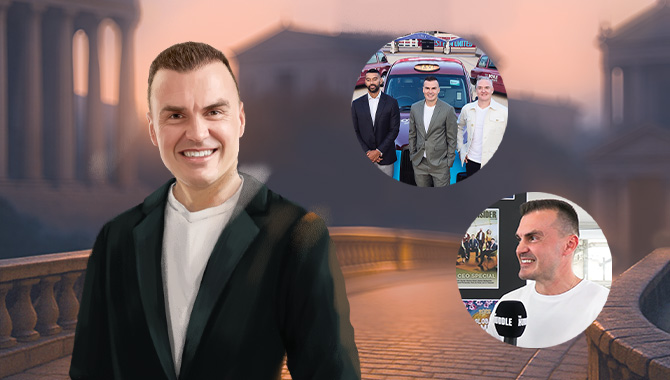
If you want to know how invested Vlad Kaltenieks is in Boyle Sports, ask him about horseracing.
He tells Global Gaming Insider: “There’s something magical about a day out at the races with the family, just watching the horses. And in Ireland, it’s a part of the fabric, part of the heritage. It’s just so woven into it. I would really love personally to see it preserved in the culture, because it makes the UK and Ireland very special.”
We sat down together before it became apparent that the ‘axe the tax’ campaign, led by British Horseracing, had been successful in deterring the Treasury from raising taxes on the sport, but I think he’ll have been pleased as punch to hear the news. It may seem unsurprising to know that the betting partner of the Irish Grand National and the Galway Races doesn’t want to see horseracing taxed into disarray, but Kaltenieks has only been at Boyle Sports for two years, and his career started a long way from the grassy furlongs of Fairyhouse and Ballybrit. One word pops up a lot in his job history: data. His first steps into the world of business were back in Latvia in 1999 with a company he co-founded, hosting websites and riding the dot.com boom. Skynet it was called (no not that one... hopefully).
In fact, Kaltenieks has only been in gambling since 2016 and this posting with Boyle Sports is his first CEO job. The first impression, looking at his career before his appointment, is that the operator has gone all out trying to find someone raised in the new school, someone with blinkers for digital, to drag a heritage, retail-focused brand into the 2020s.
“I really like computers. But I like figuring things out and learning even more. I think the IT side, it was so new and fresh, it was so different to everything else. It was exciting, yes. It is just a reality in its own.” Jackpot.
Of course, the gambling industry has changed radically since 1999, and the value of having a technologically literate, data-driven mind high up in a gambling operation has increased exponentially. Tech rules the waves. But this is not a simple modernisation narrative, and Kaltenieks’ success relies on a lot more than good timing. He is a far more rounded leader than that, he values and cherishes every inch of his kingdom, from software to retail, to the horses and the courses. When I ask him about his IT background and whether it was by this or by his entrepreneurship that he felt most defined, he replies: “Well, Rory, I think it’s even worse than that... I actually studied to be a lawyer.”
The ‘figuring things out and learning’ defines Kaltenieks more than anything else. If he didn’t have a profound curiosity and appeciation of the history of a company like Boyle Sports – the racing, the retail, the people – it seems unlikely he would have got this far. The eponymous John Boyle had not long stepped down from the role himself when Kaltenieks came aboard, and it sounds as though he is still never far away. “We’re in touch probably every other day or so. There’s pretty much nothing we don’t talk about.”
It’s evident the respect Kaltenieks has for the company’s Founder and the brand’s 43-year story. He is clearly grateful, not just at having been given the role of CEO, but to have been given the space to grow into that title. “I had a good exposure to many different teams throughout my career, so I had a really good understanding, but it’s different when you are actually at the helm.”
It was only going back to the beginning that I could begin to appreciate just how he’d thrown himself into those “different teams” throughout his career and how unsurprising it is that this business leader has gained the trust of a major figure like John Boyle.
The responsibility brick
Slightly bashfully, Kaltenieks admits that he does have what you could call a philosophy of leadership, and as he walks me through his career up until Boyle Sports, it’s clear to see how much of it was crafted on the wing and as a result of the people around him. Skynet went live in Latvia in November 1999 – by contrast, the hellbent Skynet of the Terminator franchise is supposed to have gone online on 4 August, 1997, so don’t panic. In fact, the origins of Kaltenieks’ company are far more benign, and were borne simply from that desire to learn. Messing around with computers, he was just keen to figure out how to set up websites and host them from “one server under a desk.”
From that “one server under a desk,” Skynet ended up hosting friends’ websites, and eventually even the national television broadcaster. He explains this sequence of events in a very ‘oh-I-just-fell-into-it-really’ manner, but it’s clear to see where he underplays his natural determination and drive. “I think the timing was excellent – just immersing myself and learning, and then once you are in that flow, it just starts to take you places.”
I ask him about the mistakes that defined this period. “Nice mistakes,” he calls them. He shares a memory of being called up at 6am by a disgruntled client with a website on his server. He tells of how he scrabbled around trying to fix the problem, barely conscious of what that problem was. His intention in telling the story is almost to point out the folly in his early venture, while in fact, what stands out is his willingness to pick up the phone at 6am and get stuck into a puzzle he only half understood. That’s not good timing, that’s good minerals.
It was, of course, a frenzied learning curve; Kaltenieks was getting down and dirty with the data before it was cool, so he tells me, or: “When it wasn’t the new oil, when it wasn’t really sexy.” But more important than the technical skills he honed in this period, is the pride he developed in bearing responsibility and accepting accountability for a whole enterprise. These are the things, apparent back then, that have guided him to where he is now.
The leadership brick
According to the CEO, he didn’t realise he enjoyed the weight of leadership until he entered the gambling industry with Betsson, not nine years ago. At this point he shares with me the names of those figures within gambling that made him the operator he is today. Ulrik Bengtsson is the first to come up, and a stonewall pioneer in Kaltenieks’ eyes. “He was a visionary in terms of looking forward, bringing that back into the reality of today and then setting up the pillars and structures to start realising it. [...] It’s nice to have ideas, etc. But let’s make sure we can deliver them in the best way possible and have the right impact.”
Bengtsson was the Betsson CEO under which Kaltenieks was drafted in. After visiting California, he was seemingly convinced that the company needed hands-on, knowledgeable leadership in the digital department. This was the way forward. Two years on, he went to become the Chief Digital Officer at William Hill, and when he did, he brought Kaltenieks along with him. He was climbing quickly, but the relationship with Bengtsson is clearly far more than a rung on the ladder. That circumspection and impact-focused approach Bengtsson posessed has evidently become a central part of Kaltenieks’ own management philosophy.
The retail brick
Some people succeed because they can deal with pressure; Kaltenieks has always seemed to invite new challenges. Despite the success he found in the furrow of his first speciality, his career steps have often been leaps into new departments altogether. “A different beast” is what he calls retail and, at William Hill, it was one he wrestled with for four years. This choice seemingly left him a different prospect as well.
Nicola Frampton is the COO of Domino’s these days, but over her time at William Hill it’s not hard to see the role she played in building the leader that Kaltenieks is. It was under her tutelage that he learned the ropes of retail: “People really loved her and were inspired by her leadership, so she left a really big and positive mark on me in that sense.”
It’s clear the appreciation he has for this side of the organisation – what he calls: “a very real business.” This is where the finest margins are, where efficiency and innovation are as important as the other and tiny drop-offs in either can sink an operation. As he explains the need for everything to “add up” in retail, there is a relish in his voice. The hunger he has for accountability and responsibility rises again to the surface. He can’t get enough.
The commercial brick
Another piece of the puzzle is filled in by Jesper Svensson, well known now as CEO of Betsson Group, but at the time that Kaltenieks was there, Svensson was CCO. It was from him that Kaltenieks came to see for himself how impact must mean profitability. “You also need to make sure you’re wearing a commercial hat and the things that we’re doing are commercially impactful and profitable for the business going forward.”
Of course, it won’t have been a revelation to Kaltenieks that a company tends to need to make money to survive. But to see first-hand from someone you admire just how and when you really need to don that ‘commercial hat’ is vital for a leader who is otherwise driven by a strong and holistic ‘philosophy.’
How do we make customers that have not considerd Boyle Sports consider us again?
The Boyle brick
The picture being painted is of a moulded leader, neither of the new school nor the old, perfect for a heritage bookmaker looking to carve out a new space in the modern industry landscape. A delicate job... Change too much and you may lose that established, trusted reputation a newer brand would pay significant money for; change too little and end up stuck in the past. Kaltenieks straddles this dichotomy as well as his experience straddles all the various departments of a gambling operator. But this was a big job nonetheless.
On the CEO’s second day, he was shown a presentation of a rebrand. He’s sat around a table with his executive team, and everyone is asking each other how they feel about the idea. There’s a sense of uncertainty, and while the new boss would rather feel out the opinions in the room than go in all guns blazing for effect, he can tell that there’s a lack of cohesion.
Kaltenieks calls brand the slowest piece of the puzzle. But it wouldn’t have to be. A new CEO could quite easily make a snap decision in that branding meeting to peacock his authority. But Kaltenieks’ priority is impact – doing things properly even if they take longer. It’s more than a lick of paint and a logo, it’s about changing how people think about the company. If no one could say for sure whether this rebrand presentation got to the heart of what the company was about, then there were clearly bigger problems than the colour scheme. He explains: “I just landed my role. I’m not going to take this one to myself obviously, because I don’t know how we arrived at this point. So I said, as Boyle Sports we need to figure out what are we about, because at the moment, I think we’re just about everything to everyone.”
That’s what he told his team in that meeting, and what followed was a slow and steady, brick by brick, year-long project to get to the heart of that question. Bring on the consultations, the surveys, the studies, always making sure to involve the different leadership teams, the marketing team, the compliance team, mocking up various visual identities along the way. All of these things would be easy to rush but, if they want their changes to have real impact, a new leader has to understand where he is starting from and know what really meaningful brand shifts are required.
“How do we make customers that have not considered Boyle Sports consider us again?” Once that’s done, then and only then can you focus on the colour scheme. And with this rebranding effort now well underway, someone as thorough as Kaltenieks knows that the launch is only the beginning. “Data, when it comes to the world of branding, is a bit more of an art than a science, but there is also a scientific part to it.”
Since the relaunch, the operator has systematically been making huge strides. It partnered with West Ham United as the club’s official front-of-shirt sponsor and made a deal with TNT Sports for exposure during the channel’s Premier League coverage. These are the types of sponsorships that are almost so wide-reaching, it’s difficult to isolate the channel and determine exactly what those growth effects are.
But, as ever, Kaltenieks wants to understand the effect these have on sentiment. The size of these deals is not the be all and end all. “Sentiment in terms of how people are perceiving Boyle Sports as a company, as a business, as a personality. What are some of the things that we are being associated with. Is it trust? Is it value? Is it something else? What do customers associate the new Boyle Sports with?”
The answer can’t be as simple as a positive attitude, but positive action, positive impact, these things are a little scarce on the ground at the moment within the UK and Ireland. And yet they are in abundance at Boyle Sports. It was amid that fog of doom surrounding the build-up to the Autumn Budget that Boyle Sports made the leap of investing £100m ($132.3m) in UK retail and digital innovation. We’ve spoken a lot about branding together. But the type of branding the CEO is interested in is interconnected with every business decision. Evolving what the company means to people is a hands-on task. It helps to discover what can set the brand apart from its competitors. Strategically, it’s making great headway in this department. The investment the company is making in the UK and in retail is very different.
It’s ambitious, it’s hopeful and it’s positive. Crucially, it’s a stark contrast to the negativity coming out of British retail in recent weeks and months. “It is going to infuse cash into adjacent economic activities like the sandwich shops or the motor service. We’re spending money in media, in creative, that’s contributing to the economy. We’re working with the sports brands, etc.”
I ask Kaltenieks about the threat of tax rises and the sense of retail fear emanating from the likes of Betfred, PaddyPower, Entain and Evoke. That positivity doesn’t come for free, of course, Boyle Sports’ margins will be hit as well, but the CEO is reluctant to add his voice to the dissent. If the company can make it through this, there will be one UK retail operator that is on the up, opening stores, boasting new jobs. That positivity cuts through; that’s a significant point of difference; and that can change a brand.
Eschewing Europe
The Boyle Sports chief is not deaf to negativity. He is conscious of regulatory challenges posed to industry across Europe – marketing restrictions, increased tax burdens etc. But again, he is not for complaining about the hand he’s dealt, calling the UK: “One of the most successful, if not the most successful, regulated market in the world.”
For him, the uncertain future of Europe-wide regulation is mitigated by clear future-planning in core markets. In Ireland for instance, Kaltenieks is encouraged that: “The new gambling regulator just published a three-year plan, which gives a very good outlook in terms of what to expect.”
Consolidation in the UK and Ireland will guide Boyle Sports into the next era of European regulation and let them target expansion from a better foundation in the future. It’s a strategy Kaltenieks has called common sense. Where many might be fretting about the prospects of more diversified European operations, Kaltenieks showed decisive foresight by curtailing international expansion.
Concentrating resources in two markets equips the company to stand steady on two feet amid the headwinds unseating so many industry wigs. While many retail workers fear for their jobs, Boyle Sports can promise new jobs and new tax revenues, thanks to this proactive consolidatory policy. The less exposed to future European regulatory upheaval the company is, the more it can approach domestic regulation with a positive outlook: “I would like to see a balanced regulation where customers are protected and have a choice. I think the UK has been able to have that balance for a while. I look forward for that to continue and for us to figure out how we achieve all of our outcomes here.”
It’s also easier to build company-wide connectivity at this manageable scale, and this is utterly essential to his strategy – retail and digital must be one self-supporting unit: “We have a really good relationship between our retail and digital and we continue to strengthen that. Then when you layer on top of it a rebrand and refresh, my challenge to the team has always been: “How do we create an environment and experience for customers so it is delightful, where they enjoy being there in that retail environment?”
If the team manages it, this could be the start of a more connected relationship between customers, staff and management – something that would delight Kaltenieks.