






























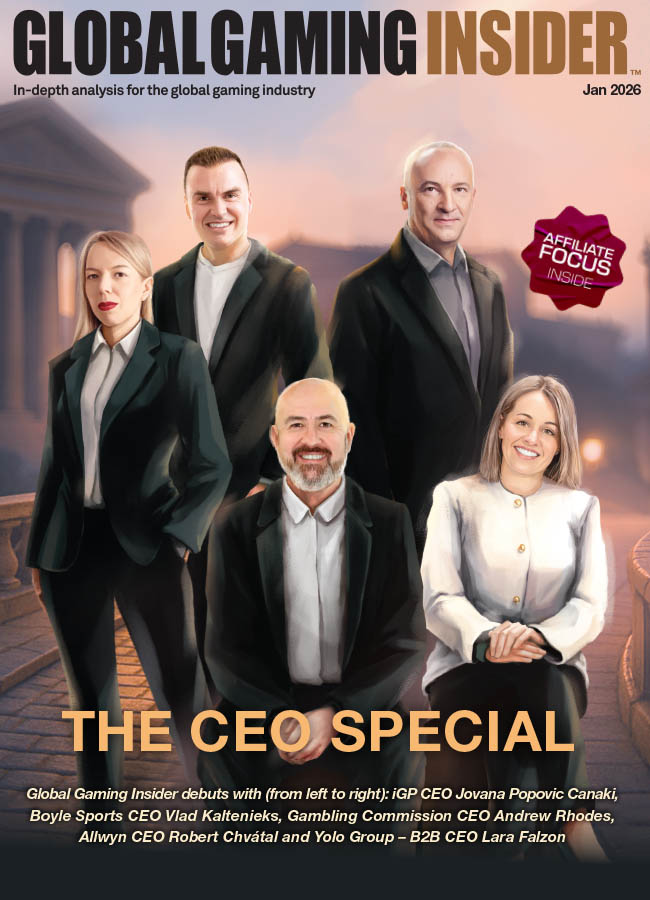
CEO Special: Allwyn's Robert Chvátal - Four years of intent
Group CEO of Allwyn, Robert Chvátal, returns for his second CEO Special interview, covering four years of rapid and focused growth and diversification for the operator, now valued at €16bn.

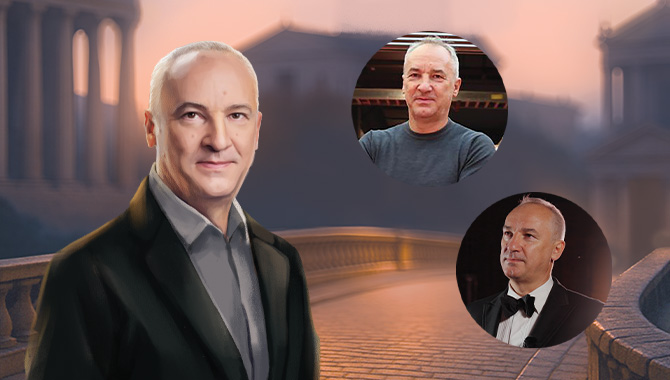
If you had faltering Czech lottery operator Sazka pegged as the future of the gambling industry back in 2012, you’re either Nostradamus or Karel Komarek, owner of investment group KKCG and Allwyn. Either way, your prophecy would seem well on its way to realisation here in 2026.
You might also have been this publication back in 2021, when we conducted our first CEO Special interview with the then-Sazka Group Chief Robert Chvátal. The interview does not in fact make many bold sweeping predictions, but to read it with the knowledge of what the operator has done since then puts a new colour on the piece.
Komarek may well have given us those grand one liners and auguries of immense success, but next to each ambitious owner stands the person charged with making those dreams happen. This is Chvátal, and the subtle difference in mindset is apparent early on in our conversation. He smiles as we bring up his paymaster’s stated ambition of building: “the world’s leading global gaming entertainment company.
Chvátal tells Global Gaming Insider: “The biggest sounds nice because it’s very ultimate, but I would say leading is still very good.” For the time being, both men will surely be satisfied with how things are progressing. When the announced merger with OPAP completes, the two companies will form an organisation valued at $18.6bn. From 2013, when Komarek installed Chvátal, there was a lot of work needed to get anywhere that kind of target... The four years since our last conversation have supersized the company, and Chvátal can certainly be confident of its ‘leading’ status. For him, however, this accolade would always be more about operational excellence than sheer size. Because of this, there are ways you could see these strong growth ethics clashing. But, if they have, it hasn’t been borne out in the operator’s actions, which over the past four years seem equally justifiable as symbolic statements of ambition and acts of shrewd efficiency.
Clearly, capital is a highly effective smoothing agent between these two things, and the immense wealth of the businessman, Komarek, gives the firm scope to speculate. But back in 2021, the operator had also just had an injection of €500m ($582.2m) from Apollo Global Management to capitalise on acquisition and growth opportunities in Europe and the US. There was a lot of headroom and boy did the company use it. We’ll start where Allwyn always has done, with lottery.
Sleeping beauty
“We saw a stagnation in the UK; we saw that the spend on lottery products in the UK is lower per capita than the spend in other comparable Western European markets like France or Italy or Spain.” And historically, where Sazka saw inefficiency in a lottery, they saw opportunity. This has been their MO since long before the events of the past four years.
Efficiency, digitisation, a steady hand on the tiller. Traditionally, Sazka/Allwyn takes struggling lotteries and makes them profitable. An honest living as a lottery fixer-upper, the company has proved time and again that it understands how to make lotteries work, right from its beginnings with the Czech lottery. “From the very start we saw that this Czech lottery is a bit of a Sleeping Beauty. It’s uninspiring, nothing flashy, but we can make it really nice. We can make it really agile, innovative and appealing actually.”
It was a familiar situation, then, that led Allwyn to where it was in 2021, preparing to bid for the biggest and perhaps most challenging lottery contract yet: the UK’s National Lottery. With around £8bn ($10.62bn) worth of ticket sales a year, it’s a big deal, but with only 1% of revenues going to the operator in profit, the clout and recognition associated with running it becomes an even more significant part of the deal.
But what made Allwyn think it could wrest it off Camelot, who had been the incumbent since 1994 and whose products were entrenched in British culture? “We did not have any doubts that whatever we put in our bid is the best that we could. We couldn’t do better.” It’s a fine example of wild ambition and good sense overlapping, and not for the last time. It takes vision to be the Czech lottery company that thinks it will come and pinch the contract off the homegrown, Watford based company that has been the sole holder of the contract in the National Lottery’s history. It also just makes sense. Allwyn was tried and tested elsewhere, and built around the modernisation processes that most lotteries around the world are moving towards. Here was another sleeping beauty. When it woke up, things weren’t quite so serene, though. Challenges from all sides made the company’s job a whole lot harder, but they also created a chance to make a powerful statement of intent.
Setting the tone
“The minute the verdict was announced, it was immediately attacked.” Camelot was not going down without a fight. Allwyn approached the issue uncompromisingly. The response to the problem was to buy Camelot’s entire business. Chvátal explains: “We had to swallow and reduce this absolute complexity of transition where you have a very hostile environment into something which is at least manageable. That’s why we wanted to reduce the risk level by acquiring Camelot. To make very clear that we want to go and get into the business of transition rather than be in the business of challenging everything.”
This move headed off Camelot’s legal challenge, bolstered Allwyn’s resources and pool of expertise, and took it into North America with the Illinois lottery. And it did it all, more or less, overnight. It was more than Allwyn had initially bargained for, but not, clearly, more than it was prepared to accept. For a company without huge forward momentum, it might have been suicidal – but for one consumed with growth and scale, it’s just part of the process. It’s the first of a few examples of Allwyn being set a challenge and meeting it with a response that not only seeks to deal with the challenge, but aims to turn it into another stride forward.
When Chvátal describes Allwyn’s bid, he made clear that nothing was based on ‘assumptions.’ It’s clear that post-bid, he was committed to staying in complete control of the situation and facilitating as risk-free a set of working conditions as possible. We describe how from the outside, the Camelot acquisition plays as a symbolic manifesto as much as
anything else and Chvátal doesn’t shy away from admitting that it certainly “sets the tone.” Somehow again, the desire to be perceived like the biggest fish in the pond, and the desire to behave like a ‘leading’ fish in the pond both seem sated in one fell swoop. Risk management and reputation enhancement dovetailing perfectly, blended together with the help of that capital wiggle room.
Ultimately, you have three gaming verticals... But now I would say there's a fourth pillar, which is casual gaming
Překotny
There is a Czech word Chvátal wants to explain to us to describe the US: “A nice Czech word about a very fast development where you tumble and you stand up and, again, you tumble and you stand up again.” This word and feeling defines both Allwyn and America, it seems. Both are moving so fast as to be almost ungainly. So decisive and powerful that challenges and stumbles are almost instantly swallowed up and rendered irrelevant. Norwegian football superstar Erling Haaland springs to mind – when he’s knocked off his stride, he almost doesn’t notice. In a flash and a blur of legs, his force and momentum rights him back on his feet and back on course. North America was always on the cards for Allwyn, even though in a way, its entry into that market almost came about as an afterthought to the Camelot deal. It was maybe inevitable that two such fast-moving entities would bump into each other.
Step one was Illinois. A total of 67% of adult residents in the state play the lottery regularly, and for online draw-based game sales, the Illinois lottery is number one in the US. It’s further proof, if needed, that what Allwyn has always done, it continues to do incredibly well. But the last four years and the future for Chvátal, especially in America, is increasingly defined by brand new territories. Top-level strategy, the CEO explains, is about wanting to be built on more than just the lottery vertical. By 2030, the company wants to be thriving in lottery, sports betting and gaming. “Ultimately, you have three gaming verticals. You have the lotteries, which always have been at least 30%, maybe 40%, of the market. Then you have sports betting and casinos. And now I would say almost there’s a fourth pillar, which is casual gaming.”
Daily fantasy sports is a casual gaming sector with that Allwyn factor. An air of inevitability. The appetite is undeniable and regulatory headwinds never succeeded in blowing the vertical terminally off course. Indeed, in September 2025, Allwyn announced the acquisition of fantasy giant PrizePicks. An initial $1.6bn is on the table for 62.3% of PrizePicks. The deal is expected to close early 2026.
And speaking of moving quickly, PrizePicks was approved to start offering a prediction market product on the same day the Allwyn acquisition was announced. Wherever that bandwagon is leading, Allwyn is going to be right there, front and centre, leading the charge relentlessly. Bringing it back to the operational benefits, Chvátal makes the point: “I think the message PrizePicks is sending is that with our technological flexibility and by relying on our own tech stack, we are able to address any opportunity there is.”
It’s a key point. In our first CEO Special with Chvátal, we talked about the strength that comes from geographical diversity: having a presence in Northern and Southern Europe. Now we are looking at the strength that comes from intercontinental diversity, vertical diversity and technological proprietorship. The wider the company can spread itself, the more it can rely on its own tech stack, the more insured it is against any one of those elements failing. Again, bigger is better, and better is bigger. CEO and Owner in harmony. These are the three pillars we want to build, because you stand not on one leg only, you stand on several legs, even on three legs. Three legs are even more stable than two legs.”
So, what of that third pillar?
Adding ballast
While we discussed lottery and casual gaming at length, that third pillar, sports betting, was less conspicuous. If anything, all that proves is how many pies Allwyn has its fingers in because Betano is very much a proud part of the Allwyn family and flitters across our conversation plenty of times.
The Kaizen-Gaming operated brand represents that third pillar, trading across many European jurisdictions. Allwyn’s is a minority stake (36.75%) and Chvátal gave no indication that a takeover is on the cards, but a move in this direction in the future wouldn’t be a shocking diversion from company strategy. If this was a step they ever took, holding a 51%+ stake in Betano would add ballast to Allwyn’s sports betting operations. A deal to acquire Betano’s Greek-market rival, Novibet, is due to complete in 2026, and Allwyn’s involvement with both brands, on top of OPAP’s Stoixman, gives them a commanding presence in the region. Chvátal said at the time: “Our Greek business OPAP acquired a sports betting and online casino market leader called Stoiximan, which means ‘the bettor’ in Greek. We’ll be building on Stoiximan’s own proprietary sports betting platform not only in Greece but also in other European markets.”
Look at the merger with OPAP. The splash that announcement made last year was immense. Of course it was. If it is approved at the OPAP EGM it will create Allwyn as the world’s secondlargest gambling entertainment company in the world (not accounting for suppliers and land-based operations) and see it listed on the Athens Stock Exchange. But that quote from Chvátal was again from our 2021 interview, and he’s already calling OPAP ‘our Greek business.’ The merger merely built on Allwyn’s pre-existing controlling 51.78% stake in the Greek operator – a restructuring more than an acquisition and yet, you cannot argue with ‘second-biggest.’
Another win-win because, for the CEO, what it means is another growth of his operational freedom: “Instead of not being sure what technology works, you will rely on your own technology more and more, and I think that’s the compelling growth story.” A narrative he was keen to stress as part of his pitch to all those OPAP investors he wants to stick around.
Europe
“We see the limits of Greece with its Greek boundaries. We see the limits of the growth rate, which is 2%. Whereas Allwyn is double or triple of that, and if you combine inorganic, it’s even more. So you want to consider that the geographical and product portfolio diversification is beneficial. As is the fact that we are able to invest into the local brand and in the global brand.” His pitch to investors is a strong one: allow your local investment to be supported by the global scale and diversity of Allwyn’s own investment. This concept works in many directions. For instance, where the more seasoned regulatory environment in Europe brings its own challenges and benefits to operators, this is constantly mitigated and balanced by the freedom and risk of the younger US market.
Chvátal touches on concerns about stifling regulation or over-regulation, but he is not for complaining. Looking towards the future of Europe, he is not in the market for regression: “We don’t want to go to the world which is absolutely unlicensed, unregulated and Wild West.” However, he does concede that when there’s a sense that innovation and competition are not being allowed to flourish, it rubs him up the wrong way: “We, in the business, are used to being very fact, evidence and research-based. Customer insight-based, too. We rationalise everything with numbers. If you sometimes get an explanation from a regulator saying, ‘Well, I feel like I’m concerned about this thing,’ without any evidence, it’s frustrating.”
For now, at least, there seems to be only one direction of travel with this debate. In Chvátal’s eyes, it seems far more likely the US starts to transform into Europe than the other way around. The stopper in any hopes of Europe committing a philosophical U-turn and liberalising regulations to encourage innovation and competition will always be concerns over consumer protection. He adds: “I’m sure even in the US certain things will get regulated. It’s a bit tumultuous with developments now in sports betting, iGaming and prediction markets, but it has to be put in order somehow. Otherwise, you could have an issue in the US about consumer protection or responsible gaming.”
Growing trust
In this interview, we speak a lot about the overlap between symbolic actions and business-first decisions. There is a similar mutually beneficial dynamic in how a CEO must seek to cultivate a sense of trust and public favour. The level of credibility your company has is a careful balance between the things you actually do and the noises you make about the things you do. A big public listing is a sign of real progress and success – it is also, crucially, ‘public.’
“If you are a listed entity, I guess you get an extra level of credibility, trustworthiness or profile.” It has long been a public goal of Allwyn to gain a major listing in New York or London. It nearly happened in 2022, but market uncertainty led it to pull out. Casual followers may think that seems out of character, but as we’ve explored there’s a lot more to Allwyn’s boldness than blind ambition. When the OPAP merger was announced, this goal was reiterated. And, with the company having taken over operations of the UK National Lottery in 2024, two years after winning the contract, it may seem like a listing in the US could provide more of a boost, particularly as the company dabbles in those divisive prediction markets. Currying regulatory credibility and trustworthiness in the US these days is a tough exercise. Decisions that prioritise compliance and safety are often at odds with the desperate battle for market share. If growth was your one priority, PrizePicks looks like a prize opportunity. It’s an operator on the up, well-equipped to be an industry leader if industry trends stay the course and as Chvátal says: “It enhances the total addressable market. They are present already in 45 US jurisdictions, whereas we are in one state of Illinois with our lottery, so it’s a big difference.”
But there’s no denying it’s not the safe choice. Mixing with sports betting is fairly novel for a lottery-focused operator. To associate with ‘casual gaming’ makes an even odder match. The CEO agrees it would have “seemed quite unusual a few years ago.” Over past months, we’ve seen more and more instances of lottery companies partnering with other forms of gambling. The merger of Intralot and Bally’s is one high-profile example. Historically, lottery operators have taken extreme measures to distance themselves from the rest of the industry and justified that separation via miraculous feats of logical incongruity. Now, not so much. Allwyn clearly believes success in other areas will not have a strong negative impact on its lottery. But what’s changed?
Well, look at FanDuel and DraftKings. They both came from outside traditional industry margins to dominate sports betting in the US. Their acceptance by the gambling establishment and the American Gaming Association (AGA) was hard-fought, but recently both took their leave of the trade body because they feared they couldn’t afford to be caught napping with predictions, lest they be supplanted by Kalshi and Polymarket. Would they have preferred to wait and see what the legal and regulatory outcomes would be with all the litigation surrounding prediction markets? We’re sure they would – their legitimacy and mainstream credibility is as important to them as it is to Allwyn. Despite Chvátal’s fondness for decisive risk prevention action, when you’re as ambitious and relentless as Allwyn, new risks to reputation and profitability are always being introduced.
Something else that’s changed is maybe simply the ease at which a company like Allwyn could turn its hand other verticals and compete with the big players. Of course, sports betting is increasingly online, as are slots and casino games. It could be as simple as saying that diversifying your offering, both in the breadth of your content and the internationality of your reach, just becomes easier the more play moves online. The digital expertise Allwyn built up in those years before our first interview with Chvátal has since become far more applicable to running a more diversified operation. Allwyn’s decision to open a whole new business, Allwyn Digital, with Kresimir Spajic as its CEO, speaks to this fact.
The Allwyn flag
It’s easy to look at any moment in time and inflate its significance as the beginning of everything that happened next. But the start of 2021 was that moment for the entire world.
It was the beginning of a new year, during which we would tentatively emerge from under the shadow of the Covid-19 pandemic. Allwyn and Chvátal never stopped emerging, and not very tentatively.
We ask Robert how much more difficult his job gets, the bigger the job gets. “Proportionally more difficult,” he tells me. “Maybe even disproportionately. What sort of keeps me awake at night is how to balance our size and scale with the initiative which brought us there.” He seems to have managed it so far. Casting back once more to 2021, Chvátal tells me how the brand, though already international, felt it needed to lean into this. An English sounding name just “sounded immediately right, it’s also a powerful internal flag to rally around. We are ‘all’, we are the leading, not necessarily the biggest, but the leading lottery-led gaming entertainment company or platform.”
In 2021, it was a flag to rally around, it was aspirational. Now, in 2026, it is no longer a target; it is a reality.