


























How to preserve your intellectual property
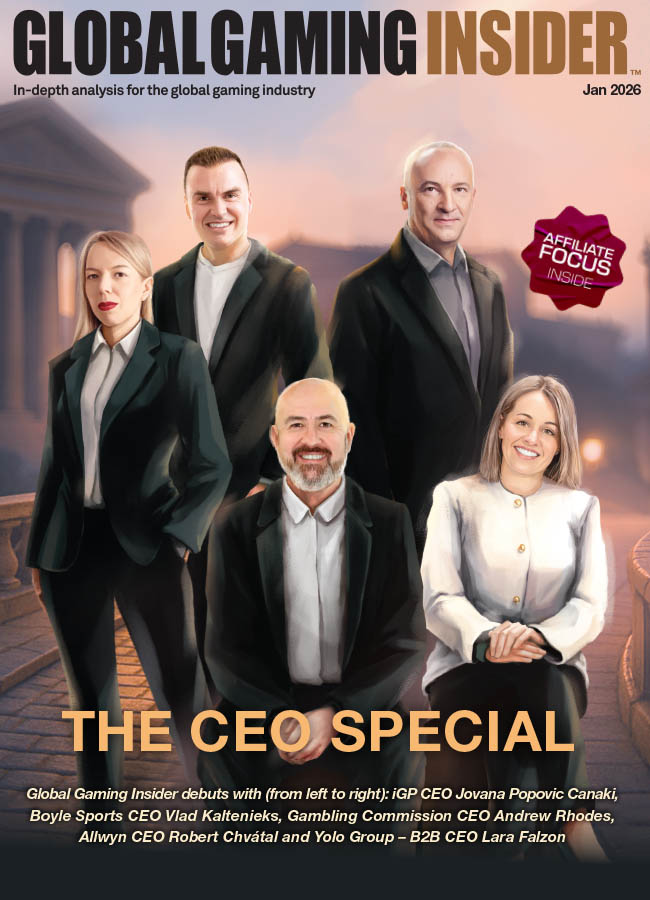
Alistair Holzhauer-Barrie, Partner at GJE, is a chartered patent attorney. Here, he writes for the first time in Global Gaming Insider – explaining how to protect your technological innovations from copycats and competitors.


In the November issue of Gambling Insider magazine, we looked into key IP trends for 2026, covering digital rights management, game licensing, global market challengers and enforcement, all alongside technological innovation, which this article focuses on.
Technological innovation in gambling spans Virtual Reality (VR), Augmented Reality (AR), native mobile applications, desktop platforms and blends of mechanical and electrical systems. And that’s before artificial intelligence (AI) is even considered. This ever-evolving ecosystem breeds innovation not only in the user experience but also in the mechanisms that put that experience into effect.
There are opportunities for operators and companies developing this technology to grow market share and create exclusive growth areas. But there are equal numbers of threats from competitors. One way to stave off those threats is through judicious use of the monopolies granted by intellectual property (IP) rights. That’s the way you protect against copycats while preserving and enhancing your market position.
Rights available
As well as branding and logos, the look and feel of a user interface can be protected using registered designs. You can use them to protect animated sequences and transitions in graphical user interfaces (GUIs) for instance.
Patents are another useful tool. These protect the way that software running a GUI operates, how software interacts with hardware in a gambling machine or in a game and how the mechanical and electronic systems work.They grant exclusive rights over their subject for at least 20 years and can be extended to markets of commercial importance around the world. You should apply for a patent while the details of the invention are still confidential. Though in the US and some other jurisdictions, there is a one-year grace period after public disclosure in which you can still register your application.
A registered design must have its own character, look and feel, and patents have a further requirement which states that the innovation must not be “obvious.” Innovators often wrestle with this second requirement of a patent and this is where an attorney can provide significant benefits, helping work through development stories and highlighting key steps along with the problems addressed.
AR/VR, AI and software
Whether it takes the form of a control system, game, AR or VR platform, or AI algorithm, software has gained a reputation for not being patentable. This is patently false.
It is true that it is more challenging to gain patent protection for software than for hardware. However, often it simply comes down to how the story is told. AI is treated the same as “classical” software, so it is generally only protectable with a patent via its implementation.
Securing design protection for user-facing parts of software is significantly easier, simply requiring images or screengrabs of the aspects of a GUI to be protected. There are even techniques that can be used to push the limits of what is protected beyond only what the user sees. GUI details and animations can also be protected, offering real value in the right circumstances.
Hardware
The oldest patents and designs centre on hardware. For as long as physical products and complex machines are manufactured, IP rights will be available for these products and machines, along with the means to manufacture them and the operating electronics and software.
Patents and designs can be legitimately granted for cardboard boxes, so the significantly greater complexity and sophistication of the gambling and gaming sector has plenty of IP potential. As long as it is new and does something clever, or looks unique, then patents and designs are within reach.
Benefits
All the monopoly rights: patents, registered designs and trade marks, can be used to stop competitors, their suppliers and the companies that manufacture or develop the products on their behalf. These can also be used to recoup lost income and profits, as well as acting as a deterrent if you make noise about holding those rights.
The UK additionally offers tax benefits relating to products with a patented component. This provides a tax reduction up to 10% on profits made from these, which can save significant sums every year.
Gill Jennings & Every LLP regularly assists clients in devising and implementing patent, design and trade mark filing strategies. Get in touch with Alistair to discuss your options at [email protected]