




























SEO trends for 2026
Eugene Ravdin, Head of PR for SEOBrothers, discusses the biggest search trends affiliates should be aware of in the year ahead.

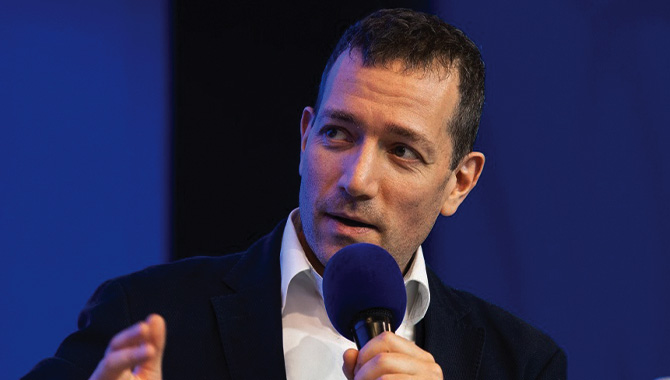
SEO is an ever-present for affiliates. And yet it is always changing...
User intent above all
Most likely, things will continue as they are now. The main focus is on AI and all the things related like zero-click, and so on. SEO is shifting away from traditional keyword optimisation and page improvements. That foundation still matters and needs to be done, but the main focus is on addressing specific, usually very clear, user intent. For example,if someone searches for “best welcome bonus in Spain,” they should get a concise answer right away. Content should be structured so that users can immediately obtain an answer to their question.
In the past, we might have written: “Bonuses come in this and that form, pay attention to such and such factors,” and created long blocks of text. Now, long blocks may still exist, but they must include a clear, direct answer to the user’s query, fulfilling the intent. Maximum specificity. Ideally, the answer should be available right at the beginning of the page. FAQ sections, which were once placed at the end of the text, now appear at the top. They can still be used for inserting additional keywords and phrases, but their main goal is to provide quick answers to users.
AI
For us, AI has more of an impact not in terms of adapting our websites to get into AI Overviews, but in how much we are using AI in our work. For example, when we’re unsure of what the user’s intent is, we might ask: “What intents could this query correspond to?” Or when creating technical briefs, we feed AI the text, asking if it’s good enough or to highlight other aspects, or analyse our competitors. You feed a few competitors and ask AI to compare them with your own content. What patterns emerge, what are you missing, and so on.
Proven expertise, not just expertise
When it comes to content, it needs to be more authoritative. In the past, it was enough to write an article, regardless of who wrote it, cover the topic and that would suffice. Today, it’s not enough to simply say “this is the best bonus.” You need to explain why it’s the best bonus, who decided it’s the best and why they have the authority to make that decision. For example, because the expert has been working in the niche for 20 years or has won awards which prove his credibility. You need to be trusted both by Google and users. The reputation of your website, the author or the expert providing the information also matters. Of course, the content quality must be good too, that’s a given.
Link-building & KPI shift
Again, I can’t really say that much is changing here. Good links still work as they always have. This isn’t a trend; it’s a fact. Quality matters. Three of four good links are better than a hundred low-quality ones. What is changing is how KPIs are evaluated. Previously, we focused on rankings and traffic but, now, while rankings are still important, traffic isn’t always in line with them. Even ranking #1 doesn’t guarantee traffic. So KPIs are now more often evaluated through conversions. Because even if you rank high, that traffic and those rankings might not bring you any meaningful results.
Technical SEO
Technical SEO is the foundation that basically remains unchanged. The key is to avoid errors. Everything just needs to be done properly and carefully. There are no groundbreaking innovations here. In fact, some aspects seem to be becoming less important. For example, in our practice, the hreflang tags used to pass some of the link juice to the pages in the same language but targeting other geos. For instance, if you had English content for the UK and for Kenya, and the UK page was well-optimised, the hreflang would show Google which page to serve to users in the UK, and which to serve to those in Kenya. The hreflang would also pass some link juice, so a weaker page for Kenya might get some boost. Now, that seems to be working less effectively.
Google document leak
This wasn’t something revolutionary. It was just a huge list of factors that Google takes into account in its algorithms. There are hundreds, if not thousands of them. Algorithms are a combination of all these factors. You might take a couple of isolated factors, test them, and if they don’t work, think, “This is nonsense, it doesn’t work.” But the truth is the factor does work, but you might be missing other key elements. So, you failed to get results not because that factor didn’t work, but because it didn’t connect properly with the other factors. Food for thought!