































How to beat Las Vegas
We welcome Oliver Lovat, regular contributor and Denstone Group CEO, to the pages of Global Gaming Insider. He walks us through how lessons from Las Vegas can be leveraged to surpass its success elsewhere.

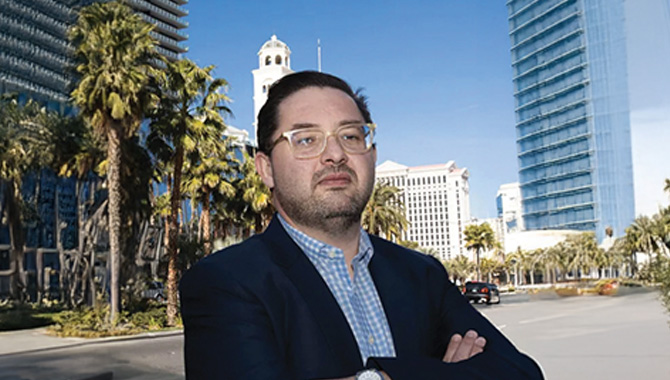
The rise of Las Vegas from a desert outpost to global destination is a remarkable story. Across tourism verticals, from gaming, entertainment, sports, events, to leisure and business, it has matured as a location far beyond its size and historic significance. Consequently, Vegas has continually been one of the fastest-growing locations in the US, and a hub frequently emulated in other cities. 2024 tourism spending in Vegas was over $55bn, greater than the GDP of all but 87 of the world’s nation-states in 2023. The tourism sector contributed to over 385,000 jobs and generated over $2.5bn in direct taxation.
The success of Las Vegas when it first emerged was far from assured, and some of those older residents and insiders recall the fear that, at any time, the golden goose would lay its final egg. Over the past 75 years, Las Vegas has been challenged, but it has endured, reinvented and thrived. That isn’t luck. If you want to compete against – and indeed beat – Las Vegas as a global tourism and hospitality hub, it can be done only by understanding the evolution of the city and learning from the successes, failures and times where challengers have fallen short.
Critical success drivers
There are five critical success factors that have remained constant in Vegas, namely political leadership, location, ongoing infrastructure investment, placemaking and people.
Observing other narratives, you can see that when any number of these are absent or break down, inevitably there is market stagnation or failure.
Whether it be social or moral impediments, resistance to tourism in general, or existing competitive interests blocking monopoly (tribal) positions, casino-led destinations have often been stymied, thus restricting gaming and hospitality opportunities.
When gaming is being introduced or increased in a market, there are no assurances that the intended outcomes demanded by policymakers are met. These are typically direct tax receipts associated with gaming revenues and associated benefits of investment, economic growth and job creation. But, when deregulation has been matched with the criteria below, markets have flourished, with benefits seen across tourism and economic verticals.
Political leadership
Do not underestimate the importance of politics in determining the success of a casino-led tourism strategy. Few thought the decision to legalise gaming by Nevada Governor Fred Balzar in 1931, the promise of a casino referendum in New Jersey Governor Brendan Byrne’s re-election bid or the handover of Macau to China, would have such transformative impacts to those markets.
For decades, Las Vegas has benefited from the close relationship between political leadership and the gaming industry. Whether it was Governor Grant Sawyer or Senators McCarran and Reid, Las Vegas was able to carve out a unique place in American Society by maintaining a national monopoly for many decades.
However, in other markets, early political enthusiasm for gaming as a catalyst for economic growth has not always endured as political dynamics changed and casinos became mere cash machines for policymakers. From Cuba to Atlantic City to Mississippi, many cities have benefited from encouraging gaming and hospitality investment.
Over time, political reticence in planning, absence of investment and complacency saw the market decline. The early breakneck rapid expansion of Macau’s gaming market was refocused by the 2023 renewal of licenses, which insisted on diversifying the business model through demanding greater tourism resources outside of gaming. Now, Macau’s revenues are coveted all over.
Indeed, oftentimes politicians themselves have killed initiatives before they have even seen the light. The recent optimism of a potential investment boom in Downstate New York has seen major operators, which had often invested hundreds of millions of dollars in pre-development costs, withdraw from the process prior to selection. Many pointed to a poor process, overinfluence of government and policymakers’ failure to understand the complexities of the industry.
As insiders to Las Vegas’ success will attest, the secret weapon is the LVCVA. This unique body of government and operators has promoted the destination both nationally and internationally, coordinating strategy and managing internal cooperation in a highly competitive market. Having such a forum is essential for strategic growth and success.
Location
Location is a prerequisite for the success of any casino destination, either micro or macro. In the case of creating a tourism destination, a cluster of casino resorts with an accessible population center is essential. If there is a secondary (or even a primary) alternative tourism driver, then it should be a slam dunk!
Las Vegas had California and the Southwest, with Vegas an easy place to access The Grand Canyon and Hoover Dam. Atlantic City (like New York) is on the doorstep of major population centers and on the Boardwalk (although one questions whether this became a help or a hindrance to tourism!). Biloxi is on the Gulf Coast, with access to customers from across The South, Florida and Mexico. Macau has easy access to China and Hong Kong as well as a beautiful Old Town.
However, for many destinations where the casino was the sole driver, the arrival of Tribal gaming, which in many cases was closer to the intended population centres, has had negative consequences in visitation. Atlantic City and The Gulf Coast properties saw a decline, while ones in Nevada, Reno, Laughlin and Primm were decimated.
Infrastructure investment
In every decade, there has been significant planning and investment in both public and private infrastructure. It is this that has enabled and supported growth in the tourism- focused economy.
In the 1940s and 1950s, the introduction of the interstate freeway system ushered in the age of private automobile ownership. People could get in their cars and drive from Arizona and the newly populous California to Las Vegas.
Moves were made to invest in water supply (from Lake Mead) and build sewage and other hospitality infrastructure for a city that was yet to exist. A convention center was built (and subsequently expanded) to encourage midweek demand, opening up an entire segment.
In the 1980s and 1990s, airline deregulation and increased competition, combined with new resorts, allowed supply to meet existing demand. Today, Harry Reid is one of the busiest non-hub airports in the USA and another airport is in the planning stages. The monorail is operated by the LVCVA, Elon Musk’s Boring Company is tunnelling through the caliche underfoot for a network of tunnels and Brightline-West is preparing to connect Las Vegas to Los Angeles once again.
The means of transport is key to developing location. The late academic, Bill Eadington, observed that in 2006, 46% of Las Vegas’ visitors arrived by air, compared to 2% in Atlantic City. The average length of stay in Las Vegas was 4.6 days, compared to 13.5 hours in Atlantic City. Encouraging average length of stay is crucial in allowing tourism diversification to prosper, and being part of a national – and international – air network is key.
It is no surprise that the increase in visitation to Macau coincided with the opening of the 55km Hong Kong-Zhuhai-Macau Bridge (HZMB) in October 2018, allowing access by sea, air and road.
In 2024, trips by Hong Kong and Macau residents across the bridge reached 16.2 million, up from 4.5 million in 2019. For the first half of 2025, mainland China and Hong Kong accounted for over 90% of total visitor arrivals to Macau.
The ease and convenience of private transportation allowed Macau to learn from the Las Vegas’ experience. It is now challenging Hong Kong for business. Next, it will likely expand into mass live entertainment and sporting events. These steps are crucial, and likely inevitable.
Placemaking
Not all destinations are created equal.
The casino resort can trace its roots from the grand palaces of Europe, but it was Las Vegas where the concept evolved. The Las Vegas story owes much to the developers: Jay Sarno, Steve Wynn and Sheldon Adelson. They imagined the likes of Caesars Palace, The Mirage, Bellagio and Venetian. Each had a vision of more than what was in the market and advanced what was possible.
Las Vegas’ lessons were both imported and exported. Through exchanging notes with Cuba, Miami, Sol Kerzner’s Sun City, Atlantic City and the Nevada/Arizona border hamlet of Laughlin, ideas of placemaking within destinations took shape. They remain dominant today.
Outside of Atlantic City, gaming expansion in the 1990s saw regional American “megaresorts” arriving on tribal land. Both Foxwoods and Mohegan Sun led as regional giants, while in Mississippi, the Gulf Coast become a regional gaming destination, dominated by Biloxi’s Beau Rivage. Built by Wynn and operated by MGM, the property featured more than the comparable casino offer and was developed simultaneously with Las Vegas’ Bellagio.
Over the 30-year period, resorts once built to meet demand started to face mature markets, and it is those properties that were more than glorified gambling halls that have fared the best. Perhaps the most famous (and profitable) commercial building in the world today is Marina Bay Sands. Opening in 2010, architecturally it has little resemblance to Sands Hotel and Casino in Las Vegas, which joined the nascent Strip in 1952, but the games played on the casino floor are remarkably similar.
Without The Sands, The Mirage and The Venetian(s) there would be no Marina Bay. The legacy of placemaking has a clear lineage, but it helps to be located in a citystate of over 6 million people. It also is handy to be situated near Singapore Changi Airport – it’s frequently cited as the world’s best and sees over 67 million annual passengers.
When one thinks of potential North American markets considering expanding gaming, New York, Niagara Falls and the populous South-Eastern states spring to mind. Globally, you may think also of Thailand, Brazil and Japan; but one must be cautious, because what has been successful in one market doesn’t necessarily work in another. However, in nearly every case, the examples of placemaking that were formulated in Las Vegas are central to successful sustainable projects.
People
It is something of a wake-up call to us real estate guys (my own professional training is as a Chartered Surveyor) who were schooled in finance, development and strategy, to see that the gaming industry is now recognised by many as a series of digital engagements. Nowadays, iGaming is highly lucrative – certainly more lucrative than land-based casinos – but ultimately transactional, with location and jurisdiction based on population, tax and regulations.
Although there may be some customer crossover, what we hope to achieve in land-based development has significantly more long-term economic value than merely transaction taxation. You need a diverse pool of skills to develop a resort, those that can build the structures, and those that staff and operate the resorts. All of these require skills, training and experience that must be cultivated, transferred, taught and learned. Where there is alignment and investment, the destination will grow over time.
This allows everyone that is either fortunate enough to be involved in the process, or brave enough to invest in the associated markets, to be successful. The emergence of the UNLV as a leading academic institution has been a key enabler, as has the space to develop residential neighbourhoods.
In 1990, the population of Las Vegas was 741,000; today it is close to 3 million. Over the same period, the coastal population of Mississippi grew from 180,000 to over 416,000, while Atlantic City remained relatively unchanged. Macau produced $5.6bn in gaming revenue in 2005, growing to over $28bn in 2024. Over that period, the population increased by 52% to 722,000, in what is already one of the most densely populated places on the planet. Around 20% of the population are employed in the gaming and hospitality industries.
From Mississippi to Macau, the casinos themselves follow a pattern. You’ll see hotels, showrooms, restaurants and large halls with places to play games. Usually, they are the same games, played with the same cards and featuring the same slot machines. And they are only new until the next big box with newer places to play the same games appears. What differentiates them are the people that build them, the people that operate them and the people that visit them.
Understanding, training, valuing and empowering people has been at the heart of Las Vegas’ success; and the expertise that has been bred there remains one of the city’s greatest exports for those seeking to emulate its growth.
Taking on Las Vegas
Any forward-thinking policymaker seeking to understand global trends, create prosperity and future-proof their economies, needs to understand that Las Vegas is not unique. The lessons found in our story can be replicated with structured thinking and dutiful planning, as evidenced in emerging challengers globally. The UNLV Office of Economic Development, led by Bo Bernhard, defined the combined industries of tourism, sports, and entertainment as “the Fun Economy.” It valued the sectors at roughly $13.7trn and 14% of the world’s economy.
With the rise of the global middle class and a shift towards prioritizing experiences over material ownership, the next 50 years will be marked by an increase in destination development and experiential tourism. Dubai knows this, having studied and copied much of the historic Las Vegas template.
Although there are currently no operating casinos in the region, this will change when Wynn Al Marjan opens in 2027. Expect it to be among the highest-grossing casinos in the world in 2028, and it will no doubt be the first of several casino resorts to appear across The Emirates in subsequent years.
Furthermore, a new, top-tier class of private wealth has emerged. Las Vegas has always provided this, with Bellagio scaling the experience and starting the trend that turned Las Vegas into the party town for the world’s elite. Others are challenging.
Despite the recent headlines, Las Vegas is still well placed. Much to the chagrin of lovers of $0.99 shrimp cocktails, Las Vegas has changed to meet the needs of profitable customers. And if it does not continue to meet those customers’ needs, there is no doubt that any one of a dozen other markets is ready to step in and challenge.
If strategic policymakers combine with private capital and entrepreneurial operators, heed the lessons set out above and play their cards right, Las Vegas can be beaten at its own game.