




























How board games are revolutionizing the casino floor
From family game night to the casino floor, Jack Found explores the rising industry trend of board game-branded gambling.

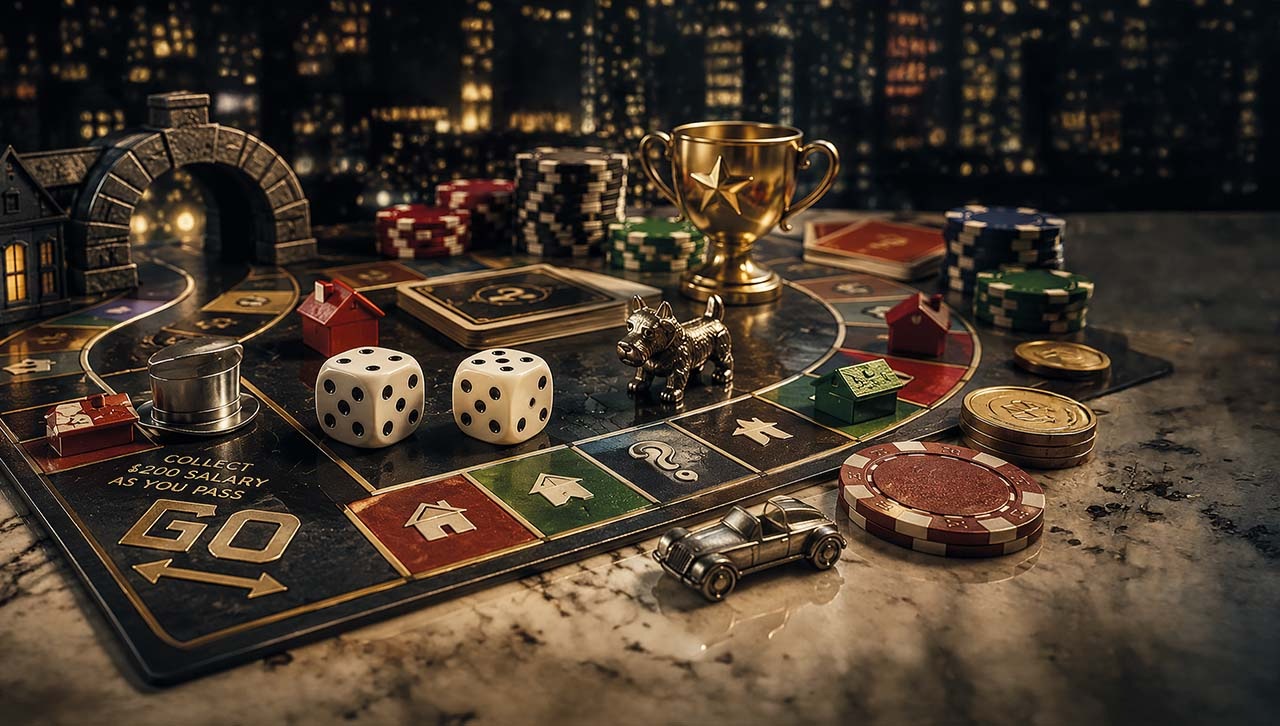
Branded gambling products have long been a staple of the casino sector, with entertainment franchises from film, television and music routinely adapted into slot machines and online casino titles. Branded intellectual property (IP) costs extra; but can bring in a new audience. It’s a trade-off. Yet one of the more curious – and increasingly visible – subsets of this trend has been the migration of classic family board games into gambling.
Over the past three decades, household names such as Monopoly, Cluedo, Battleship and Yahtzee have all been repurposed into casino products, often with mechanics designed to mimic elements of the original gameplay. What began as a niche licensing experiment in the late 1990s has since evolved into a significant vertical within branded gaming, prompting both commercial enthusiasm and ethical debate.
As suppliers continue to invest in nostalgia driven content and recognizable IP, the question is no longer whether family games belong in gambling – but how far the trend can go.
Monopoly: The franchise that started it all
The clearest pioneer of the board game-to-gambling movement is Monopoly. In 1998, WMS Gaming (then part of WMS Industries) launched the first Monopoly-branded slot machine after securing a licensing agreement with Hasbro. The game debuted in casinos in 1999 and proved an immediate commercial success.
By the early 2000s, Monopoly had become one of the most recognizable slot brands on casino floors, helping to establish branded slot gaming as a mainstream strategy. WMS later stated that, since launching its first Monopoly participation games in fiscal 1999, it had created more than 60 approved Monopoly-branded titles by 2009.
Its success was not accidental. Monopoly translated naturally into gambling mechanics: property accumulation, chance cards, dice rolls and money management all lent themselves easily to bonus rounds and features. The board game’s pre-existing association with money and wealth arguably made the leap to casino gaming feel intuitive.
Monopoly remains one of the gambling industry’s most enduring licensed products, with Hasbro describing it in 2014 as “one of the most well-recognized and successful licensed gaming entertainment brands in the world.” Even in 2025, the brand’s value remained evident when Hasbro awarded a new exclusive land-based Monopoly slot license to Aristocrat Gaming, with fresh titles scheduled to launch in 2026.
Passing 'Go' – The expansion beyond Monopoly
The story didn’t finish there, though. Following Monopoly’s success, suppliers sought to determine whether other board game brands could replicate its crossover appeal. In 2009, WMS expanded its licensing agreement to include rights for Battleship and Cluedo (known as Clue in North America), formally broadening the trend beyond Monopoly.
Since then, multiple family-game-inspired gambling titles have emerged across land-based, online and live casino verticals:
• Cluedo/Clue has been adapted into slot products featuring mystery-themed bonus rounds and gameplay elements inspired by the original game’s detective format.
• Battleship has been licensed for casino adaptation, with its strategic, grid-based gameplay offering a natural thematic fit for interactive gambling formats.
• Yahtzee has been transformed into slot products incorporating dice-rolling bonus mechanics and gameplay inspired by the original game’s scoring system.
Interestingly, however, many of the most prominent examples within this niche stem from the same source: Hasbro. As owner of Monopoly, Cluedo, Battleship and Yahtzee, the toy giant has played an outsized role in shaping the board game gambling crossover trend. In 2025, the organization noted that it has a “nearly 30-year history” of licensing its IP to the casino sector. While other tabletop and toy brands have occasionally experimented with adjacent entertainment activations, few have embraced real-money gambling to the same extent.
While a film franchise licensed to slots may be viewed as standard entertainment branding, childhood board games often evoke more intimate, formative memories – potentially making them uniquely sensitive
The most recent sign of the category’s growth came in July 2025, when Hasbro announced a major expansion of its casino licensing program. The company confirmed new multi-year partnerships with Aristocrat, Evolution, Galaxy Gaming and Bally’s, naming Monopoly, Yahtzee and Battleship among the brands set for further casino adaptation.
Why are board game brands becoming so popular in gambling?
There are several commercial reasons behind the trend’s sustained momentum.
1. Nostalgia and familiarity drive engagement
Perhaps the most obvious factor is nostalgia. Many of the players engaging with casino products today grew up with these games, making the IP instantly recognizable and emotionally resonant. In a saturated gambling market where operators are competing heavily for player attention, familiar branding can provide an immediate advantage. Branded slots allow players to approach a new game without feeling as though they are learning from scratch; they already understand the theme, characters and basic concept.
2. Gameplay mechanics translate naturally
Unlike some entertainment IPs, board games offer built-in mechanics that slot developers can adapt directly into gameplay. Monopoly’s dice rolls and property buying, Battleship’s targeting system, Cluedo’s deduction mechanics and Yahtzee’s dice combinations all provide thematic frameworks for bonus rounds and interactive features. This enables developers to move beyond surface-level branding and create products where the IP feels meaningfully integrated.
3. IP helps differentiate products in a crowded market
The online casino sector in particular is increasingly crowded, with thousands of slot titles released annually. Using a recognizable brand helps suppliers and operators stand out. A board game license can also broaden demographic appeal by attracting casual or entertainment-first players who may be less interested in traditional casino themes.
Where could the trend go next?
The 2025 Hasbro licensing expansion suggests the board game/gambling crossover trend is far from slowing. In fact, it may be entering a second wave. Historically, most board game gambling adaptations centered around slot machines. However, Hasbro’s newest deals indicate expansion into table games, live casino products and omnichannel formats, suggesting that branded IP are starting to stretch beyond reels alone.
There is also evidence that the wider entertainment industry is increasingly comfortable experimenting with adult-facing reinterpretations of nostalgic brands. Mattel’s 2025 UNO Social Club activation in Las Vegas – while not involving gambling – demonstrated the commercial appetite for childhood gaming brands being repositioned for adult audiences.
Though UNO itself was not monetized as gambling, the event sparked immediate public speculation online about whether similar brands could eventually be adapted into wagering products. Looking ahead, if the current momentum continues, more childhood and tabletop IP may follow. However, whether rival games companies will mirror Hasbro’s apparent openness to gambling partnerships remains to be seen.
Harmless nostalgia or problematic gambling?
Despite the clear business logic, the use of family-oriented brands in gambling remains controversial. Critics argue that adapting childhood brands into casino products risks blurring the line between harmless nostalgia and behavioral manipulation.
The core concern is not necessarily the games themselves, but the emotional associations they carry. Board games like Monopoly and Cluedo are culturally tied to childhood, family bonding and social play. Recontextualizing those brands in real-money gambling environments may soften perceptions of gambling’s risk or make betting feel more approachable than it otherwise would. This criticism overlaps with wider regulatory discussions around gambling advertising and gamification, particularly where products may appeal to younger adults or newly legal players.
Defenders of the trend, however, point out that these products are marketed exclusively toward regulated adult audiences, not children, and that casinos have long used familiar entertainment brands – from movies to musicians to television shows – without facing the same scrutiny.
Still, the optics remain complex. While a film franchise licensed to slots may be viewed as standard entertainment branding, childhood board games often evoke more intimate, formative memories – potentially making them uniquely sensitive.
Rolling the dice for the future
The rise of family board game-branded gambling reflects broader trends shaping the modern casino sector: the growing importance of licensed IP, the monetization of nostalgia and the push toward more entertainment-driven gaming experiences. What began with Monopoly in the late 1990s has expanded into a broader category encompassing multiple household brands, major supplier investment and increasingly diverse product formats.
Commercially, the logic is clear. These brands offer instant recognition, thematic flexibility and proven player appeal. But as the trend accelerates, so too will debate around where the line should be drawn between clever branding and questionable commodification. Whether viewed as innovative entertainment or uncomfortable brand repurposing, the continued expansion of board game-branded gambling suggests nostalgia is set to remain a powerful force in shaping the casino products of tomorrow.