




























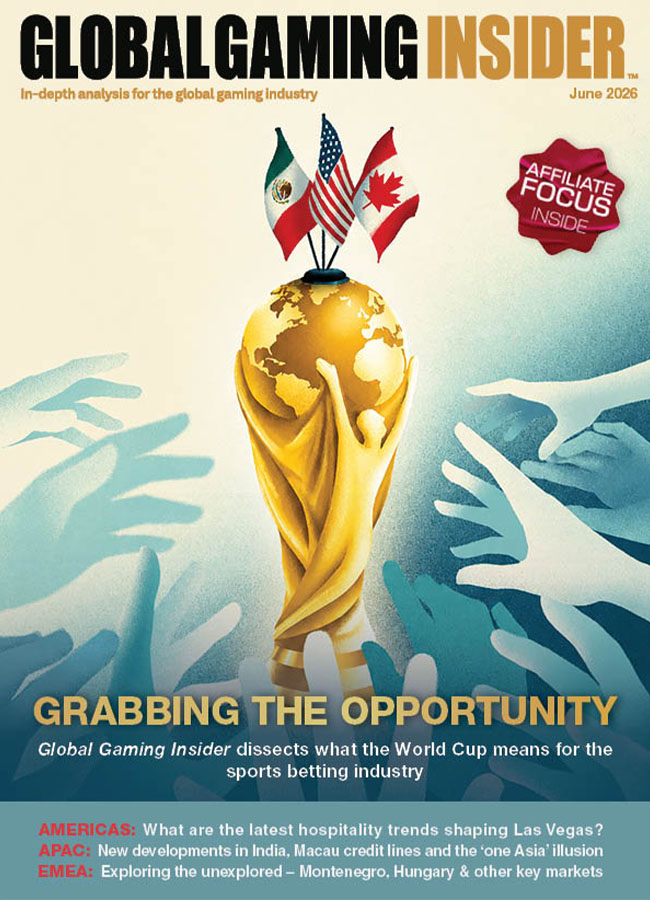
World Cup 2026: The industry's opportunity for responsible gambling
The World Cup is a stress test for gambling’s commercial credibility, writes Adrian Ward, Communications Manager at EPIC Global Solutions.


Anyone who’s watched the BBC’s Twenty Twenty Six will recognise the tone. Beneath the satire, it captures something very real – the internal tension that builds around an event of this scale. Competing priorities, competing narratives and a constant push to land in the right place commercially without ending up on the wrong side of public or regulatory perception. I’ve sat in enough of those rooms to know it’s not far off. And with this summer’s tournament across North America, those conversations aren’t hypothetical. They’re happening now – across operators, rights holders and partners all trying to position themselves for what is, commercially, one of the biggest moments in the cycle. More inventory. More eyeballs. More pressure to deliver return. But also: more scrutiny.
That tension is particularly sharp for gambling brands. For European and Asian audiences especially, this is a World Cup played at unusual hours. Late nights, early mornings, fragmented viewing patterns. From a pure opportunity standpoint, that opens up more space – more breaks, more touchpoints, more chances to stay visible around in-play betting behaviour. But the context matters. Those same conditions – the time of day, the immediacy of in-play markets, the accessibility – are the exact environment where risk escalates. That’s not theoretical. It’s lived.
At EPIC Global Solutions, around half of our team carry personal experience of gambling harm. When they talk about how behaviour escalated, a common thread runs through it – betting at irregular hours, chasing outcomes in isolation, drifting into cycles that feel manageable in the moment and aren’t in reality.There’s nothing obscure about a World Cup fixture, even at 3am. That’s the point. So the question for operators isn’t whether to show up commercially. Of course they should. The question is how deliberately they choose to do it.
This is where most strategies still fall short
A lot of the industry has made genuine progress on safer gambling. Tools are better. Messaging is more visible. The intent, in many cases, is absolutely there.
But when you get into high-intensity commercial moments like a World Cup, the model can still default back to volume and visibility – because that’s what drives short-term return. That’s the gap. Not a lack of awareness. A lack of integration.
Safer gambling still too often sits adjacent to the commercial strategy, rather than inside it. That’s where I think this tournament becomes interesting – it offers a chance to close that gap in a way that is both credible and commercially smart.
Those same voices can do more than drive activity – they can shape behaviour
The underused lever: influence
Twenty Twenty Six plays with the idea of global icons fronting tournament messaging. It’s exaggerated, but the underlying point holds. Operators already invest heavily in ambassadors – current players, former players… recognisable voices who carry trust and attention with audiences. Most of that investment is still geared towards acquisition and engagement. That’s understandable, but it’s also incomplete.
Those same voices can do more than drive activity – they can shape behaviour. Used properly, they give operators a way to normalise safer play in a way that feels part of the experience, not bolted on to it. That could be as simple as how in-play betting is framed. How often prompts are surfaced. When messaging appears – particularly around those late-night fixtures where behaviour patterns shift.
It doesn’t require a complete overhaul. It requires intent. And if we’re being honest, the operators who are already leading in this space know exactly how to do it.
What good already looks like
We’ve seen this work when it’s built in properly… not as a campaign, but as part of the commercial relationship.
Our partnerships alongside Flutter Entertainment – across the EFL and League of Ireland – and with Evoke through the SPFL are good examples of that in practice. Education delivered directly into playing and staff environments, sitting alongside sponsorship rather than separate from it.
Not performative. Not surface-level. Embedded. The first season of the SPFL programme set a benchmark in terms of how these partnerships can operate – and, importantly, how they’re perceived externally. It’s no coincidence it’s already being recognised at industry level.
That’s the piece that often gets missed. This isn’t just about risk mitigation or regulatory alignment – it ’s about credibility. Operators who can demonstrate that their commercial relationships with sport are built to last – that they understand the environment they’re operating in and are willing to invest in its sustainability – are in a stronger position long term, with regulators, partners and audiences.
The opportunity this World Cup
World Cups have a habit of setting direction; not just for sport, but for the industries that sit around it. This one is no different. There’s an opportunity here for gambling brands to show that high-performance commercial strategy and prevention-led thinking aren’t in conflict – they’re aligned. You can maximise visibility and still be deliberate about how, when and where that visibility shows up. Safer gambling isn’t a constraint on growth. It’s part of what makes that growth sustainable.
The operators who get that balance right won’t just come out of this tournament with stronger numbers. They’ll come out with stronger positioning. And, in the current environment, that’s the part that tends to compound.