




























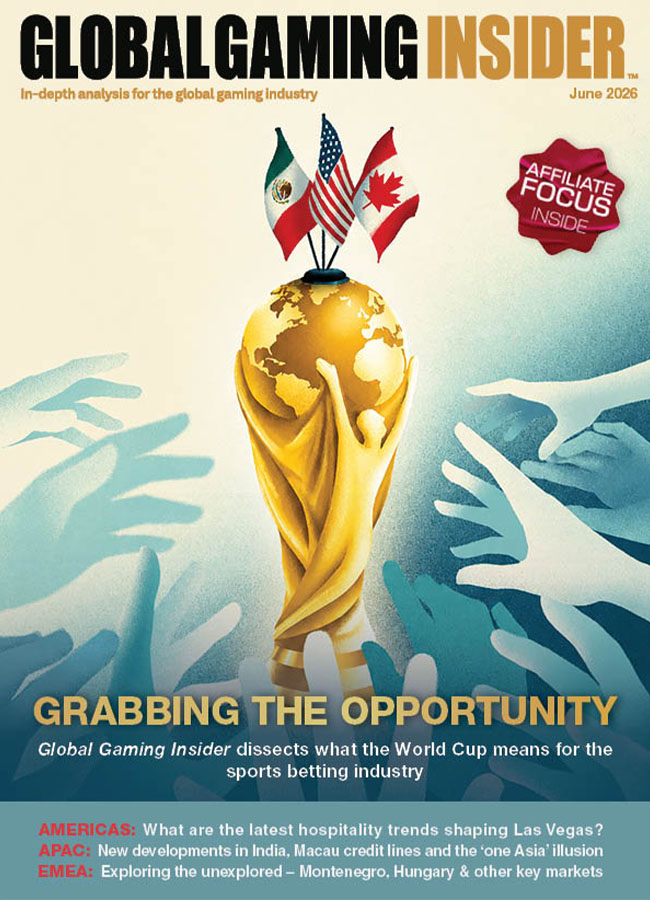
How ready is Mexico for the world’s biggest sporting event?
Andrea Avedillo and Alfredo Lazcano, lawyers from Lazcano Sámano and regular Global Gaming Insider contributors, provide a regulatory reality check for the 2026 World Cup


As the countdown to the 2026 FIFA World Cup continues, anticipation is building not only among football fans, but also across the gaming industry. Mega sporting events have historically driven spikes in sports betting activity, and the World Cup – given its scale, duration and global reach – is the most powerful catalyst of all.
For Mexico, however, the equation is more complex. As one of the three host countries alongside the US and Canada, our country faces a dual challenge: capturing the economic upside of increased betting activity while ensuring that its regulatory framework is robust enough to protect consumers and provide legal certainty to operators. So, is Mexico ready?
A new tax regime: Progress without clarity
In late 2025, Mexico introduced a significant amendment to its tax framework by reforming the Special Tax on Production and Services Law (“IEPS Law”). The reform effectively created a parallel regime allowing foreign operators without a local permit issued by the Ministry if the Interior (Spanish acronym “SEGOB”) to offer services within Mexican territory, provided they comply with certain tax obligations (this is a topic we have previously analyzed in Global Gaming Insider).
On paper, this is a notable development. It acknowledges a longstanding reality: Mexican users already access offshore platforms (unlicensed in Mexico and therefore illegal there), and ignoring this segment entirely is neither practical nor fiscally efficient. By requiring registration, tax payments and reporting obligations, the reform aims to bring those operators out of the regulatory shadows and into the formal economy.
However, the details remain largely undefined. To date, SEGOB has not issued any formal guidance or interpretative criteria clarifying how this new regime will coexist with the existing licensing framework under the Federal Law on Games and Drawings. This creates a fundamental tension: while the tax authority recognizes and firmly regulates foreign operators for tax purposes, the sectoral regulator has yet to signal how it will accommodate them from a gaming law perspective.
This regulatory silence generates uncertainty on multiple fronts. Can offshore operators truly rely on tax compliance as a shield against enforcement? How should locally licensed operators interpret this apparent asymmetry? And perhaps most importantly, what level of consumer protection applies to users engaging with these platforms? In the context of a World Cup, where betting volumes are expected to surge, these are not merely theoretical legal questions, but rather quite practical and realistic ones.
Advertising under the microscope
If taxation reflects a pragmatic attempt to capture economic activity, the legislative agenda on advertising tells a different story. In the first months of 2026 alone, at least seven legislative initiatives have been introduced to regulate advertising related to gambling activities. While the proposals vary in scope and intensity, they share a common underlying concern: the social impact of gambling exposure, particularly among vulnerable groups. This wave of initiatives signals a clear political interest in the topic (likely amplified by the visibility generated by the World Cup).
However, despite this legislative activity, none of the proposals have advanced meaningfully in Congress. The result is a paradox. On one hand, there is heightened awareness and apparent urgency. On the other, there also seems to be a lack of consensus, coordination and, in our opinion most important, engagement with the industry.
This regulatory silence generates uncertainty on multiple fronts
Effective regulation in this space requires more than reactive restrictions. It demands a nuanced understanding of how advertising functions within a regulated ecosystem. Blanket prohibitions or overly broad limitations may have unintended consequences, including driving consumers toward unregulated operators who face no such constraints. In the gaming industry, we know this is a very real risk. In markets where legal operators are heavily restricted in their ability to advertise, illegal platforms often fill the visibility gap. The outcome is often a less transparent, less accountable and ultimately less safe environment for consumers.
The missing piece: A holistic regulatory approach
Taken together, these developments reveal a regulatory landscape that is evolving but it is still not very well-aligned, to say the least. For one, fiscal policy is moving toward inclusion, recognizing the need to capture revenue from a broader universe of operators and to regulate digital platforms. On the other, legislative proposals on advertising risk potentially constraining the very operators that are subject to regulation and oversight.
What is missing is a cohesive strategy that integrates these elements into a coherent framework, and such a strategy would ideally address several key questions: How should Mexico balance openness to foreign operators with the integrity of its licensing system? What constitutes fair and effective advertising in a market with both legal and illegal participants? How can consumer protection be strengthened without undermining the viability of compliant operators? These are complex issues, but they are not insurmountable. Many jurisdictions have grappled with similar challenges and have developed models that combine robust licensing regimes, clear advertising standards, and strong enforcement against illegal operators.
A window of opportunity
The 2026 World Cup presents a unique moment. It will bring increased attention, increased participation and increased economic activity across multiple sectors, including gaming. From a regulatory perspective, this moment can be viewed in two ways: It can be seen as a vulnerability that may expose certain gaps in the current framework and amplify existing challenges, or it can be seen as an opportunity for modernization, coordination and reform.
At present, Mexico appears to be somewhere in between. There are clear signals of progress: the willingness to rethink tax policy, the legislative focus on advertising, and the broader recognition of the sector’s relevance. Yet these efforts remain somewhat fragmented and the absence of clear guidance from key authorities leaves critical questions unanswered.
Are we ready?
So, is Mexico ready for the betting boom that the 2026 World Cup will inevitably bring? The honest answer is not quite, but there is still time.
Regulators have an opportunity to provide clarity on the interaction between tax and licensing regimes. Legislators have an opportunity to refine advertising proposals in a way that protects consumers without empowering illegal markets. And the industry itself has an opportunity to engage constructively in this process, offering insights and best practices from other jurisdictions.
The World Cup will come regardless. The question is whether Mexico will meet it with a regulatory framework that is coherent, balanced and fit for purpose, or whether it will rely on a patchwork of evolving rules that struggle to keep pace with reality.