




























Why Greece’s land-based casinos are betting on reinvention
After exploring Greece’s online market in our last issue, Global Gaming Insider assesses the land-based casino industry’s bid for a fresh start

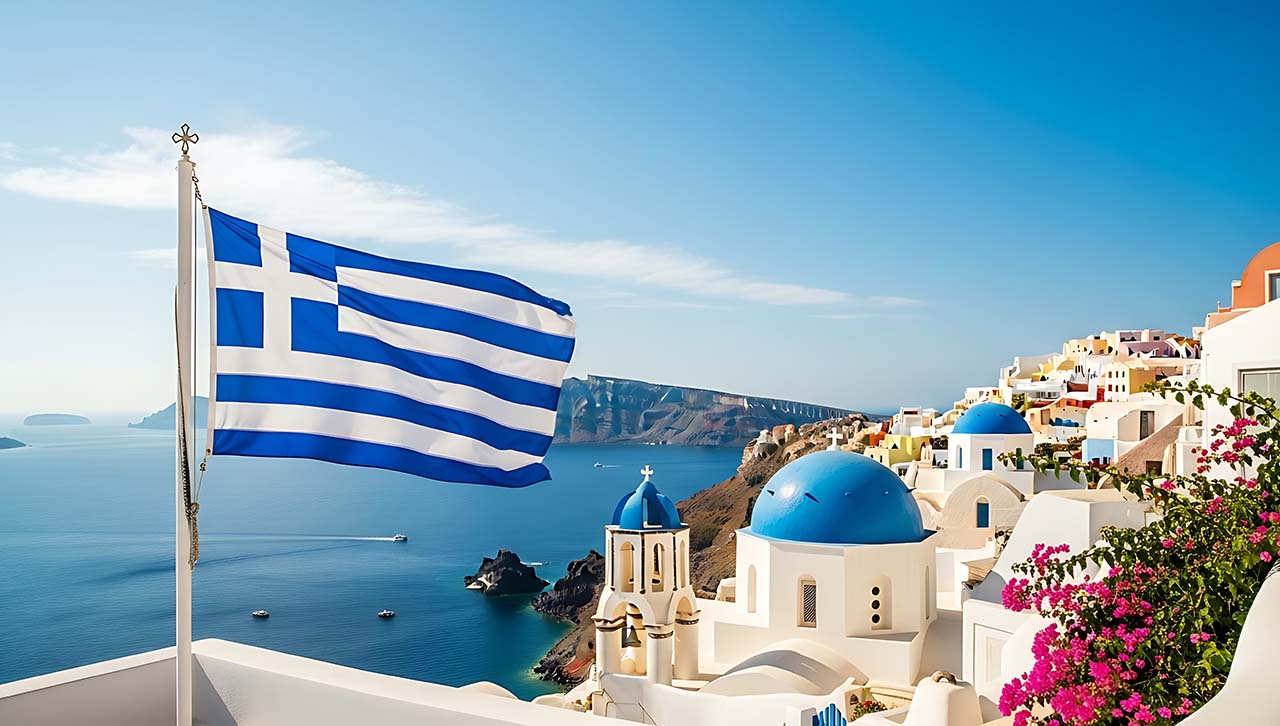
In recent years, Greece’s casino industry has been fragile. While the overall market has recovered since the Covid-19 pandemic, a significant number of operators remain financially unstable. The current Greek model positions casinos primarily as gambling venues, with their operations centred almost exclusively around gaming rather than on a broader entertainment or tourism experience.
Yet at the same time, the country is preparing for the largest transformation in its land-based gaming history. Integrated resort developments are reshaping investment priorities, while the Hellenic Gaming Commission (EEEP) has openly acknowledged that the traditional casino model no longer works in today’s digital gambling landscape.
The result is an industry caught between consolidation and reinvention.
Beneath the growth lies a historically fragile market
The Greek casino sector has shown signs of recovery in recent years. Gross gaming revenue (GGR) reached €252.8m ($292.5m) in 2024, representing a 9.5% increase from €230.8m in 2023. Furthermore, land-based casinos reported a 6% year-on-year increase in GGR for 2025, reaching €268m.
A 2023 study by the EEEP found that only four of Greece’s ten licensed casinos met the positive equity requirements for an EKAZ licence: Parnitha, Porto Karras, Rhodes and Syros. The study examined the financial results of the ten casinos from 2014 to 2021. The remaining casinos were in significant financial distress, with Thessaloniki, Alexandroupoli, Corfu, Rio and Loutraki collectively accumulating over €440m in losses, while Florina had effectively zero equity. According to the Commission’s analysis, during the period 2014-2021, Rio Casino recorded the largest losses, exceeding €218m.
Loutraki Casino was another key example reporting a negative net worth and debts to the Greek state and EFKA. Subsequent restructuring deals with creditors and authorities helped maintain stable operations and avoid closure. By 2025, attention shifted to potential restructuring and investment activity involving assets linked to the Piladakis group, including casinos in Alexandroupoli and Corfu.
Saint George Participations emerged as a prospective buyer and received a suitability licence in mid-2025, with the Chionis family allegedly injecting about €12m to maintain operations during negotiations. No final acquisition has been publicly confirmed, as far as Global Gaming Insider’s aware, but both casinos are still operating.
The contraction of the market reflects changing consumer behaviour
A more concentrated market
By 2025, Greece effectively had nine licensed casino businesses, though only seven were fully operational. The active market included casinos in Parnitha, Loutraki, Thessaloniki, Rhodes, Alexandroupoli, Corfu and Florina. Meanwhile, Syros and Porto Karras retained licences but remained inactive, while Rio Casino permanently lost its operating licence following regulatory and legal proceedings.
The contraction of the market reflects changing consumer behaviour. Online gambling continues to capture an increasing share of the market, placing pressure on smaller casinos that lack the entertainment diversification needed to remain competitive.
Moving to the integrated era
Greece’s largest gaming development is progressing at Elliniko near Athens, where Hard Rock International and GEK Terna are developing a €1.8bn integrated resort project. The complex will include 1,100 hotel guestrooms,180 gaming tables, 1,500 slot machines, a 3,000-seat Hard Rock Live entertainment venue, retail areas and conference infrastructure. Alongside the Hard Rock project, two other integrated resorts are also in development. While smaller in scale and investment value, both projects reflect a shift away from the traditional model of casinos operating as standalone venues.
The relocation of the historic Parnitha Casino to Marousi, north of Athens, has also become one of the country’s important gaming investments. The project, known as Project Voria, represents a €350m development spearheaded by North Star Entertainment. Regency Entertainment remains the key shareholder behind the initiative.
The project is transitioning from licensing into execution. It is designed as a fully integrated resort destination, featuring a five-star, internationally managed hotel, casino, conference facilities and dining and entertainment venues. If timelines remain on schedule, completion is expected in 2027. There will also be an integrated resort in Gournes, Crete. REDS, a subsidiary of the Elactor Group, plans to invest €200m in the development. According to company executives, the project will include hotels with tourist residences, a shopping centre and a casino.
Acknowledging old failures
Perhaps the clearest sign of Greece’s failing casino landscape came in late 2025, when the Hellenic Gaming Commission openly acknowledged the need for a fundamental redesign of regulation.
Speaking during a media briefing, Hellenic Gaming Commission then-Chairman Antonis Vartholomaios admitted that smaller standalone casinos are increasingly struggling in the modern gambling environment. Vartholomaios stated: “Small casinos, given how the gambling landscape has changed with the shift toward the internet, are facing difficulties. Integrated Resort-type models promote entertainment more broadly and, in that sense, are being favoured.”
The next chapter
The Greek casino industry now stands at a crossroads. The coming years will likely determine whether Greece can successfully transition from a fragmented legacy casino market into a modern integrated resort destination. What is already clear, however, is that the era of the traditional standalone Greek casino is failing. However, if an experienced operator such as Hard Rock sees potential in the market, it could be argued that an integrated resort model may succeed. Given Greece’s strong global tourism appeal, this approach could prove more sustainable and better aligned with modern gamblers’ expectations.