





























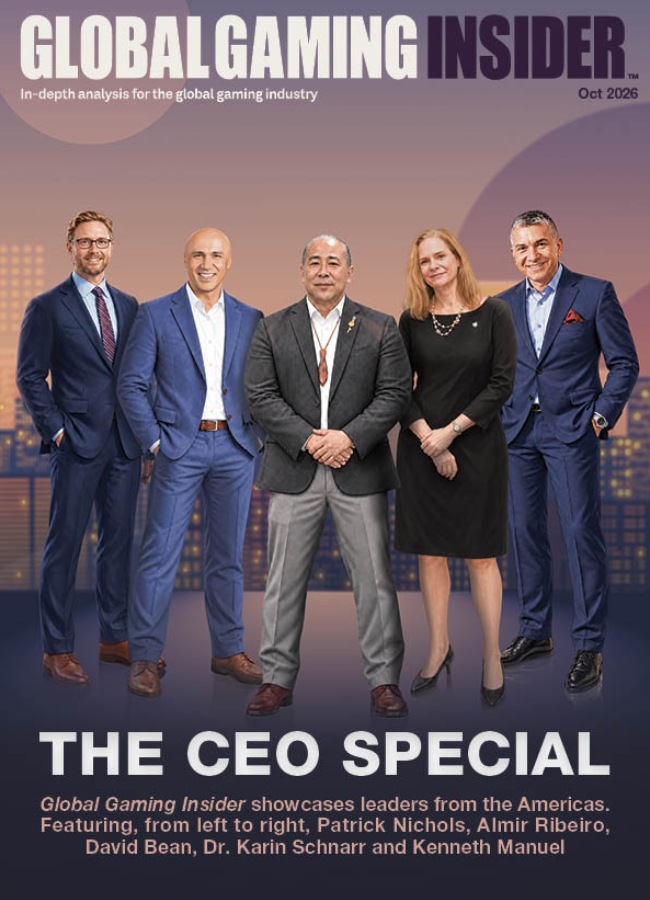
CEO Special: The Venetian's Patrick Nichols explores the changing face of Las Vegas
Patrick Nichols, President and CEO of The Venetian, joins Global Gaming Insider Editor Tim Poole to discuss Cornell, The Cosmopolitan, his perfect night out in Las Vegas and the “three-legged stool” that drives The Venetian forward.

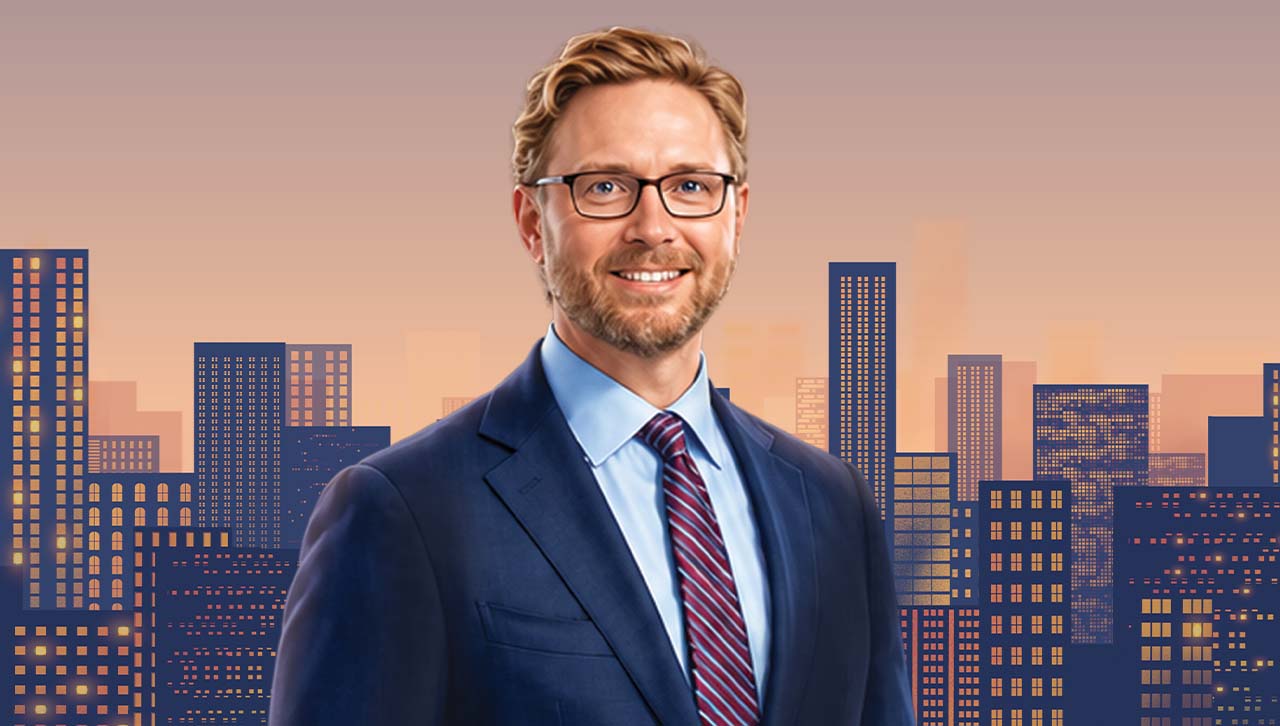
If you’re reading this at the Global Gaming Expo (G2E), consider this your official welcome from Patrick Nichols, President and CEO of The Venetian Resort Las Vegas. In charge of the property since August 2022, Nichols recently celebrated his four-year anniversary at the casino. But, having started as a Financial Analyst at The Venetian & The Palazzo in July 2008, Nichols’ association with the resort goes back much further. Add in time at Singapore with the Marina Bay Sands, alongside almost 12 years at The Cosmopolitan of Las Vegas, and you start to think Nichols was born for the role.
And yet Nichols’ connection with hotels goes back even further. Indeed, when we ask if he ever saw himself running a resort – considering his family history – well, actually, yes...
The family business
“I’ll take you back to the beginning,” Nichols begins his discussion with Global Gaming Insider, speaking from his office at The Venetian. “I think I was in third grade and my parents bought this little piece of land on the Mississippi River Valley in Minnesota, where I grew up. They decided to build a very small hotel, call it 40 keys. One hotel turned into six, all small – nothing compared to Vegas – no restaurants, just hotels and pools. And so I really grew up working in these hotels. My mom was an elementary school teacher who retired from teaching to run them. My dad worked in the financial services industry. It was very much a family business. ”
Among the list of duties a young Nichols and his sister grew up with were: working the front desk, housekeeping, maintenance, painting and putting in Wi-Fi networks. The now-CEO puts genuine meaning behind the phrase “you name it, I have done it.” Perhaps the most interesting fact about this upbringing, however, was that Nichols thought hotel operations were “not for him.” Partly due to family business dynamics and the cyclicality of hospitality, Nichols felt sufficiently put off from the industry.
This continued even upon graduating high school, when Nichols studied at Cornell University. “You know, it’s funny. Cornell, for whatever reason, always gets portrayed as the goofy Ivy League college,” he quips. “Andy Bernard from The Office, Sideshow Bob from The Simpsons both went to Cornell. We’re always picked on.” Admittedly, Nichols attended the Nolan School of Hotel Administration but, again, with “no inkling” that he would run a casino resort one day. His studies were less focused on operations and more on the financial side. Like many of his peers, Nichols harbored aspirations of Wall Street, at the time foreseeing potential pathways into private equity or investment banking.
As events transpired, though, Nichols ended up graduating in 2008 – the year of a global financial crisis, triggered by Wall Street activity that prompted a US housing market crash. “It wasn’t the best time to be looking for a job on Wall Street.” Nichols, instead, came across the aforementioned posting at The Venetian and was back in familiar territory. “I am very, very happy I didn’t end up on Wall Street,” he breathes in a sigh of relief. “In fact, I spend a lot of time back at Cornell speaking to students in different classes. There’s this appeal that Wall Street has when you’re young and you see big numbers. But there is a quality of life and enjoyment that certainly comes with the hospitality business.”
Trial by fire
When the Financial Analyst role became available, Nichols conducted his research on Las Vegas Sands, covering its ethos, property development in Macau and Singapore, and the impact of its Founder Sheldon Adelson. There was only one conclusion: this was a “pretty cool opportunity” in a “really fun industry.” “This wasn’t a limited-service hotel. This was the big leagues,” Nichols reflects. “The diversity of the business – casinos, table games, slots, sportsbooks, poker, hotels, nightclubs, restaurants, bars – was really appealing to me. And in financial planning, you get to see everything. You can see all the numbers; you get to work with different stakeholders who run the business. I would say I learned very quickly.”
I have a poster in my office that says work hard and be nice. That’s my philosophy. Those two simple things go a very, very long way in making someone a successful executive
Although Nichols prefaces that his understanding equated to an “inch of depth,” compared to someone running an individual department who would know it “a hundred feet deep.” Nevertheless, he developed a requisite understanding of how every area of the business works in tandem. This level of knowledge allowed him to “really enjoy” his early time in Las Vegas – and facilitated a move to the Marina Bay Sands in Singapore. Moving to Southeast Asia for a year to be part of the property’s pre-opening team, as Manager of Financial Planning & Analysis, was “great when you’re young, single and can work nonstop seven days a week.” “Never afraid of hard work,” Nichols fell in love with the experience, receiving exposure to different problems and how they were solved by different executives. Nichols still visits Singapore every other year or so, with the Marina Bay Sands remaining a “benchmark” his team looks up to today. But, six months after the Marina Bay Sands opening, Nichols could not resist the chance to open another property closer to home: The Cosmopolitan of Las Vegas.
For context, Nichols’ old Venetian team had moved to The Cosmopolitan, where the VP of Finance was now the CFO and Nichols’ direct boss, Walt Fales, was also a VP. Fales called to inform Nichols they were opening a new resort on the Las Vegas Strip, despite Vegas – in 2010 – facing some of its toughest times to date.
An example of “a lot of trial by fire” in Nichols’ career, he became Director of Strategic Planning at The Cosmopolitan in October 2010. The switch inspired a 12-year career at the property, which culminated in promotion to the role of General Manager & Chief Strategy Officer. It would be his last position before taking charge at The Venetian, although Nichols never held the explicit goal of becoming CEO of a casino. “I’ve always loved every single job I’ve had and would be perfectly comfortable doing it for the rest of my life,” he says. “I love building Excel models and really getting into the business. But as my career progressed, I realized leading a property is something I should think about.”
“Work hard, be nice”
Nichols is grateful to have had “some fantastic mentors and bosses along the way.” He was placed in rooms he “should never have been in” and presented opportunities he “should never have had.” These mentors acted as backstops for Nichols whenever he was lost or needed help. Biggest of all – returning to the very beginning – was the inspiration of both his parents.
“My mom, every day I left for school or work, always told me to be nice,” Nichols recalls. “My dad always told me to work hard. And so I have a poster in my office that says work hard and be nice. That’s my philosophy. Those two simple things go a very, very long way in making someone a successful executive.”
Nichols also looks back on “a couple of wonderful bosses.” Fales taught him the discipline and importance of accurate information and presentation, and to always think about the next question someone’s going to ask. At The Cosmopolitan, there was further influence from both CEOs Nichols worked for: John Unwin first taught him about branding, design and creating “something people want before they know they want it.” Later, Bill McBeath, brought in when Blackstone acquired The Cosmopolitan in 2014, taught Nichols about the design, development and culture of a gaming business.
There was a bonus motivational factor early on in Nichols’ Cosmopolitan tenure too... “What was cool about The Cosmopolitan, despite financial troubles, was a lot of people said it would never work. That gave the team and me an incredible amount of motivation to prove everybody wrong – that this place will work. So we were very tight-knit; the culture was fantastic and we really believed in what we were building.”
Nichols utilized all of these lessons as he rose through the ranks at The Cosmopolitan. Similarly to Bill Hornbuckle, the MGM Resorts International President & CEO who worked his way up through the business, step by step, Nichols ascended every rung of the executive ladder. His roles at The Cosmopolitan, between his first and last, included Director of Business Planning, Senior Director of Strategic Planning, VP of Financial Planning & Analysis, SVP of Strategy and Business Development and Chief Strategy Officer. Plus, Nichols had the front-desk and day-to-day hotel jobs he grew up from his childhood... This holistic combination, tied with his financial planning education, positioned him perfectly for property leadership – especially in Las Vegas.
The three-legged stool
“Coming up from the financial planning side of the business, you’re a partner to all of the operators,” Nichols continues. “Your job is to make them perform as best as they can. When you approach that with a partnership mindset, the operators really bring you into their operations. One person has a different skill set to me – and they’re incredibly financially literate. They think about the business differently than I do. And that balance is, I think, really important. Early in my career, I’d be heavily focused on financial performance. I worked with an operator who said ‘yeah, financials are one piece of the puzzle, but you also have to focus on the guest service side.’ I learned that lesson over many years, to balance my view of how these resorts should operate. There are trade-offs between prioritizing team member experience versus guest experience, versus the financial experience.”
These trade-offs lead us to Nichols’ tried-and-tested operating model. Indeed, he thinks about The Venetian’s business like a piece of furniture. Not a BarcaLounger to relax in, but a precise three-legged stool where each leg must be equidistant and, chiefly, equal in length. “The team member experience is on one leg, the guest experience on another and financial performance on that third leg,” the President & CEO explains. “The goal is to balance the stool. If you get that out of balance, the stool falls over. Every year, it should get taller and taller. All those metrics should improve, but it should be in balance and harmony.”
Nichols admits: “I learned that through being too focused on the financial side of the business early in my career, partially because I started when the financial performance just wasn’t great. When you start in the recession, an all-time low performance, you’re going to be heavily focused on financials. Similarly, at The Cosmopolitan, when the business opened, it was the middle of the global financial crisis, and we needed to turn a $4bn investment into something profitable.”
In terms of operating models, Nichols feels The Cosmopolitan and Venetian are “probably more similar than you’d think.” The scale is very different, with The Venetian holding almost 7,200 suites (compared to around 3,000 rooms at The Cosmopolitan). But the biggest driving factor behind that is The Venetian’s MICE (Meetings, Incentives, Conferences and Exhibitions) business.
The perfect example is US gaming’s biggest annual convention, G2E, held at the Venetian Expo and at which this magazine is mass distributed. Nichols adds: “We have 2.2 million square feet. The Cosmopolitan was a couple of hundred thousand. So our ability to accommodate the largest groups and conventions in the world sets us apart from, really, any resort in the country. That is probably the biggest fundamental difference, the scale and the focus on MICE.”
“It gets a bad rap... but I love private equity”
Nichols feels his tenure at The Venetian so far is, again, “very similar” to that of The Cosmopolitan. For his last seven years at the latter, the property was operated by Blackstone, while The Venetian today is operated by Apollo Global Management. Both represent a private-equity model, which creates a “really fast-paced environment to work in.” The timing behind the ownership transitions of both properties played an important factor in Nichols’ career.
The goal is to balance the stool. If you get that out of balance, the stool falls over. Every year, it should get taller and taller
Once Blackstone had sold the Cosmopolitan to MGM Resorts, after 12 years under two different owners, Nichols felt his work at the property was complete. At the same time, however, Apollo was buying The Venetian from Las Vegas Sands (Sands now only operates resorts in Asia). Four years on, Nichols’ decision to start afresh at The Venetian – but stay with private equity – is one he looks back on with pride.
“I love the private-equity model,” he beams. “I think private equity historically has gotten a bad rap of buy it, gut it and sell it for a profit. My experience has been the exact opposite. It has been significant amounts of capital investment across two casino resorts, significant investment in the team, massive operational improvement and creating a much better business than when we found it. At The Venetian, the strategy has been pretty simple. It goes back to the three-legged stool I talked about.
“First, we are highly focused on taking care of our teams. We have some unique things at The Venetian that, to my knowledge, no other casino offers. For example, every single one of our team members has an equity-like participation in the business. We call it The Venetian Red Coin Program. So, when there’s a change of control at some point and Apollo sells, our team members will receive a portion of the profits. And along the way every year, if we hit our budget and guest service targets, there’s a distribution on an annual basis.
“I believe we have distributed about $4,300 per team member in the last four years. We now have 9,000 or so team members who are all advocates for The Venetian. They’re all owners. They’re all entrepreneurs. To me, that has been a game changer. Another way we take care of our team members is we pay all of our healthcare premiums. So there’s no deduction on a monthly basis for premiums on paychecks, which for a family of four is thousands of dollars a year. It’s a meaningful difference. And the entire model, the reason why we’re so focused on this, is if a team member is focused on how they’re going to put dinner on the table tomorrow night, they’re certainly not going to be focused on the guest experience at that moment.”
On the financial side, Nichols emphasizes a lack of “corporate decision-making.” If he or his team want to make a decision, they make it. Things can move “incredibly quickly,” demonstrated in how much capital expenditure (CapEx) Apollo has thus far invested into The Venetian. A chief benefit is the ability to focus solely on one property, a “huge advantage in Las Vegas,” without having to prioritize across a portfolio of multiple casinos or development opportunities.
As such, Apollo has deployed “north of $1bn of CapEx” into The Venetian over the last four years. The total CapEx plan will be more than $1.6-$1.7bn by the end of 2027 and start of 2028, according to Nichols. The 27-year-old resort, therefore, feels “new.” There are 4,000 renovated suites in The Venetian North and South Towers, while work is being carried out on a new high-end product at the Palazzo. There are new restaurants, new bars, new entertainment and, of course, “new neighbors” in The Sphere. With “happy team members, happy guests and operational excellence,” Nichols feels there is no ceiling for how high the three-legged stool can become.
Las Vegas: The perfect night out
As we approach the final topics of our CEO Special interview, we set a test for Nichols. It is equal part industry question, equal part a fun, lighter segment of our discussion. After all, everything Nichols does as President & CEO of the Venetian is designed to get guests through the resort’s doors. So what would his perfect night in Las Vegas involve – both with and without The Venetian?
... at The Venetian
"I think my favorite night out right now isa fantastic dinner at Cote, which is one of our new restaurants, a Korean steakhouse that’s phenomenal. They have additional locations in New York, Miami and Singapore.
"Then I would check out a show at the Sphere. Backstreet Boys is in the building right now – I saw them recently; they still are fantastic.
"I would wrap it up with some drinks at Electra Cocktail Club at The Palazzo, which is a great ultra lounge and probably the best place to be after any show at The Sphere. It has just incredible energy; a ton of fun."
... without The Venetian
"I would have brunch at a great place like Bardot at Aria. Then I’d walk to Allegiant Stadium, check out a 1pm Sunday Las Vegas Raiders game, and then to the T-Mobile Arena for an afternoon or evening Vegas Golden Knights game – hitting the hotspots along the way."
What else does a CEO do outside the boardroom?
For all our strategic discussion on private equity, our CEO Specials also aim to discover the person behind the executive. For example, what does Nichols do outside of work – if there is such a thing for a CEO? To begin with, he and his wife have two children – a two-year-old and a four-year-old – who keep them very busy (and perhaps a little sleep-deprived). Nichols’ favorite thing to do, plainly, is spending time with his family – aiming to teach his children to “see the world the right way.”
Nichols’ favorite hobby, though? Sailing! His big passion, racing sailboats is one of the few ways the executive has found to completely unplug. “The teamwork, complexity, hydrodynamics, navigation... There is generally no cell service, although Starlink has changed that recently for everyone who enjoys offshore racing! It’s a great way to disconnect and it’s challenging, when you’re focused on making the boat go as fast as possible and not really thinking about anything else.”
Elsewhere, Nichols is very active within his community, focusing particularly on education and food insecurity in Las Vegas. Nevada ranks among the bottom few states nationally when it comes to high school graduation rates. Nichols does what he can in this regard, spending a “significant amount of time” with local organizations who help on the education front, as well as with schools addressing food insecurity.
We are highly focused on taking care of our teams. We have some unique things at The Venetian that, to my knowledge, no other casino offers
“We have put into place a number of great programs here at The Venetian, the first of their kind, really, to redeploy unconsumed food from large banquets and events, package them up into meals, flash freeze them and get them out to the community through our partner, The Just One Project. So we redistribute hundreds of thousands of meals a year. I think last year the Food Rescue Alliance distributed north of 250,000 meals to the community. That is very important to me.”
Lastly, Nichols is involved with the Board at the Campus for Hope Foundation, which represents a new facility being built in Las Vegas. The aim here is to tackle Vegas’ homelessness problem, without focusing only on housing, but getting people back to being productive, functioning members of society – via healthcare, childcare, education and job placement. The community element is” incredibly important” to Nichols and his wife: “We spend a lot of time on it personally and through The Venetian.”
The big question: Where next for Las Vegas?
Of course, there is one big topic we are yet to discuss with Nichols... Since 2025, Las Vegas has been the subject of endless headlines and column inches – many of them for the wrong reasons. Last year, Las Vegas visitation fell 7.5% year-over-year to 38.5 million, while gross gaming revenue for 2026 grew just 1.2% to $15.6bn – with cracks starting to show. December 2025 and January 2026, for example, both saw gross gaming revenue fall – the latter by as much as 6.5% to $1.34bn. There were external economic and policial pressures, naturally, but other factors – like excessive food & beverage pricing and hidden fees – have been endlessly emphasized by influencers declaring the end of Las Vegas as we know it.
The truth, of course, is somewhat more measured – with numerous Nevada-based executives speaking to Global Gaming Insider about how Las Vegas has and always will bounce back. Leading a high-end property at the heart of the Las Vegas Strip, Nichols is well positioned to give his take. “Like most businesses, there is cyclicality to Las Vegas,” he explains. “That’s nothing mind-shattering: everybody knows that about Las Vegas. Following four years of pent-up demand coming out of the Covid-19 pandemic, when I go back and evaluate it, 2025 was really the return of seasonality to our market – coupled with a disconnection in the broader Las Vegas value proposition. I think there are plenty of resorts, including The Venetian, where the value proposition was intact. I’d say there were others where pricing and the experience – that formula was not synced up.
“We saw demand soften, but the value segments of the hospitality industry domestically, across all major metropolitan statistical areas, also saw declines in average daily rates and occupancies. Then you combine that with this disconnected value proposition at the lower end of the market. I’m going to use a buzzword – but you think about the K-shaped economy. The high part of the K, the luxury segment, has performed incredibly well in Vegas and nationally, whereas the value side has struggled. So you get the seasonality, you get the disconnected value proposition. You have a couple of unique things to Vegas, with some of our discount suppliers cutting inbound flights. It made for a perfect storm in 2025.”
Considering the source, it is Nichols’ job as a Las Vegas Strip CEO to offer hope. But, considering the logic involved, he is not exactly wrong in doing so. Seasonality has returned but Nevada has seen tougher times in the past, including when Nichols first entered the region post-financial crisis. The market has “not just sat, scratching its head” and several strategies have now been put in place. Nichols openly admits those strategies show Vegas “got it wrong as a destination” and that the “price value proposition was out of sync.” But operators took note, acted and Nichols expects stronger Q3 performance as a result – with Q2 results already showing relative growth, while visitation has grown in recent months. He concludes: “I think we found the bottom. We had a great couple of years of pent-up demand coming out of Covid. And now it’s back to the typical cyclical seasonality. To me, it’s a reversion back to the mean.”
Nichols’ confidence is additionally underpinned by the “immense amount of young talent” in Las Vegas. Not only is Nichols a young leader himself, the team in place at the Venetian has youth on its side. Nichols is thus given “great confidence” by the pipeline of talent in Las Vegas who will be “running this town” in the future – and their “incredible passion” for the business.
As for the here and now? Nichols has stated his case. MICE continues to drive The Venetian forward, while Las Vegas has taken stock of 2025’s “seasonality” issue. Private equity is unlocking for Nichols the quick decision-making so often celebrated by Tribal operators – and bemoaned for its absence within larger corporations. Utilizing those advantages, this Las Vegas Strip leader will stick to his personal operating model. If the team remains happy, the guests keep returning and financial performance continues to grow, that three-legged stool will only keep rising.