
































The Golden Nugget at 80: Celebrating the casino that transformed Las Vegas
Oliver Lovat, Las Vegas expert, Denstone Group CEO and longtime Global Gaming Insider contributor, forensically examines the 80-year timeline of The Golden Nugget. Not just any old property, The Golden Nugget has shaped modern American gaming history – in more ways than one.

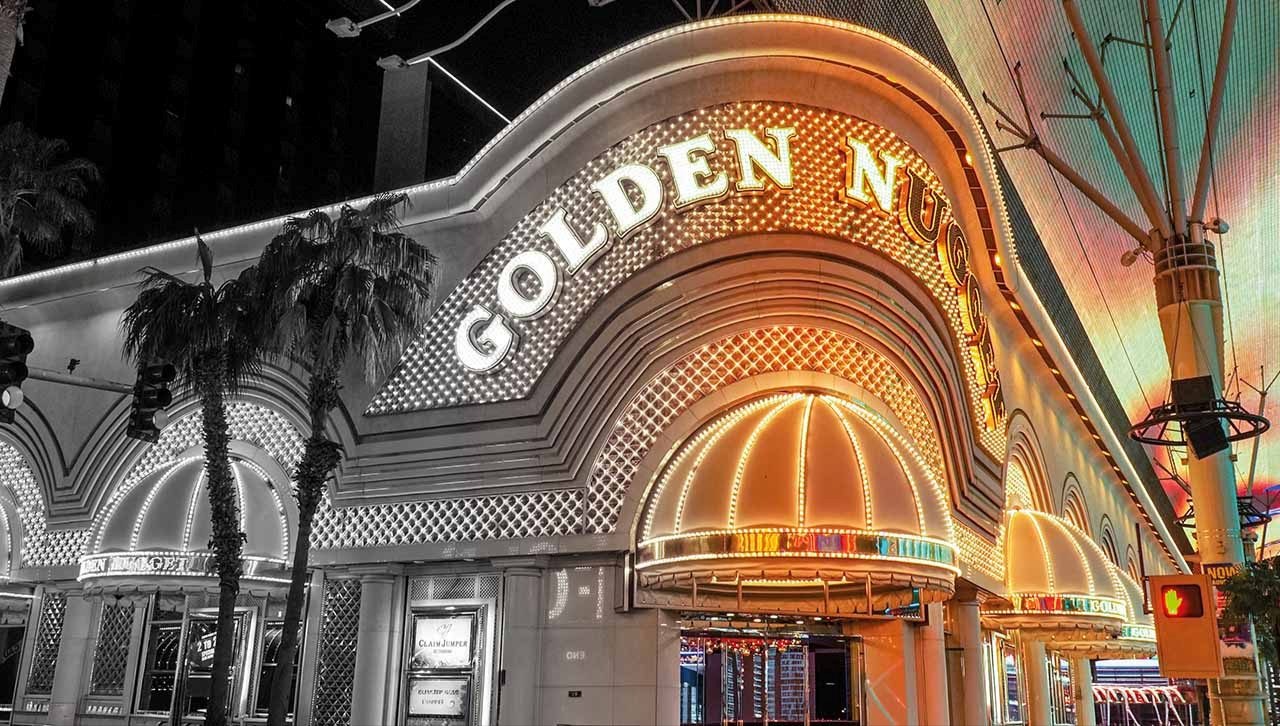
- The Golden Nugget turned 80, marking eight decades of influence on Downtown Las Vegas and the wider American gaming industry
- Steve Wynn transformed the Nugget from a modest Fremont Street casino into a model for modern casino management
- Under Tilman Fertitta, the Golden Nugget became a scalable national brand, combining casino operations with established hospitality concepts
2026 celebrates the 80th anniversary of the Golden Nugget Gambling Hall on Downtown’s Fremont Street. It is increasingly evident that this once inconsequential gambling saloon has had the most substantial impact of any casino in American gaming history.
Events at The Nugget have formed the basis of modern strategic thinking in casino management, shaped the nature of modern hospitality operations and design, and are the acorn that has sprouted dozens of industry executives and several multi-billion-dollar gaming companies.
Gamekeeper turned poacher
In the pantheon of controversial characters to operate casinos in Las Vegas, Guy McAfee remains among the most notorious. As the head of Los Angeles’ Police Vice Squad in the 1930s, McAfee had the responsibility to curtail the same brothels and gambling saloons he was illegally operating. After his criminality was exposed in 1938, McAfee was forced to depart LA along with several underworld colleagues and friends. Obviously, he arrived in Las Vegas.
With no hotels on “The Strip” – a term he claimed first to coin for Highway 91 – McAfee initially acquired the Pair-O-Dice Club, then obtaining interests in other gaming and drinking operations across the city, notably The Pioneer Club on Fremont Street. By 1945, McAfee had developed sufficient relationships, capital and appetite to build his own casino club from the ground up. With backing from a group of investors and friends, including former construction worker Gilbert “Buck” Blaine, McAfee built the Golden Nugget Casino at 129 East Fremont Street, themed in homage to the gambling halls frequented by Gold Rush speculators and frontiersmen of the mid-19th century.
The property opened on August 30th, 1946. Despite having no guestrooms, it was immediately profitable and the casino expanded to neighboring real estate. In 1948, the famous “Golden Nugget Gambling Hall, 1905” sign was added, dominating the intersection of Fremont Street and what is now Casino Center Blvd.
It was claimed that points in the property – and beneficiaries of the skim – ranged from known mobsters such as Moe Sedway, to influential lawyer, politician and Founder of The Bank of Las Vegas, Cliff Jones. The operational and ownership status of the casino at this time was opaque. However, we know that McAfee controlled the property as both General Manager and President.
Every successful casino that has been built on the planet, in the past 30 years, from Mississippi to Macau, has taken architectural inspiration and design features that originate from the Golden Nugget
We also know that the company structure was changed around 1950 to allow Golden Nugget’s shares to be publicly traded, a rarity in the industry, facilitating the exit of some of the investment group and enabling access to others, including fellow casino owners Jake Kozloff and Beldon Katleman. McAfee and his friend group further invested, acquired and traded several more casinos, notably The Last/New Frontier on the site of McAfee’s Pair-O-Dice in 1955.
After McAfee’s death in 1960, Blaine assumed control of the company. He made further expansions to the footprint of the property over the following decade. The Golden Nugget remained profitable, despite the assumed skim. Still without a hotel, it remained a junior player in the market, existing in the shadows of The Mint and Binion’s Horseshoe, opposite, The Four Queens next door, and the new The Union Plaza, rising from the site of the train station, just one block away.
By the end of the 1960s, several of the founders and owners of Las Vegas’ casinos were exiting their positions, many guided by the hand of Cliff Jones’ Bank of Las Vegas’ successor, Valley Bank, then led by E. Parry Thomas and Jerome Mack.
Enter Steve Wynn
Steve Wynn moved to Las Vegas in 1967 to become slot manager in the newly reopened Frontier Hotel and Casino, where he had acquired 3% of the company – thanks to an introduction from Maurice Friedman, a family friend. Within months, Howard Hughes acquired The Frontier as part of his acquisition spree, with Valley Bank’s Thomas leading the deal on behalf of Hughes. Wynn’s part-ownership, and his job, were eliminated.
Prepared to leave town after such a disappointing experience, Thomas persuaded Wynn to stay in Las Vegas after the Frontier sale and assisted him in finding an opportunity in the liquor business by acquiring Best Brands (also trading as Wynn Distribution). Thomas engineered a deal with Riviera owner Meshulam Riklis for Wynn to receive the distribution rights for liquor company Shenley, which Riklis also owned. Again, with Thomas’ assistance, Wynn and partner Abe Rosenberg were able to trade a parcel of Howard Hughes’ personally owned land adjacent to Caesars Palace, flipping the site for over $1m in profit.
In 1969, with the new Corporate Gaming Act in place, Continental Connector, a listed company, merged with The Dunes Hotel in Las Vegas, and E. Parry Thomas was made Chairman. Perhaps with the belief that Continental was to move for Golden Nugget, Wynn bought shares in the holding company of The Nugget, hoping for another quick turn.
The Continental deal fell through, but Wynn continued to acquire stock for several years. Around 1971/1972, both Wynn and former Caesars Palace casino manager, Jerry Zarowitz, whom Elaine Wynn recalled knowing from Miami, had acquired sufficient positions to face off for control of the casino. Zarowitz had a long and contentious history with the Nevada Gaming Control Board, who had branded him a man of “notorious reputation.” Others who knew him were not so polite!
With Zarowitz’s inability to achieve licensure, and Wynn’s suitability for such, Wynn was able to form a consortium (again thanks to both Thomas and Rosenberg) to acquire further stock of The Golden Nugget; by June 1973, Wynn was made a Director and an EVP. In 1972, the company reported annual revenue of $19m, with $4m of profit. With the induced retirement of The Nugget’s President, Buck Blaine, who had been on property since opening day, by August of that year, Wynn (and Thomas) had arranged for a new board of directors and a shareholding group that included industry insiders such as Jackie Gaughan. Wynn became The Golden Nugget’s new CEO and President and was, now, in the casino business.
Becoming Steve Wynn
It immediately became clear to all present that The Golden Nugget had endemic corruption that needed addressing before any real work took place. It was reported that within the first year of Wynn’s ownership, over 160 employees were fired and, in some cases, entire departments were reconstituted. Developing robust management systems and fostering employee trust became paramount to Wynn’s thinking, which was to evolve into a high-culture management thesis.
Knowing that the existing operations and strategy at the property needed an overhaul, Wynn planned his first redesign of the casino floor with architect Fred Doriot, (removing elements of the western theme). He proposed The Golden Nugget Rooming House, a 19-story, 576 guestroom addition, a new parking garage, and the introduction of restaurants, Zachariah’s and Lillie Langtry’s. The Golden Nugget’s first hotel tower opened in 1977 and, in 1978, the Golden Nugget Inc reported $43m in revenue and $12.3m in profit.
Wynn had also started building a team. Trusted colleague “Bob” Maxey, who Wynn employed at Best Brands, was onboard and, over the next several years, many friends arrived from outside the casino industry. Both Steve and Elaine’s brothers, Michael Pascal and Kenny Wynn, joined the new family business. Peter Thomas, son of Parry, Doug Poole and Clyde Turner, assumed key financing and administration roles before the end of the decade. The Nugget was doing well, but the opportunity for Wynn to go back east and bid for a license in Atlantic City was compelling.
Although not the subject of this essay, the development of The Golden Nugget in Atlantic City was formative to the fortunes of the Las Vegas namesake. Opening the (relatively small) 506-room resort in late 1980, in short order it was the highest-grossing casino in the largest gaming market in the country (as, by 1981, Atlantic City was outperforming Las Vegas).
TV commercials featuring Wynn and Frank Sinatra, who had signed a 40-date deal across both Golden Nuggets, made Wynn a very public face, perhaps the best-known casino owner in Atlantic City, until Donald Trump entered the market.
Positive experiences lead to positive memories. Positive memories lead to loyalty. Loyalty leads to business sustainability
Moreover, operating in two markets with an ambitious and demanding owner, The Golden Nugget needed to grow and professionalize internally. Without E. Parry Thomas, Wynn formed a financing partnership with (another Riklis associate) Michael Milken. He employed the talents of Joel Bergman, Brad Friedmutter, Peter Smith, DeRuyter Butler and Paul Steelman at the in-house Atlandia Design. Across operations, the company hired longtime family friend, Charlie Meyerson, and executives Bobby Baldwin, Arte Nathan, Marc Schorr and Barry Shier joined The Nugget throughout the early 1980s.
The combined input of designers, executives, employees and capital, and the implementation of the culture and systems formulated in Las Vegas’ Golden Nugget, were to prove highly impactful for the company’s growth and the future of the gaming industry. In 1983, The Golden Nugget Inc reported $38.9m in annual profit, and the company planned expansion at both its Las Vegas and Atlantic City resorts.
Midas years
Influenced by the design and operational principles of Wynn’s friend, Jay Sarno, and trusting his own good sense, the new Golden Nugget was ready to apply elements of fantasy, spectacle, theatre, fun and entertainment, in the context of modern luxury and hospitality delivery, translated to design by Atlandia, aided by Henry Conversano.
With the team in place, in 1983, The Golden Nugget acquired neighboring properties and commenced a full remodel and repositioning of the property. This was to be perhaps the most creative, daring, innovative
and formative period in the history of the casino industry.
Around the table was the finest team of casino architects ever assembled, alongside executives from both the Vegas and Atlantic City properties, discussing – but not always agreeing – the ideas, principles and strategies that were to form the business model for decades to come. The results were changes throughout the operating verticals, with standards, practices and training levels implemented that were ahead of anything in the industry.
Gone was the neon; Wynn hated it. Likewise, the historic 1948 sign went. In came the white exterior with a reported 50,000 lightbulbs. The 19-floor Spa Tower and showrooms were added in 1984. Notable for the penthouses (forerunners to the villas) and duplex suites, the room product was elevated significantly to become among the finest in the city, easily bettering anything in the Downtown market. The interior designer selected for the rooms was E. Perry Thomas’ son, Roger Thomas, who was to begin a relationship with Wynn that would run for nearly 40 years, elevating Thomas to one of the leading interior designers in the world.
“The magical pool and cabaret that were created were among the greatest environments ever conceived for a Downtown hotel casino. When the entertainer opened the curtains to reveal the pool, the effect was magical,” recalled architect, Paul Steelman. The grand opening of the New Golden Nugget was in 1985.
When recording of market data began in 1984, the entire Downtown Las Vegas (DTLV) market generated revenue of $565m, of which $411m was from gaming, $21m from hotel and $57m from food.
In 1986, phase one of the south tower expansion opened, adding 816 rooms, with a further 500 rooms added to the inventory over the next two years. The following year, the company completed the sale of The Golden Nugget Atlantic City for $439m, with a renewed focus on developing in Las Vegas. By the end of 1988, The Golden Nugget Las Vegas had 1,930 rooms.
Atlantic City offered glimpses of the potential revenue that could be achieved, plus the results of ideas in Las Vegas and the small Golden Nugget built in Laughlin, so the team started work on The Strip Golden Nugget – the property that would ultimately become The Mirage. The Nugget team had already been enhanced, with a roll-call of future industry leaders and Hall of Famers, notably Bill Hornbuckle, Bill McBeath, Chris Flatt, Troy Mitchum, Bob Sheldon, Scott Sibella, Andrew Pascal, Rob Oseland, Trevor Scherrer, Debra Nutton, Alan Feldman and Maurice Wooden (as well as too many others to individually mention) all joining the Nugget employee base around this period, in preparation for the company expansion.
Golden Nugget Inc was renamed Mirage Resorts, with the Strip property opening in November 1989. In 1990, the company reported revenue of $909m and EBITDA of $188m. The financial power of what was possible in the Las Vegas casino business was laid bare. However, there was a cost; with many of the Nugget’s staff and much of the high-end custom moving over to Wynn’s newer property, it was reported that the Nugget’s revenue was down 21%.
Focus on non-gaming resulted in the Golden Nugget at one point making more money than all of the casinos on Fremont Street combined
This was not just affecting the property, but the entire DTLV market, which The Nugget dominated. After a challenging period where veteran operator Dennis Gomes joined and left the property, Mirage EVP Barry Shier was parachuted back Downtown with dual responsibilities on The Strip and as The Nugget’s President and CEO, where he had to revive both the property and the Downtown market.
Shier reflected, “The problem we had at The Nugget was that, by the late 1980s, we were constrained by the footprint. We had focused on operations and refined all aspects of the customer experience, delivering leading rooms, amenities, restaurants and environment, but there was a ceiling to what we could offer Downtown. At The Mirage, we could raise that ceiling significantly – and we did. Coming back to The Nugget in the 1990s, we observed that some customers preferred the more intimate experience found Downtown. And, once again, we returned to our fundamental principles of great service, leading product and a unique place for our guests to visit; and they continued to reward us with their loyalty.”
Under Shier, The Nugget led the renewal of the area, playing a key role in the design and delivery of The Fremont Street Experience and the illuminated canopy, which opened in 1995, in time for the Nugget’s 50th anniversary the following year.
The introduction of The Fremont Street Experience experiment worked, maintained market relevance and, despite several new resorts on The Strip with thousands of new rooms, in 1997 DTLV’s gross revenue crossed the $1bn threshold for the first time at $1.14bn. That year’s gaming revenue of $687m remained unsurpassed until 2021.
New owners
On March 6, 2000, it was confirmed that MGM was to acquire Mirage Resorts for $4.4bn. At that time, it was the largest casino transaction in history and subsequently proved one of the greatest bargains. It was reported that Abe Rosenberg’s $300,000 in backing Steve Wynn in 1973 yielded him $75m. Wynn’s 12% of the company was valued at over $480m.
Kerkorian’s MGM had never operated Downtown Las Vegas. Although many MGM-Mirage Executives (both new and old) had learned their craft at The Nugget, the ambitions and resources of the new company were to be focused on the larger Strip resorts and integrating thousands of new employees in a merged corporate entity.
Steve Wynn and Frank Sinatra were very visible promoters of the Nugget in the 1970s and 1980s, redefining the brand as elegant, aspirational fun, away from the pioneer nostalgia envisioned by McAfee. Perhaps only Caesars Palace and The Sands held greater resonance in Americana.
In hindsight, MGM missed a trick by not appreciating the value of the Golden Nugget brand, particularly in US regional markets. It could have been translated in a way that the uniqueness of Bellagio, MGM Grand and Mirage as destinations could not be replicated outside of Las Vegas. At MGM, with multiple assets in the portfolio, the essential role that The Nugget had played in the Mirage development structure (both from a training and testing perspective) was deemed no longer necessary.
MGM sold the property (and Golden Nugget Laughlin) to internet entrepreneurs, Tim Poster and Tom Breitling, in 2003 for $215m. Considering that, a year later, Tamares was to acquire Jackie Gaughan’s portfolio, including The Plaza, Las Vegas Club, Gold Spike, Western and much of the retail on Fremont East, totaling around 40 acres, for $82m, this was no fire-sale acquisition.
Breitling and Poster understood the internet and new media. The duo had previously sold Travelscape.com to Expedia, parlaying profits into The Nugget. Under the new owners, the property became visible again as part of the reality TV boom. Relying on the historic nature of the brand, they believed customers would have nostalgia for the grande dame of Downtown Las Vegas. As The Sands, Desert Inn and even The Mirage prove today, embracing nostalgia alone is a challenging strategy to adopt as a differentiator; operational delivery is key and the duo without casino experience discovered the challenges of managing a property on Fremont Street. Moreover, running a casino did not guarantee financial upside, but did guarantee scrutiny and stress!
For those that study the evolution of Las Vegas, the gaming and hospitality industry, strategy formulation, delivery and impact, there is no single casino has had such an impact
Breitling recalled, “Tim [Poster] and I really understood the travel business and the growth of Las Vegas. Having attended nearly every one of the new property openings in the 1990s and 2000s as part of the growth of our travel company, LVRS and Travelscape, we studied the market on a daily basis to understand room rates, industry trends, casino opportunities with limits and odds, and that the real ‘hook’ in the business were personalization and the personalities running the properties. It really helped that we saw the power of the internet early on, embraced the development of new technology, and were the first travel company to offer online room rates for Las Vegas. We were operators – not developers of technology. We knew what technology could do and we embraced it to the fullest, but we enjoyed operating and building businesses.
“There was a lot of attention on us as new casino owners when we bought the Golden Nugget, but we realized the value of having a great team, and kept Maurice Wooden and his leadership team in place to help us run the operations of the property while we got up to speed on all of the details. We had to think differently with our marketing efforts and took the approach of bringing vintage Vegas back to the industry – and respecting the rich history of one of the most storied brands.”
Tilman Fertitta was watching Las Vegas. Based in Houston, Landry’s had successfully operated restaurants across the country, investing in recognized brands, standardizing operating procedures and rapidly scaling operations. The company’s Las Vegas footprint was already proven, as part of its then 300 restaurant unit portfolio. In 2005, Fertitta made the move into gaming, with the brand equity found at The Golden Nugget making it highly desirable.
Breitling reflected, “We had no intention of selling the properties, but Tilman Fertitta essentially paid us $340m for a company we paid $215m just 18 months prior. Our intention was to build a meaningful gaming company, like what Tilman eventually did with the Golden Nugget brand, and use the Las Vegas property as a launching pad. The deal from Tilman, though, was just too good to pass up. If he didn’t pay us what we wanted, we would’ve still owned the company. Tim and I made a profit of $113m, a 226% profit on the $50m we invested. That was more money than anyone in Downtown Las Vegas had ever made, faster than anyone had ever made it (up until 2005). On the flip side, it was the entryway for Tilman into the industry – and he would go on to create billions in value over the next two decades.”
Everything looked golden in 2005, but The Great Recession’s cumulus was forming. Between 2005 and 2011, Downtown revenue would fall from $1.1bn ($658m in gaming) to $900m ($496m in gaming). Downtown Las Vegas was in trouble again, and The Nugget was particularly exposed.
Landry’s at The Nugget
There is little doubt that Landry’s has its formula perfected. From steakhouses to aquariums, the company is a leader in hospitality operations. At The Golden Nugget, the footprint allowed Fertitta to integrate his existing chain businesses within and, shortly after acquisition, the property adapted to test a new template.
Already an important driver of differentiation, the Golden Nugget’s pool was enhanced with an aquarium, featuring sharks... Until Circa Swim was added, it was the dominant pool area in the market. Vic and Anthony’s became the anchor steakhouse, followed by Saltgrass as a second steakhouse. Grotto Italian, Claim Jumper and Chart House were added to the restaurant mix. However, the most notable addition to the footprint was the introduction of the Rush Tower, a 500-room upscale tower completed in 2009.
With the Golden Nugget, Fertitta had a nationally recognized casino brand, his food & beverage brands operating successfully within and, perhaps most crucially, proof that his strategy could work.
There was a clear market position, a proven design aesthetic, operations and more importantly, The Nugget could be imported to other markets with a cachet that few other casino brands could offer. In addition to Las Vegas and Laughlin, under Fertitta, the Golden Nugget brand can now be found in Lake Charles (former Ameristar), Danville, Lake Tahoe (original Sahara), Atlantic City (former Trump Marina), Biloxi (former Isle of Capri) and Cripple Creek (former Wildwood). The properties share common design features, standards and hospitality brands.
With the strategy proven, this has allowed Landry’s to achieve efficiencies in acquisition, generate greater equity as part of a portfolio or the opportunity to repeat the strategy with another company – which may be the rationale for a potential Caesars acquisition.
With an architectural practice on multiple continents, Steelman has worked with many leading global gaming visionaries, including Fertitta. “Today, the Golden Nugget remains truly one of a kind in Downtown Las Vegas, with revenue and profit exceeding those of many Strip resorts. What Tilman has accomplished there, and the value he has created through seven Golden Nugget casinos, is absolutely incredible.” In what was initially considered an expensive transaction, Fertitta’s Golden Nugget acquisition has proved a shrewd piece of business.
Golden lessons
As a development and strategy professional, I frequently reflect on the evolution of various aspects of this industry. And there is little doubt that, when we assess the industry today, the role of The Golden Nugget is pivotal. The origins of The Nugget were not uncommon for the time, although of McAfee’s various casino “investments,” only the Nugget has endured. McAfee’s contribution to this legacy is location, and location alone.
Situated in an area that had strong customer footfall, thanks to the initial proximity to the train station and the cluster of properties around the saloon, this allowed it to be more accessible than the Strip. The angle of “theming” the property may have initially been an effective marketing tactic enticing customers in; it was not enough to be a sustainable driver of competitive advantage. However, under both McAfee and Blaine’s management, the property served its purpose; it provided a source of income to the ownership groups.
There were other casinos in the area around the early 1970s of various sizes and with variance in longevity. Many are just memories. The Nugget could have gone the same way, if not for the arrival of Steve Wynn. Wynn’s ownership is of interest to strategic thinkers, as the early changes grew profit from $4m to $39m in just over a decade. His second decade is about the effective delivery of that strategy, where the casino became the roots of a multi-billion-dollar corporation.
In his 2014 address to G2E, Wynn isolated the strategic dilemma facing the property: “When I got to the Golden Nugget as a young guy, I thought to myself I’m just one of the gang here and therefore I really don’t have a way of exceeding the average revenue stream… that wasn’t satisfying to me, so we began a journey that has brought us to today, where we’ve developed some thoughts on the subject. The mentality of Fremont Street made us realize then that gaming revenue was an effect not a cause.”
In determining that the effect, Wynn set about deconstructing the “cause:” “It’s about things that give people a chance to live big; that’s what they come here for (to Las Vegas) that’s what they want… If you give it to them, you’re going to be okay, and if you forget it you’re just a passenger on a bumpy road of economic cycles.. you’re just as good as until the next guy opens up down the street, and I don’t like that. I don’t like any business where all you’ve got to sell is price. It’s a fool’s game. You’ve got to give people something they’re willing to pay for, to give people something they’re willing to get on an airplane and submit to a body search for… and that ain’t a slot machine friends, and it sure as hell ain’t a baccarat table.”
In hindsight, MGM missed a trick by not appreciating the value of the Golden Nugget brand, particularly in US regional markets
Done well, customers would feel validated about their decision to visit The Golden Nugget, would want to stay for longer at the property… and, most importantly, would want to come back. Positive experiences lead to positive memories. Positive memories lead to loyalty. Loyalty leads to business sustainability.
For the first time, Wynn specifically identified and codified the psychological element in the casino environment; customers needed to feel valued on an individual level and, in a practical context, this was isolated to three verticals.
- Employee cultural excellence
- Investment in non-gaming experiences
- Unique placemaking
With this thesis, Wynn set about developing (and hiring) the capabilities to deliver, both at Atlandia and within The Nugget’s executive team, many of whom were more proficient at delivering this vision than Wynn himself. The mission was inculcated throughout the property, from top to bottom.
Starting with a summer job in the mailroom in 1985, Troy Mitchum graduated to warehouse, then valet. The company paid his college tuition as he progressed through management positions. “The hospitality culture was embedded throughout the company, with both peers and guests all treated like family. Over time we developed one-on-one relationships, which guests appreciated, and they returned to repeat their positive experiences at the property. Lessons I learned from the Nugget are valued, and throughout my career I have relayed those to new employees joining the industry.” Today, Mitchum is an executive at Wynn Resorts.
The Nugget’s 1983 development cycle saw this strategy effectively implemented in Las Vegas. Wynn explains, “At the Golden Nugget we spent $200m or more on a street where people spent $50-60m. We spent that money on rooms and restaurants, attractions and entertainment that had little to do directly with gaming but they brought people who are interested in experiential moments who also found time to gamble while they were doing it. This focus on non-gaming resulted in the Golden Nugget at one point making more money than all of the casinos on Fremont Street combined.”
Whereas Wynn translated this strategy to different, bigger and more ambitious projects, Fertitta captured it and rolled it out, nationally. Every successful casino that has been built on the planet, in the past 30 years, from Mississippi to Macau, has taken architectural inspiration and design features that originate from the Golden Nugget.
Every single training standard or best practice in the industry can be traced to the culture heavy approach that was codified at The Golden Nugget. Every one of the 40 million annual visitors that come to Las Vegas and is wowed by the spectacle and the range of experiences that is before their eyes, is enjoying the legacy of a strategy first deployed at The Golden Nugget.
Every list of industry CEOs, casino presidents and gaming executives of the past 40 years, whether working in Las Vegas, regional, national, Tribal and global gaming companies, will feature those schooled at The Golden Nugget. And, even today, when there are corporate mergers, acquisitions and casino transactions, the aspiration for all is to have some of the success started at The Golden Nugget.
For those that study the evolution of Las Vegas, the gaming and hospitality industry, strategy formulation, delivery and impact, there is no single casino has had such an impact. Happy 80th birthday – everything is Golden!
Oliver Lovat is the CEO of the Denstone Group. He consults on development and the strategic positioning of casino resorts. He lectures and writes about the evolution of Las Vegas and Competitive Strategy