





























Building responsibility into the product
Jan Fencl, Responsiblo CEO & Co-Founder, explores the potential of bridging the gap between sports and gambling by utilising the tool of responsibility.

There has always been a natural connection between sports and gambling. Both are built on competition, excitement, skill and the desire to test one’s limits. Over time, this relationship has grown stronger. Gaming draws inspiration from the sporting world, while sports increasingly relies on the engagement and community that gaming provides.
As these two worlds continue to overlap, so does the shared responsibility to keep the experience healthy and sustainable. It is no longer just about compliance or image – but about trust, culture and the future of engagement itself. From my experience, building responsible innovation at the crossroads of technology, gaming and sport, I have learned that this connection is both powerful and delicate. However, when guided by responsibility, it does not restrict the experience. It makes it better.
Sports and gambling rely on the same energy. Both depend on emotion, strategy and the human need to compete and belong. Sponsorships, shared audiences and new forms of fan engagement have made the two industries almost inseparable. The early days of the Covid-19 pandemic made this dependence clear. When live sports came to a sudden stop, it was not only stadiums that went quiet. Entire ecosystems built around sporting events paused overnight. It was a reminder of how closely the two worlds are linked and how important it is to build that relationship on something more resilient than constant activity alone.
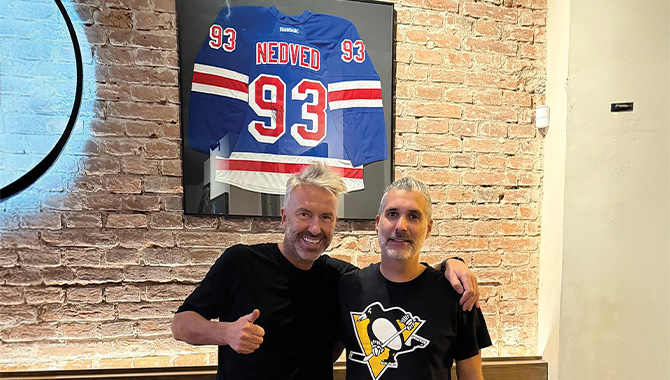
This connection became even more personal to me when I began discussing the idea of Responsiblo with my long-time friend Petr Nedved, a former NHL player. Petr often spoke about how education around responsibility worked during his career. Clubs would invite experts to talk to players, but those sessions were occasional and easily forgotten. From the beginning, our idea with Responsiblo was to change that approach and make education part of everyday experience. We wanted to create a system that delivers responsible content directly to each individual through a digital compliance module, so that learning becomes continuous, relevant and personal. At the same time, the system gives each partner a clear record that education has actually taken place, turning responsibility into something that can be demonstrated, not just declared.
The relationship between sports and gambling only works in the long run when it is built on responsibility, serving as the bridge that connects ambition with trust and innovation with integrity. For me, responsibility has never been about limiting what people can do but about giving them the awareness and tools to make better choices. True engagement comes from confidence, not from risk or pressure. The same applies to companies and organisations. When clubs, operators and partners take a transparent approach, they gain loyalty and demonstrate the industry can set high standards on its own, reducing the need for restrictive regulation.
Responsibility becomes real only when it moves from policy to practice, becoming visible, measurable and part of everyday engagement. Across the industry, technology now makes it possible to combine behavioural insights with personalised education – and give both individuals and organisations a clear overview of progress. Operators can identify patterns that signal potential risk, then connect those individuals with targeted educational interventions. This creates a system where detection leads to support, not just restriction.
In practice, this creates a loop of awareness and improvement. With Responsiblo, we enable this through continuous education rather than one-off compliance exercises. Individuals receive training tailored to their context, organisations gain documented proof that responsibility measures are in place, and regulators can verify that proactive standards are being met. The industry demonstrates commitment beyond minimum requirements. When everyone can see the benefits, responsibility stops being an obligation and becomes a competitive advantage.
The future of sports and gambling will depend on how well both worlds handle responsibility. Regulation will always play its part, but real progress comes from within the industry itself. Embedded in culture, supported by technology and guided by education, this approach becomes natural. The next phase of growth in gaming will not be driven by bigger bonuses or louder marketing, but by smarter engagement and deeper trust. As responsibility becomes part of the product, not a reaction to external oversight, everyone benefits. Players gain confidence, operators build sustainable businesses, clubs secure lasting partnerships and communities thrive on transparent practices. Those who lead now will not just respond to change. They will drive it. That is the direction worth pursuing.