




























Taxes, influencers and consolidation: Where next for Brazilian gaming?
Potholes, pitfalls, promise and potential – Brazil's regulatory roadmap has had it all in its first 12 months. With the help of expert contributors, Global Gaming Insider takes a journey through time, reflecting on what has come to pass – and what may follow

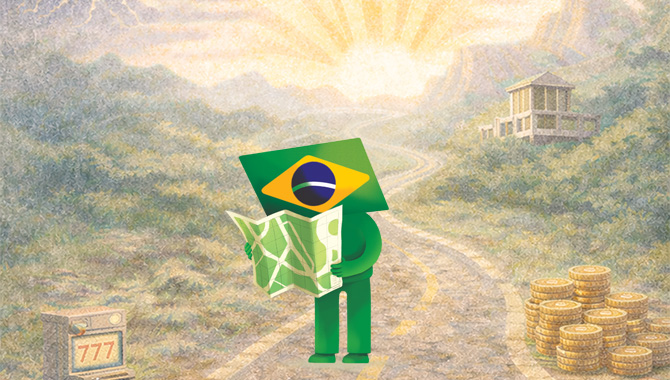
Brazil's regulatory road is a long, winding and technically demanding adventure that has proven as every bit as engaging as the entire gambling industry had anticipated. Winding through a tropical landscape woven by innovation and an undeniably sports-obsessed culture – this newly paved and regulated path is one we all hope stretches farther into the distance than the eye can see. What is over the horizon, of course, remains to be seen. But the road in the rear-view mirror leads back a long way, too.
December 2023 is a brief-yet-significant pit stop in recent history that saw the year end with a flourish as the Brazilian Government announced the long-awaited regulation of sports betting in the nation, with the surprise addition of online gambling granting those in the gambling industry the greatest Christmas gift of all. Work.
And lots of it.
The rush that ensued in 2024 saw regulators, operators and everyone in-between begin to ready their operations for the launch of what was the most hotly anticipated market opening in recent memory. In the grand scheme of Brazil’s gambling journey, 2025 will remain a footnote fleeting and pivotal in equal measure. An onslaught of market entries was followed by fierce competition, licensing contention, influencer arrests and abundant regulatory action.
Now, as 2025 fades slowly into the background, Global Gaming Insider – with the help of a handful of expert contributors – takes a chronological look back at what will surely prove to be one of the most memorable bypasses along Brazil’s long and winding regulatory tale.
Brazil: Beginners, beware...
Following President Luiz Inácio Lula da Silva (Lula)'s deliverance on confirmation of gambling regulation, which had first been conceptualized by the Bolsonaro Administration some years before, the overseas industry began salivating at the astronomical potential of the world’s seventh-most populous nation. Many have forecast Brazil as the world's third-largest betting market. Already, it sits at number five. 212 million potential players aside, Brazil’s sports-manic reputation precedes itself. However, as the gaming sphere became intoxicated with the promise and prospect of a regulated Brazil, seasoned veterans from within the nation’s market were quick to warn that Brazilian gambling was absolutely not for beginners.
They were not wrong. Brazil’s journey through 2024 was something of a soap-operatic saga that at times bordered on the comedic. Nevertheless, in true Brazilian fashion the nation’s regulator – the Secretariat of Prizes and Bets (SPA) and affiliated government entities beat the buzzer at the end of the year by a hair, scrambling regulation over the line prior to the December deadline. A game-changing regulatory development for the global industry was now complete.
Over the course of 2025, things have settled – but not slowed. As news out of the nation in January was swallowed whole by a frenzy of license applications and news of who had been granted market entry in the nation, those in Brazil’s legal sector fielded what was no doubt one of the busiest periods in Brazilian gambling law history. One of those on the frontlines of this frenzy was Neil Montgomery, Founder of Montgomery and long-term Global Gaming Insider contributor. Reflecting on the period, Montgomery recalls that the key advice he gave foreign operators upon the opening of the Brazilian market has remained simple and unchanged. He tells us: “Hiring local talent – especially rather than partnering with local investors – to occupy the key corporate and non-corporate roles required for obtaining the license was key at the time. Indeed, this advice continues to be valid but, at this point, those in the position to consider acquiring a licensed operator could also begin exploring that option.”
This sentiment is echoed strongly across all of our legislative contributors, with Ana Bárbara Costa Teixeira, Brazilian Regulatory Law Specialist and Abrajogo Director of Government Relations, adding: “In essence the advice now is much the same as before; you must tropicalize your operation. Naturally this mainly applies to international operators – especially as so many were entering the market at the beginning – and they were not aware of how Brazil works. Unfortunately, those operators really struggled because – without naming names – we have some providers in Brazil that are excellent worldwide, but here in Brazil they do not have the correct setup around data, legal and compliance. So they could not provide to the Brazilian players and operators with the level of service that they require.”
Most in or indeed outside of the gambling industry need no reminding of the importance of localization when prepping and entering new markets. In Brazil, however, the term localization doesn’t seem to justify the depth of analysis and understanding required for a successful market entry. Rather than simply understanding Brazilian player habits, interest and cultural touchpoints – many local gaming experts place an additional non-negotiable emphasis on understanding the Brazilian mindset. Fabio Ferreira Kujawski, Partner at Mattos Filho and long-term Brazilian gaming lawyer, underlines that this sentiment stretches beyond the players and weaves its way into compliance and legal strategy. He tells Global Gaming Insider: “Our advice for foreign operators entering the Brazilian market for the irst time was to understand the peculiarities of Brazil and our legislation, including consumer‑protective rules, the overlapping jurisdiction of multiple authorities over very similar subject matters, among others.
“As the year progressed and rules crystallized and evolved, the guidance shifted from readiness to optimization; refine policies and governance, tighten ad disclosures and influencer use, implement complaints handling and analysis of new regulations and laws to ensure ongoing compliance. As we turn into 2026, we are now also dealing with the first court cases on various topics, making it extremely important to have a robust strategy, even if the cases are of low value, given the multiplying factor over escalated litigation.”
Home advantage: Local vs overseas operators
Legal battles in the gaming industry are nothing new. Moving through its regulated infancy into February 2025, perhaps the key point of legal contention in Brazil was the raging battle between federal licenses and the alternative, cheaper Loterj license on offer for the state of Rio de Janeiro. Technically, this license should have only allowed operators to run their operations within state boundaries – but Loterj utilized a legal loophole which was allowing for gaming operations nationwide. This is a loophole that the Federal Government is still scrambling to close, as an increasing number of foreign operators continue to enter market via the more expensive, federal route.
Nevertheless, as local operators – often with less financial backing as the ‘big boys’ who have begun to swarm the market – seek to retain some kind of home advantage, the Loterj license could remain an appealing a potentially temporary option. This home advantage is something that, in Teixeira's opinion, could become increasingly difficult to retain over time: “Before the market became regulated, many of the most successful operations gave a lot of welcome bonuses, used a lot of advertising which suggested guaranteed big winnings – and generally made use of practices that you can’t get away with in any regulated space. Now, the operations that are really successful are the ones that have a good brand, a good product and a good service.
“In this sense, because international operations have come from more mature markets – and consumers are familiar with their brand(s) – I think overseas operators may have an advantage in the Brazilian market. Their experience, funding and product are usually very strong. On the other hand, it’s still incredibly important to know how to communicate with the Brazilian people. For foreign operators, this can be easily solved through good local hires, a good local CRM company, a good local marketing company – and so on.” Kujawski concurs, pointing out that – although it may be difficult for local operators to remain as competitive, it is not an impossibility – and that some sense of home advantage will always remain present: “Local operators have some home advantage in Brazil, primarily because they understand the country’s multicultural, continental-scale realities, where consumer preferences, payment habits and trusted brands vary significantly by region; and require tailored strategies and communications.
“That edge extends to compliance and governance: fluency with Brazilian laws and regulators, as well as established relationships, can materially reduce friction and execution risk. In short, being local – or having trusted local teams – often makes the difference. However, international operators bring valuable experience from other regulated markets, where the challenges and policy debates are often similar, and they typically have greater capital to invest in product, risk, and marketing. Over time, as foreign groups localize talent and operations, the home-field edge may narrow, though it is unlikely to disappear in such a complex market.”
A 'relearning' curve
As Brazil concluded its first quarter of regulated action, Q2 began with the SPA’s requirement that all operators must submit their AML/CTF policies. Flutter, meanwhile, began gearing up for market entry via its NSX Group acquisition in early May. Alongside Flutter’s arrival, May 2025 was shaping up to be a memorable month in Brazilian gaming – with a new advertising bill which introduced a ban on celebrity endorsements, live broadcast and print ads and strict time slots to only allow for gambling advertisements to air between 7:30pm and midnight – was approved by the nation’s Senate.
Teixeira reflects on this latter introduction as one of the most significant updates of 2025 overall: “Over the course of the year, I felt some operators were feeling increasingly desperate and concerned because of the strict rules regarding advertising. On one hand, we saw a learning curve from operators who managed to improve their onboarding via faster technology and revalidated databases. On the other, there have been operators who have found these new restrictions very difficult. Overall, looking at significant developments in Brazil, I think the ‘relearning’ of advertising under new regulations in the new market has been pivotal.”
Another day, another lawsuit
As previously explained by Kujawski, legal battles in Brazilian gaming are becoming increasingly commonplace. While the aforementioned in-fighting between the Federal Government and Loterj saw the courts field a battle between two local entities, the conclusion of Q2 last year saw an explosion of lawsuits submitted against operators.
In July, a major legal development saw a public civil action lawsuit filed by the Public Defender’s Office for Rio de Janeiro against a total of 43 online wagering operators – including the likes of Betano, bet365, Betfair, Sportingbet, ANJL, Pixbet and more. The suit alleged that operators deliberately omitted important information around the dangers of online gambling from their advertising and outreach, in breach of Brazilian law. The conclusions of the suit remain unclear. Nevertheless, at the mid-point of Brazil’s first year of gambling regulation – this action served as a clear reminder of the polarization between some members of the public and the industry, highlighting tension between the consumer protection expectations in the nation and the industry’s drive for tapping into Brazil’s explosive growth potential.
From the operator’s perspective, remaining compliant amid these kinds of ever-evolving cultural demands and regulatory developments may be just another day in the office – but that doesn’t make it any less difficult.
First... let me take a selfie
In the Rolodex of compliance headaches most commonly listed by operators worldwide, advertising sits high up the billing. Prior to regulation in Brazil, Teixeira outlines the popularity of influencer endorsement as one of the most commonly utilized advertisement techniques for online casinos and sportsbooks: “Many Brazilian operators that had partnered with Brazilian influencers found they had a more direct communication with local players.”
The scrutiny on gambling advertising and influencer endorsement reached a rather spectacular crescendo during the second half of 2025. As specified by Montgomery, “After the launch of the regulated market, influencer advertising has been reduced dramatically. This is because operators face high risks and liability resulting from undue and/or abusive advertising by the influencers they engage.”
Throughout the year, Brazil faced a soap opera of its own in the CPI das Bets. Broadcast to the whole country, a panel of senators conducted an inquiry into gaming influencers. Subsequently, numerous high–profile influencers were summoned to court for the promotion of unregulated casinos. In a "circus" moment, famed influencer Virginia Fonseca ended up taking a selfie with a senator mid-hearing... But, after several legislative courses of action were recommended, the inquiry's final report was rejected by 4 votes to 3 – making the whole process rather redundant. But that doesn’t mean the end of the road for all influencer scandals in Brazil. “The biggest influencers are not partnering at all,” explains Barbara, “But we have an issue now with what we call nano-influencers, who have a much smaller following and are still partnering with illegal brands.
“As I understand it, CONAR, which is the self-advertising national council, is in the process of discussing potential new boundaries and requirements around influencer advertising for 2026 – particularly related to gambling. Influencers in Brazil are a key way for any brand to communicate more closely with its clients – and this is especially true in the illegal gambling market. And as we have mentioned, prior to the regulation of the market, it was very common to see all kinds on influencer endorsement.”
Kujawski raises the point that protection against underage gambling interaction has been the core argument against influencer advertising sponsorship. “Protecting children and adolescents is a core legal and cultural value, and authorities tend to be highly protective given this group’s particular vulnerability. The past year’s debates and controversies accelerated that trajectory, culminating in the approval of the Digital Child and Adolescent Statute (ECA Digital), set to take effect in March 2026. It requires information technology products and services to implement robust measures to prevent minors from accessing prohibited, unsuitable, or inappropriate content – explicitly including fixed-odds betting. In a national election year, we expect youth exposure and online safety in gambling to receive even greater scrutiny, shaping both enforcement priorities and public discourse.”
Kujawski also argues that operators have a significant role to play in ensuring adequate protection through responsible advertising practices: “Against this backdrop, operators should proactively reassess their controls and advertising practices – across influencer partnerships, audience targeting, age-gating, creatives and placement – to ensure no campaign could be perceived as appealing to, or reaching, minors. That is essential to mitigate regulatory, reputational and platform-compliance risks.”
Taxation in the nation
Brazil’s transition from late Q3 into the year’s final quarter showed no shortage of drama – as October began with Congress unveiling proposals for a 30% tax hike on the industry whil simultaneously formalizing a ban on betting for social welfare beneficiaries, which had been in the works for some time.
Focusing on the former, the industry released an inevitable outcry against the tax hike proposals. However, both President Lula and Brazil’s Finance Minister – Fernando Haddad – doubled down, affirming their commitment to raising taxes on the industry. “As many of us know, recent research has indicated that 50% of Brazil’s market remains in the unregulated sector,” explains Teixeira, who ponders on the potential ramifications of significant tax rises in Brazil.
“If we captured this market and had more bettors, it would be easy to pay more taxes because, as operations are mostly online, you can control your costs. In that sense, if we can fight the illegal market, I think we can survive with new taxation. The problem is we have between five and 10 very big operators in Brazil that can afford any tax rises easily because they have large profits. The smaller operators are going to struggle. The next issue would be protecting the industry from further tax increases.”
Moving through Q4 2025 into November, taxes swiftly became the key focus of the Brazilian gambling discourse, with Haddad pushing for an 18% tax hike. Regardless of the reduction in possible percentile, many in the industry remain concerned about the thriving black market that remains in Brazil. Outlining his own concerns, Montgomery believes this is “very hard, but not impossible. The Brazilian Government needs to more aggressively restrict financial movements out from and into the country. The black market only exists because bets and winnings are still flowing out from and into the country. If additional restrictions were introduced, the regulated market could stand a better chance to succeed, even in an environment of enhanced taxation.”
Drawing on the other side of the coin, Montgomery reminds us that Brazil’s international appeal remains its biggest strength: “On a more positive note, another significant development was to see the appetite for obtaining a license, despite the costs incurred in doing so and for maintaining the local operation, with more than 80 operators having been licensed at federal level, showing that Brazil is currently the world’s fifth-largest iGaming market. It will be interesting to see how the introduction of new restrictions around PIX payments – which were made to try to clamp down on the illegal market – yield any tangible results.”
A little on the CIDE
Alas, following broad discussions around tax in the nation – 2025 ended in true Brazilian last-minute fashion with the formal approval of a new CIDE-Bets measure, which implements a 15% tax on players gambling deposits to help finance public security programs. Kujawski reacts to this latest significant update with tentative concern: “In the near term through 2026, CIDE Bets is likely to amplify Brazil’s already significant tax and legal uncertainty around betting. Frequent regulatory and fiscal shifts erode predictability, which is a critical precondition for capital deployment and investor trust. Many foreign operators and investors may pause or scale back-market entry until there is a clearer, stable framework on tax incidence, rates and compliance obligations. The risk premium for Brazil rises and cost of capital follows.
“At the same time, the illegal market tends to gain ground under complex and onerous regimes. On the operator side, legitimate brands may reassess the commercial viability of compliance-heavy participation, given margin compression and operational burdens. On the demand side, players may migrate to unauthorized offerings that present fewer frictions and bureaucracy, even if at higher risk. The net effect is weaker channelization, diminished consumer protection and leakage of tax revenues.”
Montgomery concurs, telling us: “As I have previously advocated, Congress and the Federal Government should avoid looking at the gaming industry as the golden goose. The continuous milking of the industry through continuously increasing taxation (including through the creation of new taxes and contributions – such as CIDE Bets) will strangle the licensed market and contribute to players resorting to the illegal market, especially if the financial transaction restrictions mentioned above are not implemented in the near future.”
2026: What’s on the cards?
Turning over a new leaf in 2026 will see Brazil make its first step away from market infancy and towards market maturity. What happens during this phase depends largely on the effectiveness of the market’s regulation. Expectations are high, but if taxes are higher – innovation could well suffer.
This point was keenly re-emphasized by Teixeira as part of her 2026 market predictions: “In 2026, I foresee two challenges. The first is the fight against the illegal market, and the second is how the industry can survive the massive tax increase that is coming. Everybody that entered the regulated Brazilian market in 2025 will have made a business plan for five years. And then in the first year we have a gambling tax increase, followed by an indirect taxation increase in the second year. This presents a huge hurdle.
“Those operations that are strong and profitable, of course, will survive. However, other new competitors in the market that do not have very solid equity or sources of funds are going to seriously struggle. Because of this, I think the number of gambling operators in Brazil is going to reduce throughout the year.”
Montgomery offers an operational prediction to build on Teixeira's conclusions, suggesting that we “should see more market consolidation to start in 2026 with an increasing number of M&A transactions. This will be one of the most effective ways of operators gaining market share and securing greater efficiencies, thereby reducing costs, which are very high – and certain to rise further following these latest changes.”
Playing on the pivotal nature of Brazil’s second year of regulation, Kujawski echoes Montgomery’s sentiment: “I agree that Brazil’s fixed-odds betting market may enter a decisive second wave of consolidation, driven by the evolution of the regulatory framework and the escalating demands of robust, ever-evolving governance. After 2024–2025 revealed how smaller operators struggled to launch or sustain regulated operations, I expect many subscale or late-moving players to become acquisition targets.
“In parallel, large brands will continue to extend their lead, using compliance readiness, capital access and marketing heft to consolidate their leadership positions. Finally, politics will catch up to the economics: betting will feature prominently in the 2026 electoral debate, with consumer protection, responsible gaming, advertising and taxation emerging as headline issues that shape the sector’s next regulatory refinements.”
So, Brazil, where next?