




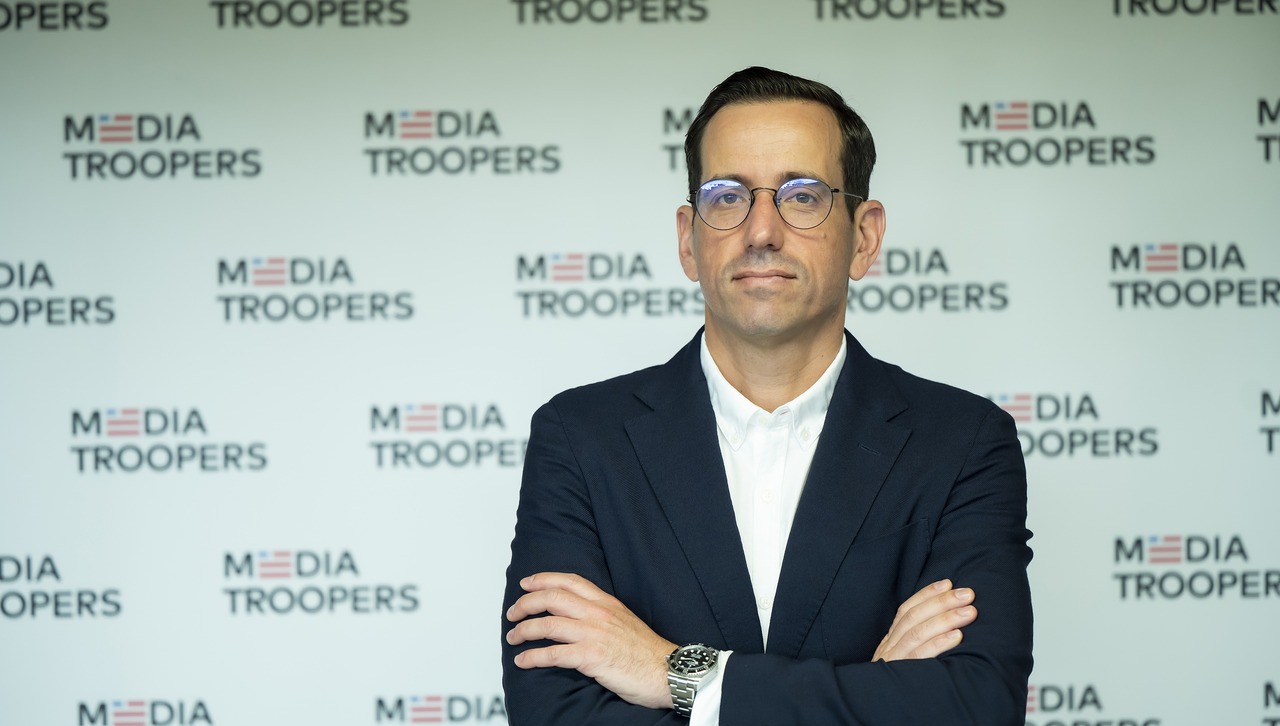
What can you tell us about MediaTroopers’ latest expansions in North America ahead of the World Cup?
From where I sit, it’s quite obvious that the North American regulated market isn’t set in stone. With Alberta's addition in the coming months, it’s clear the market is still evolving, and with that, new opportunities are always popping up.
What we’re seeing in Alberta is that more and more operators are already planning their next steps to capture the new market, and we’re hoping that it will be regulated by the time of the World Cup so we can also tap into that new potential.
We already operate throughout North America, in Ontario and various US states. That means, as a business, we already understand the demand between operators and performance-based acquisition. The arrival of the World Cup is simply accelerating our growth strategy. We’re not expanding market by market, but instead want to build a connected ecosystem between North and Latin America.
What kinds of sports-related opportunities does the World Cup present for operators specifically looking to establish a presence across the Americas?
As we know, the World Cup is taking place across three established markets in the US, Canada, and Mexico. This provides the opportunity for strategic expansion across markets, with both the North and Latin markets providing an engaging dynamic.
My advice for operators is that now is your chance to enter both regulated and soon-to-be-regulated markets. This presents an opportunity to build brands early in regions that are experiencing rapid growth.
With the right infrastructure, especially in terms of market affiliates, operators can run localized campaigns and capture new audiences. The point of this is to help operators achieve growth and credibility in new regions.
Beyond Spanish and Portuguese language optimisation, what non-negotiable localisation strategies should operators employ for LatAm engagement throughout the World Cup?
To be frank, language is what’s easiest for us, as localisation is operational. With our Media Cruiser platform, we’re able to deliver specialised targeting to help operator campaigns adapt to new markets, including geographical, behavioural, and personalised-data points.
But we know technology isn’t just enough. We also provide on-the-ground expertise, having repeatedly expanded our team to include members familiar with local culture in Latin America, including football and other regional nuances.
Stronger publisher relationships are also essential, as local affiliates can certify trust among consumers. Tailored UX and local payment solutions can also solidify trust. What we mean is that localisation has shifted into a core operational capability for operators.
How should operators be preparing for the player-acquisition and engagement drop-off that often follows major sporting tournaments? Is there a way of embedding this preparation as part of a targeted campaign?
Operators waiting until the final whistle blows during the tournament before thinking about player retention will definitely lose a portion of their potential player base.
That’s why we approach acquisition differently. For us, at Media Troopers; retention and acquisition are two sides of the same coin. Throughout the tournament, we don’t just want to drive traffic; we also collect and structure data so operators can act on it swiftly. Media Cruiser plays an essential role in this regard. It enables real-time optimisation and audience segmentation as campaigns run.
Next is planning the transition. Such as moving users from the World Cup into the domestic leagues, or introducing new sports. Operators can market other verticals where appropriate. The most successful campaigns would then be those that have already mapped out the journey before the first kick-off.
If you could offer one piece of marketing advice specific to the LatAm landscape for operators ahead of the World Cup, what would it be?
If I had to give one piece of advice, it would be that operators should invest in local intelligence as much as they invest in media.
Here at Media Troopers, we have built a team of over 50 members from 25 nationalities who speak more than 20 languages. That diversity is intentional, as it allows us to understand how different markets behave and react in real time.
In the Latin American regulated market, it’s safe to say that success doesn’t come from who can spend more. Success is determined by making better decisions at a local level. Operators who win the upcoming World Cup won’t necessarily be the ones with the biggest budgets, but those who understand and adapt to new markets faster than anyone else.