



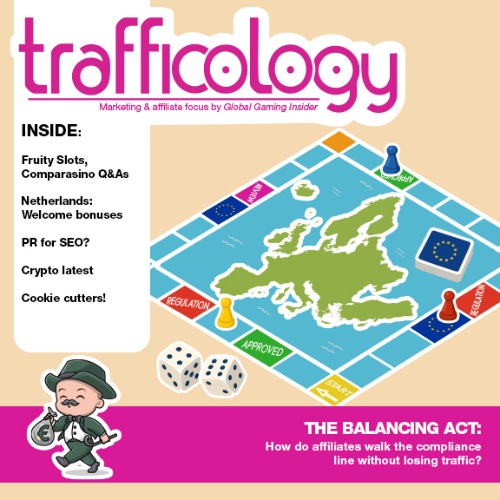


One day you’re projecting five-figure monthly earnings; the next, you’re refreshing an inbox that contains a short, polite message informing you that your partnership has been “reviewed.”
For affiliates operating in the gambling space, this is the balancing act: pushing performance hard enough to grow, while staying clean enough to survive.
Silent killers: Why do affiliates actually get cut off?
Most affiliates don’t get cut off because of a single catastrophic error. It’s rarely one rogue campaign that brings everything down. More often, it’s a pattern of smaller issues that gradually erode trust.
Misleading bonus claims, vague or missing responsible gambling messaging, or outdated offers that don’t reflect current terms might seem minor in isolation. But regulators like the UK’s Advertising Standards Authority (ASA) have repeatedly cracked down on affiliates for exactly these kinds of breaches.
In 2022, for example, ASA highlighted failures around misleading promotions and insufficient clarity in gambling ads, emphasising that affiliates are very much within scope of enforcement.
Then there’s the less visible layer: traffic quality. Operators are increasingly sensitive to bonus abuse, low-value players or suspicious acquisition patterns. You might be hitting your CPA targets, but if your players aren’t sticking – or worse, are triggering fraud flags – you’re suddenly a liability.
The uncomfortable truth is that most affiliates aren’t dropped for being bad actors. They’re dropped for being sloppy.
Revenue vs risk: Why do operators choose compliance over cash?
There was a time when high-volume affiliates could get away with more. That era is fading fast.
Today, operators sit under intense regulatory pressure. In markets like the UK, Sweden and parts of the US (to name just a few), the burden of compliance doesn’t stop at the operator’s own marketing – it extends to affiliate activity as well. The Gambling Commission has been explicit about this, stating that operators are responsible for the actions of their third-party marketers.
That changes the equation entirely.
From the operator’s perspective, the question is no longer “How much revenue does this affiliate drive?” but “How much risk does this affiliate introduce?” If the second answer outweighs the first – even slightly – you’re expendable.
This is where the balancing act becomes real. Affiliates often push aggressive acquisition tactics to stay competitive, but the tolerance for those tactics is shrinking. Compliance teams are bigger, sharper and far less forgiving than they were five years ago.
Your value isn’t just in your traffic anymore. It’s in how little trouble you cause.
Fine print, big consequences: What’s being missed in affiliate contracts?
If there’s one area affiliates consistently underestimate, it’s the contract.
Affiliate terms and conditions are rarely written with your protection in mind. They’re designed to give operators flexibility – and that flexibility can be brutal when exercised.
“At sole discretion” clauses are perhaps the most dangerous. These allow operators to terminate partnerships without providing a clear reason. Combine that with clauses around “traffic quality” or “compliance breaches,” and you’ve got a situation where revenue can be cut off with minimal explanation.
Negative carryover policies, retroactive commission adjustments and vague definitions of valid traffic all add layers of risk. Many affiliates don’t read these terms in detail until something goes wrong, at which point the contract becomes less of a guide and more of a weapon.
The reality is simple: if you don’t understand your agreements, you don’t fully understand your business risk.
Most affiliates don’t get cut off because of a single catastrophic error. It’s rarely one rogue campaign that brings everything down. More often, it’s a pattern of smaller issues that gradually erode trust
Is compliance really just a box-ticking exercise?
Compliance has a branding problem in the affiliate world. It’s often seen as a constraint – a box-ticking exercise that slows down growth. But that mindset is increasingly outdated.
A better way to think about compliance is as insurance.
Clear disclosures, accurate bonus descriptions and visible responsible gambling messaging don’t just keep regulators happy – they remove reasons for operators to question your activity.
In other words, compliance isn’t just about avoiding fines from regulators. It’s about making yourself a low-risk partner.
And in a market where operators are actively reducing risk exposure, that matters more than ever.
How can affiliates protect themselves in the long term?
Avoiding fines and account closures isn’t about playing it safe to the point of stagnation. It’s about building resilience into your business model.
Diversification is the obvious starting point. Relying heavily on a single operator or program is a structural risk. When that relationship ends – and sometimes it will – you don’t want your entire revenue stream disappearing with it.
Documentation is another underrated safeguard. Keeping records of agreements, communications and approved marketing materials gives you a layer of protection if disputes arise. It won’t always save you, but it can help shift the balance in your favour.
Regular self-audits are equally important. Content that was compliant six months ago might not meet current standards. Regulations evolve, operator policies change and what competitors are doing isn’t always a reliable benchmark.
And perhaps the hardest lesson of all: just because a tactic works doesn’t mean it’s sustainable. Grey-area strategies can deliver short-term gains, but they often carry long-term consequences.
The bigger threat: Are affiliates underestimating the real risk?
The biggest misconception in affiliate marketing is that one big mistake kills your business. In reality, it’s usually the slow build-up of unmanaged risk – plus a model that can’t survive a single decision going against you.
Fines, account closures and withheld commissions aren’t random events. They’re usually the result of accumulated risk – risk that could have been managed, reduced or avoided.
The affiliates who survive long term aren’t necessarily the most aggressive or the most innovative. They’re the ones who understand the balancing act: pushing hard enough to grow, but not so hard that the entire structure collapses.
Because in this industry, staying in the game is now half the battle.