





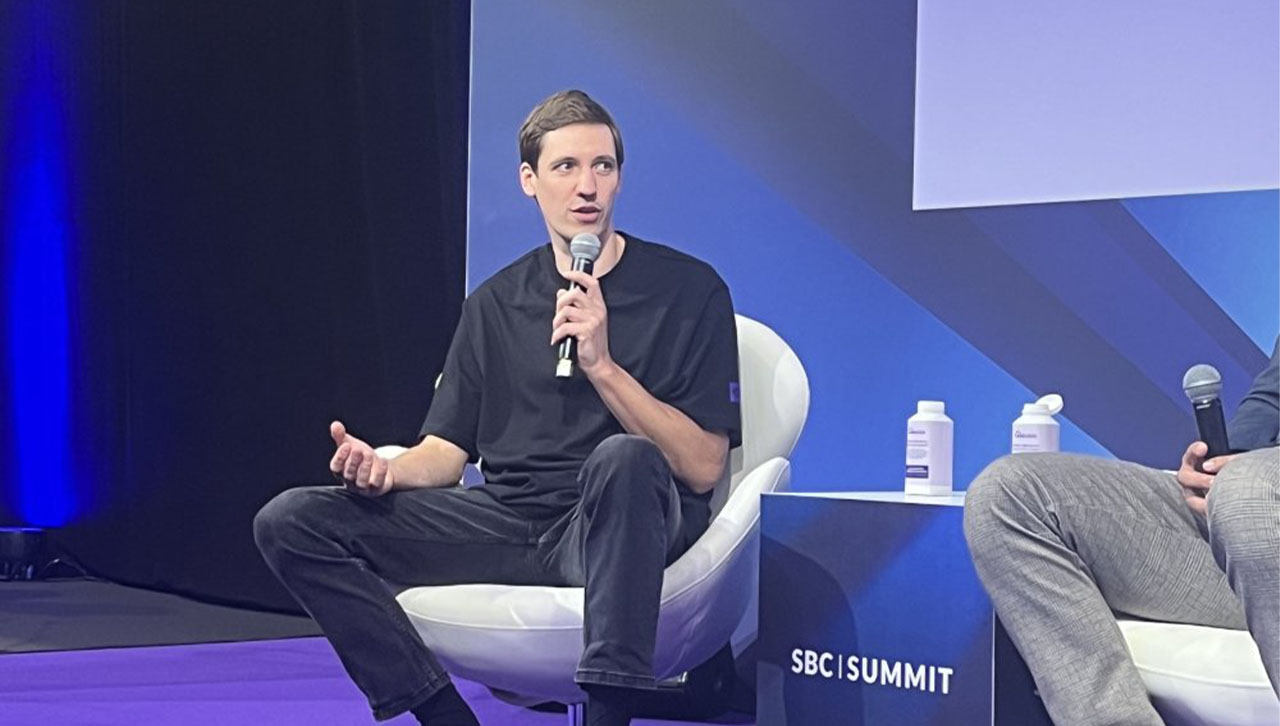
Ivan, thanks for rejoining us. It was a pleasure to share a panel with you at SBC Summit Lisbon. How did you enjoy speaking and attending the show overall?
Very much, thank you. Lisbon was busy, as it always is, but our session felt like one of the more honest conversations of the week. We had people from analytics, game design and the operator side on one stage, and the discussion stayed practical. Nobody pretended that more engagement is automatically a good thing, and that made it a useful hour.
After all our discussions, what are your biggest takeaways about how best to engage players in today’s age, without “crossing the line”?
The biggest one for me is that a lot of engagement work starts in the wrong place. Teams look for a new mechanic, when the player is often still deciding whether to trust the brand at all. In their first visit, many players don’t open a game. They look at the payment methods, read the bonus terms and check whether the site looks licensed. Get that wrong and no tournament will save you.
My rule of thumb is to ask whether a feature serves what the player came to do. A clear wagering counter does. A countdown timer on an offer that never actually expires doesn’t.
And I’d be careful with session length as proof. It goes up with almost anything you switch on. Whether people come back next week tells you far more.
There was also discussion from yourself, fellow panellists and the audience about the role of AI in creating games. Will 2027 see more games created solely using AI?
I’d expect more games built with AI, yes. Games built entirely by AI and live in regulated markets will still be unusual next year, in my view.
The change will happen inside studios. Artwork, animation, translations, first drafts of code, quick prototypes for testing an idea with players: those tasks are already getting faster and cheaper. A small team will be able to produce what used to take a much larger one, so I’d expect release volumes to keep growing.
Where it gets harder is the core of a casino game. Somebody has to define the maths, prove the RTP holds, make sure the RNG passes testing and take responsibility when a lab or regulator asks questions. AI can help with each of those steps. Handing all of them over is a different matter, and I don’t see the industry doing that in 2027.
Are fully AI-created games and products up to scratch, or are there many teething issues still for our industry?
Some look great. Whether they’re ready to go live is another question.
A demo only has to work once. A real game has to behave the same way over tens of millions of spins, on cheap Android phones and slow connections, in every market where it’s certified. That’s where I’d expect most of the teething problems: inconsistent behaviour between builds, maths nobody on the team fully understands and unclear ownership of the art.
If I were an operator looking at one of these titles, I’d ask for exactly what I’d ask any studio for. Lab certificates for my markets. A clear RTP and volatility profile. Proof of who owns the IP. And a named person accountable for the product. Then I’d judge it the way I judge any game in the lobby: by whether players return to it when nobody is promoting it anymore.
As for Kanggiten, what are your biggest plans for 2027?
Most of my 2027 is about shortening the distance between an operator’s idea and a reliable answer. In practice that means more settings the operator controls without asking us, and better ways to compare player cohorts after a campaign has finished.
Games built entirely by AI and live in regulated markets will still be unusual next year, in my view
The commercial reason is simple. Operators usually have more hypotheses than test capacity. When a test takes weeks to set up, good ideas just wait in a backlog.
We’ve seen what changes when that friction goes. One European casino that migrated to Kanggiten used to spend up to 72 hours publishing a single game by hand. After the move, it took 15 minutes, manual work dropped by 85%, and the team ran more than 45 product experiments in its first year.
Which verticals are you focusing on most for the year ahead?
Casino first, because that’s where most of our operators’ revenue sits. Within it, classic slots do the heavy lifting on our traffic, and that has held for a long time. Crash games get a lot of attention at conferences, but in the markets we serve they play a smaller role than people assume. Live casino tends to come in later, once a player is settled and wants something more immersive.
Sportsbook is the second, and partly for acquisition. In some markets a large share of casino players arrives through betting, so a weak sportsbook means a weak casino funnel too.
I’d keep CRM, gamification and mobile out of the verticals list. Those are tools that run across both, and they decide how well each vertical performs.
Similarly, which geographical markets offer the biggest growth prospects?
We’re active in 30+ markets, and much of our growth comes from partners expanding within those markets. I’d describe what makes a market attractive rather than name new countries.
Regulatory stability comes first now. Brazil was a reminder of that this autumn. Operators who had invested in licences saw the ground shift through a single provisional measure. Finland is interesting from the opposite side: a regulated opening from July 2027, but one where technical integration with the regulator matters as much as the licence.
After that, I look at local payment methods that actually work, how mobile-heavy the traffic is and whether we can support the market well. And within any country, two traffic sources can behave like two different markets.
Finally, if you could look back on 2026, how would you sum the year up for yourself, for Kanggiten and for the industry?
For me personally, it was a year of explaining the post-launch side of the business on stage, in Prague and in Lisbon, and then testing those ideas with operators every day. That loop between speaking and practice was valuable.
For Kanggiten, it was the year operators started putting their own results into the public domain. For the industry, I’d call it a year of correction. Regulation tightened in places nobody expected, players became less forgiving of slow withdrawals and cluttered lobbies and operators got more serious about measuring what actually works. If 2026 taught us anything, it’s that a brand earns its next session with every withdrawal it pays on time.
Kanggiten CEO Victor Cherkas also spoke with Global Gaming Insider in Q2 to discuss the impact of gamification on performance metrics.