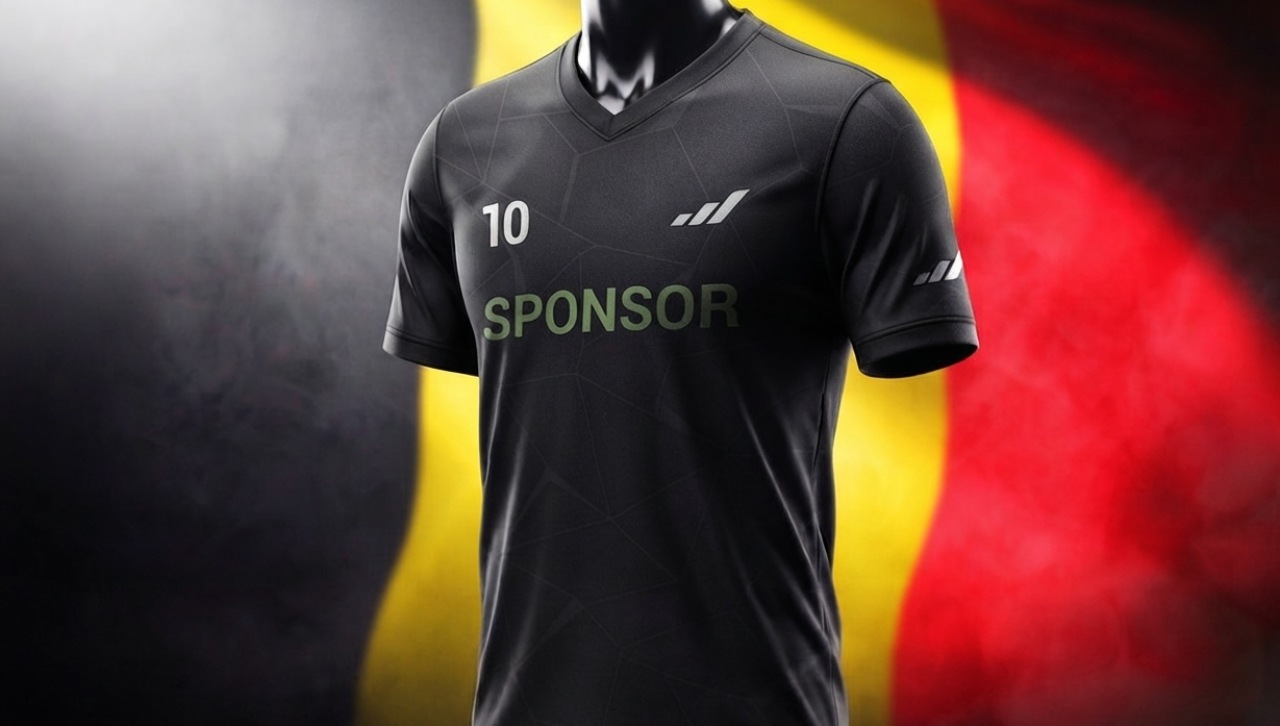
Belgium’s attempt to ban gambling sponsorship is nearing a new phase, as regulators face growing evidence that operators and football clubs are finding ways around the current restrictions.
In 2023, Belgium approved a phased ban on gambling advertising. The first restrictions came into force in July 2023, banning gambling advertising on TV, radio and video. At the beginning of 2025, the restrictions were extended to gambling advertising in football stadiums, although some exceptions remain. Shirt sponsorship is still permitted, but only if it features the betting company’s name and logo without a slogan and cannot appear on the front of the shirt.
The rules also limit gambling branding on shirts to a maximum area of 75 cm² (7.5 centimetres by 10 centimetres). These restrictions have not been welcomed by clubs and operators. As the new rules approached, reports began to emerge of clubs looking for ways around the legislation, with some eventually finding ways to do so.
This week, Belgian media reported that Federal Minister of Justice Annelies Verlinden noted operators are still exploiting loopholes in media legislation to circumvent the ban on shirt placement and size. This is despite previous warnings from the Belgian Gambling Commission (BGC) that such practices will not be tolerated. The Secretariat of the BGC is now calling for a review of the initial law.
At the same time, another deadline of the phased gambling ad ban is nearing. From 2028, there will be a total ban on gambling advertising, regardless of shirt position. Still, one might argue, with legislation as is, it won’t be effective.
Loopholes and workarounds
Limiting the maximum area of gambling operator branding present on sports shirts to 75 cm², a bit smaller than an average smartphone screen, of course displeased clubs and operators.
Such branding does not provide much visibility, and a further restriction on it not being on the front of the shirt makes sponsorship deals unattractive. Operators, naturally, found a workaround. They started launching media bodies. Logos and brands of these ‘news sites’ closely resemble original gambling operator brands
Ignace Vandewalle, a Belgian Gaming Commission member, blames the 'poor parliamentary work' in drafting the law
One of the operators approaching sponsorships this way is Circus, which launched its Circus Daily news site. When approached by local Belgian newspaper De Standaard, the operator stated that Circus Daily is a ‘fully-fledged sports media project.’ They even had this confirmed in court last year, where a judge ruled that advertising for the news site is permitted, as long as there is no reference to the gambling site.
The Circus Daily logo features on the shirts of football clubs Standard and Antwerp, among others, but was also visible, for example, on microphones that appeared in the frame during interviews in the Tour de France.
In early 2025, it was reported that at least seven Belgian clubs were exploiting regulatory loopholes. Brugge played with U-Experts, a Unibet brand, as their main shirt sponsor, while Antwerp swapped BetFirst with AntwerpFirst.
Previous regulator warnings and current backlash
As already stated above, in late 2024 BGC was aware that clubs would be seeking loopholes and warned that it will tighten its controls. Meanwhile, lawmakers even threatened football clubs that violate the regulations with fines of up to €500,000 ($580,000).
Two weeks into 2025, shortly after new rules took effect, BGC launched an investigation into football clubs attempting to circumvent the ban. Of course, this intervention and associated threats did not produce any meaningful results, since otherwise you would not be reading this article.
Now BGC secretariat is calling for a review of the initial law. Ignace Vandewalle, a BGC member, blames the ‘poor parliamentary work’ in drafting the law.
No law can realistically be made completely 'loophole-proof,' especially in an area like gambling sponsorship where branding, media, sport and advertising overlap
Speaking to local media, Vandewalle insisted that loopholes have to be closed, noting: "Anyone may set up a sports channel or broadcast sports reports, but it may not be named after a gambling company. Advertising with identical names and logos is not allowed. That must be clearly defined in the law."
Will tighter laws do the trick: A battle of restriction vs creativity
Threats did not work, investigations failed and even court sided with operators. This poses the question of just how tightly laws have to be written so they leave no unintended loopholes. Is it even possible to draft such a bullet-proof law?
Sports betting operators have become so intertwined with football sponsorship, which generates unprecedented brand visibility. Belgium is not alone in this.
In Italy, the 2018 Dignity Decree banned all gambling advertising and sponsorships. Global Gaming Insider wrote an analysis piece on how major global operators are still present in Italian football via ‘infotainment deals.’ Eight years after the ban, their presence is significant.
No law can realistically be made completely ‘loophole-proof,’ especially in an area like gambling sponsorship where branding, media, sport and advertising overlap. A law can, however, be drafted to make circumvention much harder.
Ultimately, the battle between regulation and creative workarounds is unlikely to end with a single law. Major gambling operators are, of course, well-funded and have their own legal teams.
As restrictions tighten, operators will continue looking for new ways to maintain visibility. We have seen the same happening in recent years in multiple European markets, yet regulators are copying each other’s dated formulas.
Maybe the answer does not lie in restriction, but rather in better regulation. If regulators focused on ‘what is permitted’ rather than what is ‘banned’, they could create a more constructive sponsorship guidance built on responsible communications and safeguards.
Ahead of the 2025/26 Serie A season, several Italian clubs embraced the infotainment partnership model, signing deals with internationally recognised brands despite Italy’s sponsorship ban