















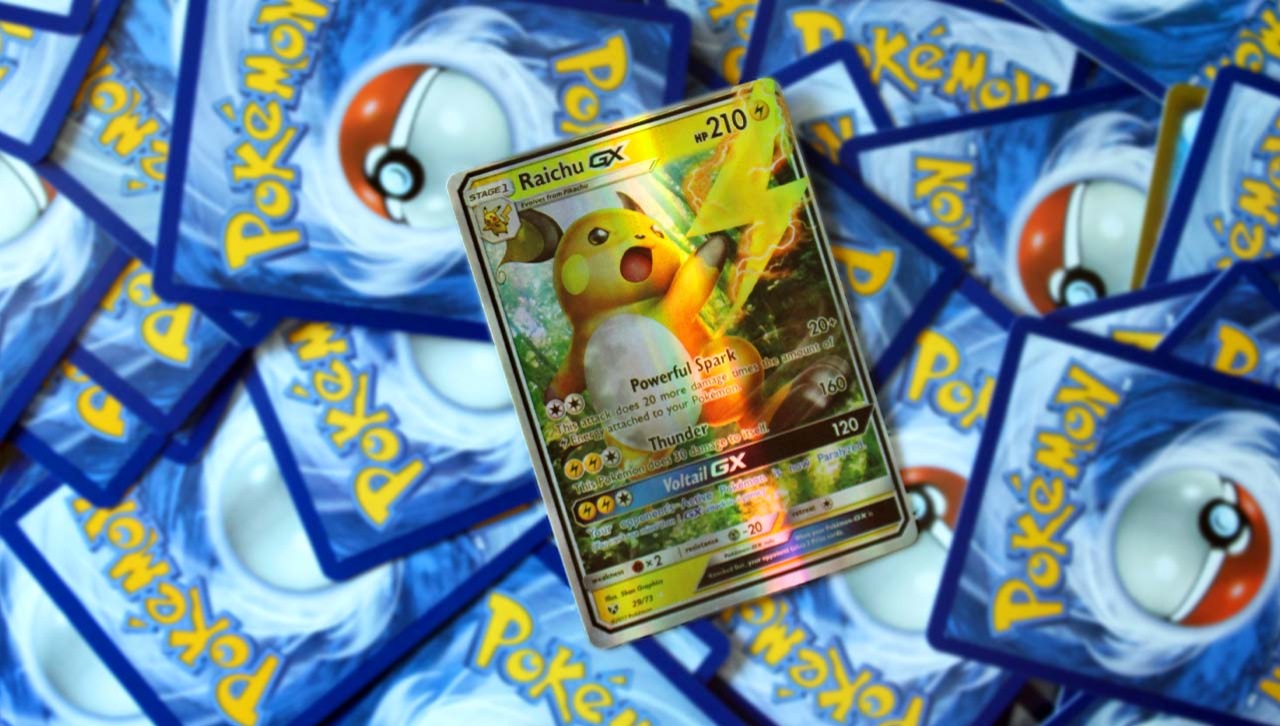
It might sound strange, but sitting at the intersection between gaming, art and finance is the Pokémon Trading Card Game (TCG). The collectable cards featuring images of "pocket monsters" have become so valuable in the secondary market it is causing lawmakers to question whether they should be considered gambling.
As the name suggests, Pokémon TCG is a trading card game in which players purchase packs not knowing what they might draw. Like any collectible, these cards have inspired a whole secondary market dedicated to buying and selling the rarest finds. Perhaps unlike other trading card games, the size of this secondary market has reached incredible heights, with many cards selling for hundreds of thousands of dollars.
The possibility of finding a card worth four figures in a pack has triggered a surge in popularity and, most recently, led to a member of the House of Lords sending a letter to the Gambling Commission questioning whether these trading cards should be classified as gambling.
How the secondary market is worth roughly $16bn
Video Game Journalist and Pokémon TCG specialist Callum Self, who was in correspondence with Lord Foster (the aforementioned member), spoke to Global Gaming Insider about the true extent of the secondary market.
"It’s difficult to put an exact figure on the entire secondary market, particularly when you consider the number of private sales, local card shops, and online marketplaces," Self said. "However, there are estimates that show just how valuable Pokémon cards have become."
Self pointed to a website tracking the value of all cards as a rough estimate of the size of the market. According to the site, the combined value of all Pokémon cards is roughly $16.1bn. .1bn.
Since this figure only represents the combined value of cards and not the amount being spent annually, Self provided another example to better understand the size of the market: "I recently reported on auction data from 2026 showing 813 sales of Pokémon cards worth at least $100,000, with a combined value of $238m."
The Pokemon Company may not have the power to change what the third-party industry does with its products, but it does have the power to de-incentivise the gambling aspects of its game
According to the Gambling Act 2005, gambling is defined as "gaming, betting or participating in a lottery," with gaming defined as "playing a game of chance for a prize." Lord Foster used this definition as a reason for considering the game a form of gambling.
When asked for comment, the Gambling Commission provided Global Gaming Insider with its complete response to Lord Foster's concern.
The Gambling Commission's Acting Chief Executive, Sarah Gardner, responded by saying: "A prize in this context must be money or money's worth, which is the term you have identified.
"We note your view that the established resale market for Pokémon cards means that they offer a prize of 'money's worth' and consequently could amount to gambling. In our view, the fact that Pokémon cards may subsequently be traded or sold on a secondary market does not, of itself, mean that their sale constitutes gambling."
Instead, the Commission believes that the focus should be on the nature of the transaction itself: "The purchaser is buying a collectible product and receives that product in every case. Any subsequent resale value arises independently of the original sale and does not convert that sale into a gambling activity."
However, if the Commission's case rests on the fact players are purchasing a real product that they get to keep in any case, then perhaps the same can't be said about Pokémon TCG Pocket.
Sweepstakes, slots, loot boxes or none of the above?
Pokémon TCG Pocket launched on the App Store in October 2024. The mobile game makes opening a pack of Pokémon cards more accessible, by giving users two free virtual packs every day. To obtain additional packs, though, players must purchase in-game currency using real money.
The game quickly became more popular than the company's previous entry into the app store: Pokémon GO.
This sort of "freemium" model is not uncommon in mobile and video games. However, in this case, rather than willingly paying to purchase cosmetic items or making an experience more enjoyable, users are paying for the thrill of maybe pulling a rare card.
The concept is not far from a game like slots. The in-game currency, on the other hand, makes it seem more like a sweepstakes casino, with even a subscription model meant to appear more alluring and better value.
What used to be a primarily child-focused space has since been invaded by people trying to make a profit
Nevertheless, the whole game is essentially a loot box app but, in this case, it is not a secondary feature of a more complete game, the loot boxes are the game.
Although the app does not satisfy the Commission's definition of receiving a prize in "money or money's worth," as the digital cards cannot be sold, it's easy to see how Pokémon TCG Pocket has adopted gambling mechanisms into its app.
According to data from Sensor Tower, the game earned $1.49bn and surpassed 100 million downloads in only six months. Moreover, it was awarded Best iPhone Game of the Year in 2025 by Apple's App Store.
The monetisation of children's spaces
Pokémon cards have only truly become comparable to a form of gambling in recent years. Before the 2020s, the hobby was mostly enjoyed by children and fans of the franchise.
In the last few years, the financial aspect of selling rare cards drew in a new kind of crowd. "Scalpers" became prominent in the community, buying up as many packs as possible purely to resell them on the secondary market.
What used to be a primarily child-focused space has since been invaded by people trying to make a profit.
Moreover, children have begun imitating that same line of thinking. From looking at cards within the context of the game, kids have started seeing each card for its monetary value.
Self echoed this concern when asked whether adults entering these communities were contributing to the issue. "I don’t think adults collecting Pokémon cards is a problem at all." Self said "What concerns me is when people enter these hobbies purely to make a profit, particularly when that comes at the expense of collectors and players who genuinely enjoy them.
"There’s nothing wrong with adults enjoying something they loved as children. The problem is when the financial incentive starts to overshadow the hobby itself."
How to regulate a trading card game
In the Gambling Commission's response to Lord Foster, Gardner explained that applying regulation to trading card games would result in "disproportionately stringent gambling requirements such as age restrictions (which include related criminal offences)."
Gardner goes on to say that: "It is not clear to me whether this potential consequence has been considered, but it strikes me as unlikely that preventing young people from partaking in their hobby of collecting cards or stickers, or potentially being criminalised for doing so, is an outcome intended by Parliament when it passed the legislation."
However, regulating the card game should not be the goal. Because Pokémon TCG isn't effectively gambling, but rather it reinforces gambling mechanisms, then the best course of action is to make changes that don't impact the player but the game's financial incentive.
Self said: "I’d like to see Pokémon publish official pull rates on booster packs. Knowing your chances of finding a particular rarity would help consumers make more informed decisions.
According to the site, the combined value of all Pokemon cards is roughly $16.1bn
"Secondly, I think improving pull rates would benefit collectors and players, while potentially reducing some of the inflated prices we see on the secondary market."
It's not uncommon for products to take on a different purpose than what they were intended for. Pokémon TCG used to be a simple trading card game, but people have found enjoyment in simply collecting the rarest cards or even displaying them.
The Commission, on the other hand, should take a stand against the third-party industry. So-called mystery packs, repacks and digital pack-opening platforms can place greater emphasis on the financial value of the cards.
Recently, across the globe, Singapore's Gambling Regulatory Authority (GRA) was made aware of influencers promoting a website offering Pokémon mystery packs with gambling-like features and is preparing to take action against it.
The website charges consumers between $77.57 and $930 for virtual trading card packs, not unlike the TCG app, known as Oripas. In this case users can sell their cards back to the platform in exchange for credits, which attracted regulatory scrutiny.
The Pokémon Company may not have the power to change what the third-party industry does with its products, but it does have the power to de-incentivise the gambling aspects of its game.
Reducing the financial incentives behind the hobby can go a long way in removing some of the scrutiny surrounding the game. Yet it seems, for now, the company has decided to forego any kind of proactive solution.
Despite loot boxes not being classified as gambling under the Gambling Act 2005, Poland drafted legislation to tighten oversight around the mechanic in December 2025