









Romania’s emergency ordinance introducing changes to the gambling sector is set for a final vote in the Parliament today.
Under Emergency Government Ordinance No. 7/2026, slot operators must obtain a local operating authorisation in addition to their national licence.
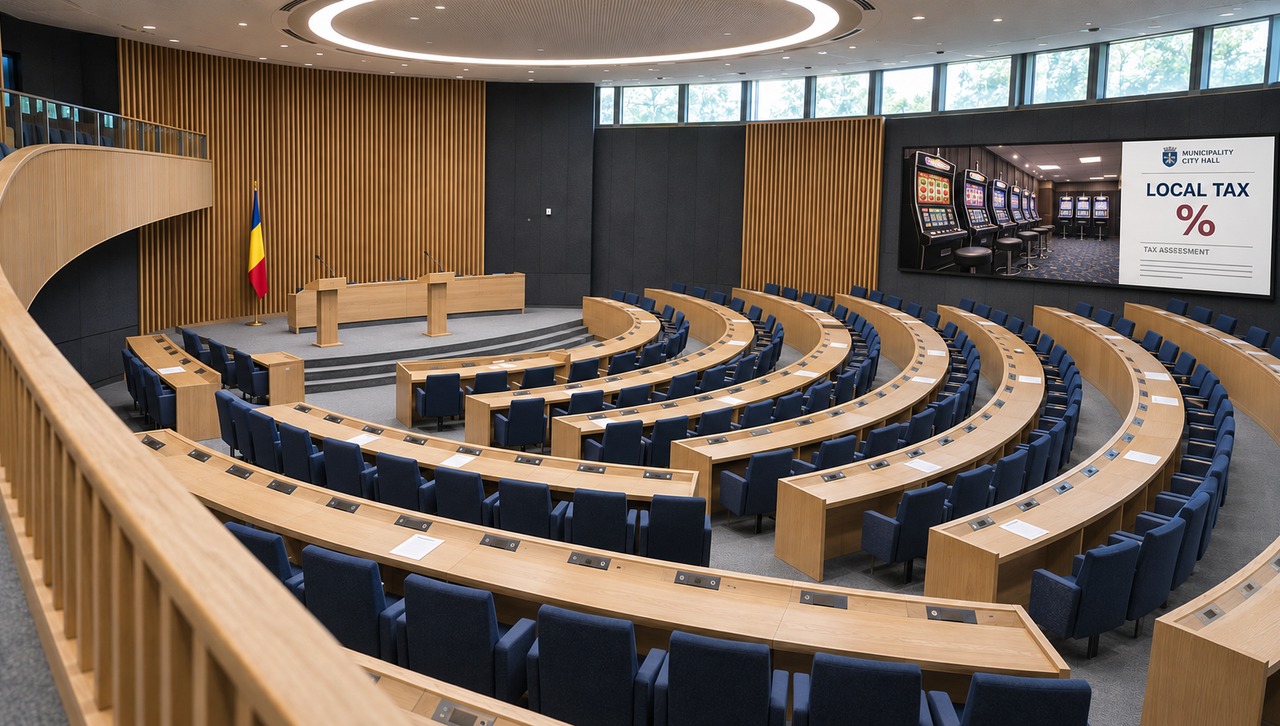
Local councils hold the authority to decide whether gambling activities are permitted within their administrative areas. Where they are allowed, councils can determine the locations in which gambling premises may operate and establish an annual local tax.
Several Romanian cities have already used these provisions to close gambling venues or restrict where they can operate.
Today’s parliamentary debate centres on proposals that might change how local taxes and operating conditions are determined.
Industry calls for consistent national rules and taxation
During discussions in the Chamber of Deputies, representatives of the gambling industry argued that restrictions on land-based operations could reduce tax revenues and potentially push players towards illegal gambling market.
They called for uniform operating conditions and a standardised tax system across Romania. The proposals prompted different responses from political representatives.
USR MP Cezar Drăgoescu rejected the industry's arguments concerning the possible effect on public finances and pointed out the social consequences of gambling.
AUR MP Dumitru Dilea supported the requirement for local authorisation through local councils while also pointing to the industry's contribution to public budgets.
Meanwhile, PSD MP Adrian Câciu said the amendments should take account of both the interests of local communities and employment within the gambling sector.
The amendments under consideration address the balance between local authority control, gambling industry taxation and the economic contribution of land-based operators.
The industry now urgently needs certainty and a resolution to an increasingly restrictive regulatory environment, which has already caused widespread closures.
Fedbet highlights scale of market contraction
When Ordinance No. 7/2026 came into force, municipalities were given 60 days to establish the necessary regulatory frameworks, but many failed to comply with the deadline. The lack of local frameworks created significant uncertainty for operators, particularly as their existing licences approach expiry.
Global Gaming Insider spoke to Alexandru Domșa, President of the Federation of Gambling Operators in Romania (Fedbet), about the impact of the legislation.
Domșa highlighted analysis by economic think tank Frames showing that the number of authorised gaming machines fell by 45% between March and September 2026, from almost 35,500 to 19,700.
Fedbet data showed that, as of mid-September, only 92 of Romania’s approximately 3,200 local administrative units had adopted regulations under Ordinance 7/2026. Of these, 57 banned gambling activities while 35 opted to regulate them, despite the 60-day deadline for local authorities having passed several months earlier.
The latest restrictions add to measures introduced in 2024, which banned slot-machine venues in municipalities with fewer than 15,000 inhabitants. Combined, the two legislative changes have reduced the number of authorised gaming machines by more than 70% compared with 2023.
Romania has recorded a RON 750m ($156.3m) shortfall in gambling tax revenue following administrative delays in implementing new rules that give local authorities greater control over the licensing of gambling venues