
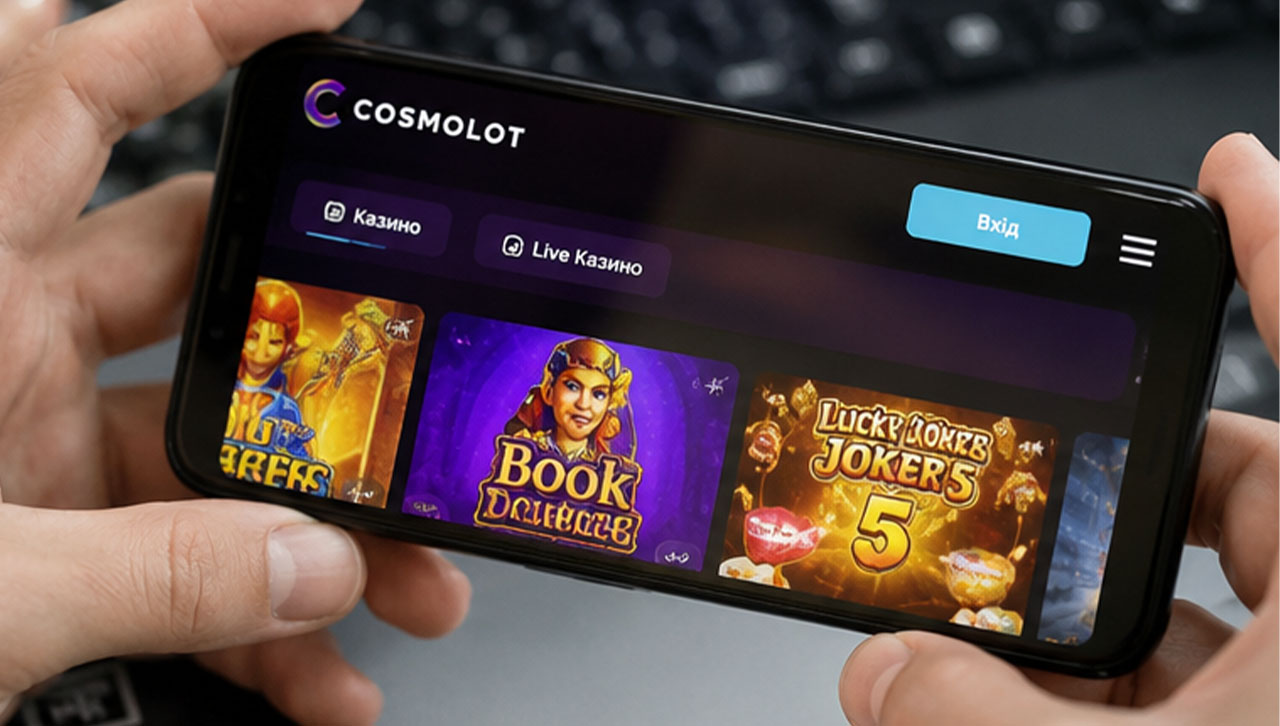
Last month, the Kyiv court temporarily suspended PlayCity’s decision to revoke Cosmolot’s online gambling licence, allowing the brand to continue operating while the legal dispute proceeds.
The dispute stems from earlier enforcement actions. PlayCity fined Cosmolot nearly UAH 13m over alleged payment processing violations, including the use of P2P payments and account top-ups using third-party bank cards.
Cosmolot clarified it had recently received a new five-year licence and passed a scheduled inspection that found no violations serious enough to justify fines or licence revocation.
Global Gaming Insider followed up with the operator to learn more about the developments surrounding the case.
How do you respond to PlayCity’s allegations?
We view the situation as an example of biased treatment and pressure on the company. Earlier this year, Cosmolot received a new five-year licence after completing all required checks. The company confirmed its ownership structure, the absence of any ties to the Russian Federation, compliance with licensing requirements, as well as responsible gaming and product security standards.
In addition, the company only recently underwent a scheduled inspection by PlayCity, which did not identify any violations of legislative requirements regarding payments that could have resulted in licence revocation or any fines. Following this, the company was subjected to an unscheduled inspection conducted with significant procedural violations.
This is precisely why the regulator’s subsequent decisions appear disproportionate to us and inconsistent with the nature of the identified remarks. We are challenging this decision in court and have also filed a motion for interim relief. On April 24, 2026, the court suspended the effect of this decision until the substantive review of the case is completed. The relevant court ruling is publicly available.
How often do you undergo regulatory inspections, and how transparent are these processes in practice?
The legislation provides for both scheduled and unscheduled inspections of gambling operators. In accordance with the Law of Ukraine “On State Regulation of Activities Related to the Organisation and Conduct of Gambling,” scheduled inspections are conducted no more than once per year and no less than once every three years in accordance with plans approved by the regulator.
At the same time, due to martial law and certain restrictions, the full-scale conduct of scheduled inspections was effectively resumed only recently.
As for unscheduled inspections, they are conducted based on a separate decision of the regulator where grounds defined by law exist. Such grounds may include, among other things, complaints or reports regarding possible violations, as well as the results of analysis of reports or documents submitted by a gambling operator.
Do you believe there may have been a misapplication of regulatory standards by PlayCity?
We do have questions regarding certain procedural decisions in the current situation. In particular, this concerns the unscheduled inspection as mentioned previously.
We would also like to note that immediately following the court’s decision, PlayCity did not ensure proper and timely execution and did not provide any public clarification regarding the validity of Cosmolot’s licence. This approach to communication appears selective and does not fully align with the principles of transparency and good governance.
Looking at the situation as a whole, these facts provide grounds to speak about biased treatment towards the company.
For the market, this is primarily an important signal that regulatory decisions may be subject to independent judicial review
Do you consider the Kyiv court’s decision to be a preliminary confirmation of Cosmolot’s position regarding compliance with regulatory requirements?
It would probably be incorrect to describe this as confirmation of our position on the merits of the dispute, since the decision was adopted within the framework of interim relief measures aimed at protecting the company from potentially irreversible consequences pending the completion of the court proceedings.
The court also took into account the overall context of the company’s operations, including the results of previous inspections, the absence of fines, transparent business operations and the significant taxes paid by the company. For the market, this is primarily an important signal that regulatory decisions may be subject to independent judicial review.
Given the current suspension of the regulator’s decision, what final outcome do you expect from this legal dispute?
For us, this is no longer only about the licence, but also a matter of the reputation of a company that has operated legally, transparently and in cooperation with the state in the Ukrainian market for many years.
We expect that, following the review of the case, the situation will be resolved through legal means and that the company will be able to continue operating steadily and conducting its business activities in Ukraine.
Can you clarify which payment mechanisms Cosmolot currently uses to ensure compliance with regulatory requirements?
The company works exclusively with payment solutions that comply with Ukrainian legislation and financial monitoring regulations.
We use tools that ensure full user identification, transaction monitoring and compliance with KYC and AML procedures.
What is your long-term vision for Cosmolot’s presence in the Ukrainian market?
Cosmolot was among the first companies to receive a licence following the market legalisation and has operated within the framework of Ukrainian legislation from the very beginning.
During this time, the company has become one of the industry’s major taxpayers and has consistently supported the country, including through charitable and social initiatives. We are interested in maintaining a long-term presence in the Ukrainian market and in the further development of the business.
Do you believe the current regulatory framework in Ukraine is sufficiently clear for operators?
The Ukrainian gambling market is still in a stage of development and ongoing updates to the regulatory framework governing gambling activities.
Over the past several years, many important decisions have been adopted to legalise and launch the industry. However, certain procedures and mechanisms still require additional clarification and more consistent practical application.
This is a natural process for a relatively young legal market. For operators, the key priorities remain stability of the rules, predictability of regulation and equal application of the rules to all market participants.
Pending regulation in Ukraine could transfer gambling policy to the Ministry of Finance, while PlayCity might be placed under the direct authority of the Cabinet of Minister