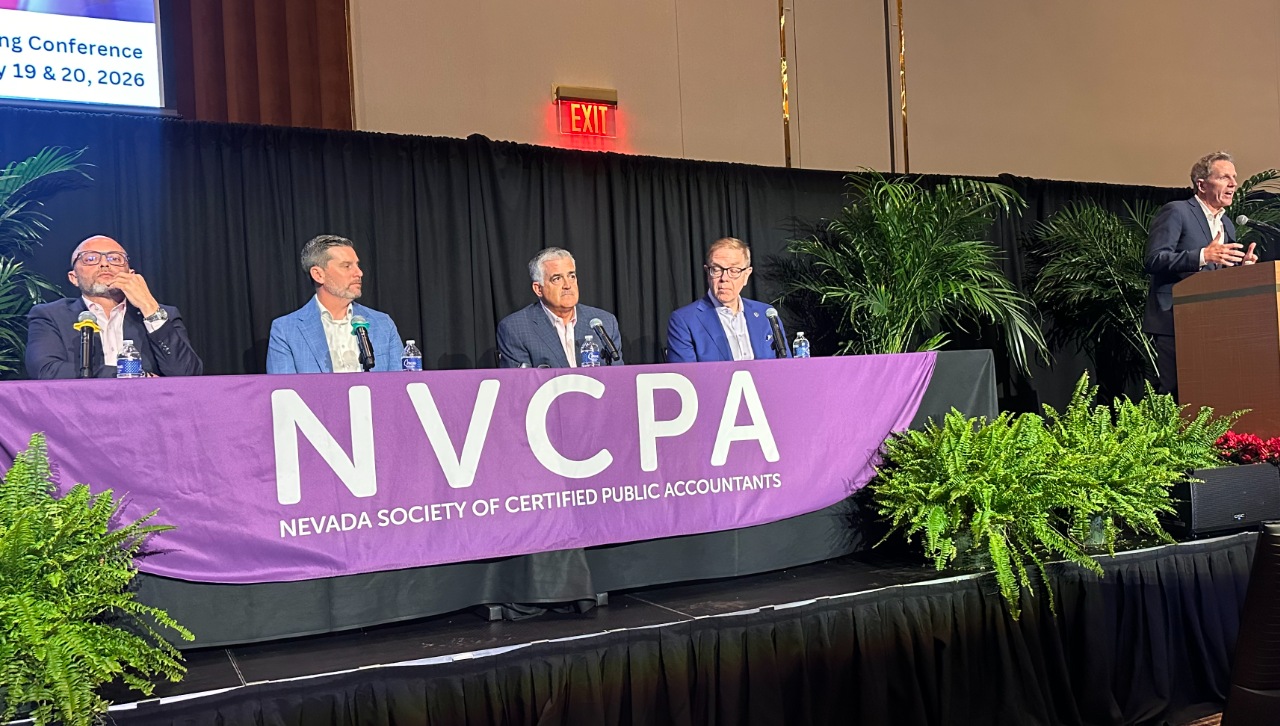
Hosted by the Nevada Society of Certified Public Accountants (NVCPA), the 47th Annual Gaming Conference was presented at Circa Resort & Casino in Las Vegas on May 19, bringing together executives from the supplier, operator and regulatory levels.
To begin the conference, Light & Wonder President and CEO Matt Wilson spoke with KPMG US Gaming Leader & Las Vegas Managing Partner Rick Arpin on his previous leadership experience, the evolution of US gaming and prediction markets.
How to avoid the Shohei Ohtani effect in gaming
Wilson started the discussion by speaking on his time with Aristocrat Gaming, helping the supplier expand from a quiet competitor into one of the top suppliers across the entire industry. Despite the success, Wilson confirmed he “kept an eye” on his future employer – then Scientific Games – and pondered how he would “fix everything they were doing wrong.”
On eventually becoming CEO and the responsibilities included with the title, Wilson said: “In this scene, it's all about shaping the strategy for the next 3-5 years. As a public company, our report cards get marked every 90 days. You have to earn the right to keep this job.
“A lot of people get behind the wheel and end up in Albuquerque. No offense to Albuquerque, but you have to make the right turns for your life and you'll eventually steer toward the right direction.”
The Light & Wonder executive believes gaming’s evolution in the US has helped "middle class country clubs," or locals casinos, generate greater success, as the need to travel to tourist destinations such as Las Vegas is no longer a requirement for gamblers. Describing gaming as "much less stable" than most industries, Wilson stated operators and suppliers need to separate their focus on different verticals, rather than become a "Shohei Ohtani" and attempt to form combined success.
On the topic of prediction markets, Wilson called attention to the views of Nevada Gaming Control Board (NGCB) Chairman Mike Dreitzer, confirming that “if it's a no for him, it's a no for us.”
“The industry needs to get together and figure out how to slow this juggernaut down,” Wilson said during the fireside chat with Arpin.
The President & CEO also shared that Light & Wonder was “completely wrong” about iGaming expansion in the US, originally believing multiple states would legalize the vertical after the Covid-19 pandemic concluded in 2021. When discussing the difficulties faced with recent tariff enforcements in the US, Wilson said the country’s geopolitical climate has had a “massive impact” on the supplier, while politicians “like to do nothing” in response.
Wilson downplayed the "panic and fear" surrounding AI and the possibility of reduced workforce in gaming, believing "you need to adapt or you'll be left behind." Confirming Light & Wonder is not looking to conduct "massive layoffs," the supplier is still currently undergoing a "major AI transformation.”
Wilson warned: "It's coming, you have to be ready for it."
The ‘narrow’ path for crypto currency in gaming
As part of a panel covering crypto being used as a casino payment method, RubinBrown Tax Partner Bill Kaiser said the “biggest misconception” about the currency is that “it’s just like dollars.”
“That couldn't be further from the truth. Anytime you're using digital assets, you're creating a taxable transaction. There's a lot of questions to be answered for accepting digital assets as payment for an operator, but that will be something which happens at some point or another,” Kaiser said.
While Zero Labs Principal Ryan Rubio believes "the path is still narrow" for operators to integrate crypto wallets, the “more you can beat the solution into a shape you're familiar with, the more success you'll eventually have.”
NGCB Technology Division Deputy Chief John Lastusky also addressed the future of crypto currency in Nevada, having said, “The Gaming Control Board doesn't accept crypto as payments. All the pieces of the regulatory puzzle are there for someone to do that, but we just have to assemble those.
“How do we handle payments if you accepted wagers at the start of the month and the value of crypto has changed since? There's more than one way to do it, but that's the hardest problem for us.”
Rubio responded to Lastusky by claiming that, despite seeing some "really insane stuff out there," operators can still discover a "hint" of what the future may hold for crypto currency.
“I think the pain of not meeting that moment is only going to increase. When you think about crypto, when you think about AI, as the consumer facing piece of this continues to accelerate, you don't want customers to feel as if they're stepping into a time capsule when they enter your establishment,” Rubio said.
The industry needs to get together and figure out how to slow this juggernaut down
When Kaiser attempted to close the panel by stating the "backend" of crypto currency is where things "break down" for operators, CleanSpark Chief Accounting Officer Brian Carson pushed back by warning that if Nevada – and Las Vegas casinos specifically – are "not ready" to capture consumer interest, "that revenue will go somewhere else.”
Can suppliers become ‘too innovative’ when developing new content?
In one of the more high-profile panels held at the 47th Annual Gaming Conference, Dreitzer, Ainsworth CEO Ryan Comstock, Konami Gaming President & COO Tom Jingoli and AGS President & CEO David Lopez spoke on supplier innovation and recent tariff issues. Lopez and Jingoli spoke on how their companies "set up shop" outside the US to avoid a portion of the financial struggles, while AGS’ leader confirmed "it's all bananas" right now and the situation "sucks" for suppliers, both private and publicly traded.
Dreitzer shared the regulator’s point of view on tariffs, having said, “It's important for us to regulate at the speed of business, which is quite quick these days.
“Oftentimes folks look to see what we're going to do. It's not always going to be one size fits all, but what affects one affects all, and this was no exception.”
Comstock confirmed Ainsworth has been forced to take a "short-sighted approach" to finding tariff solutions, while Lopez stated "we don't know what tomorrow brings" anymore due to the uncertainty around US politics.
On innovation, Jingoli brought attention to how gaming is a "copycat" league, even sharing how Lopez told him AGS would be "stealing" a Konami game during a recent tradeshow. Lopez argued that AGS could just "change the colors” of Konami’s game, and went on to point out expansion efforts made by the supplier's digital businesses. Jingoli also said the "key" to innovation is finding a way to "stay ahead of the competition" by routinely developing original content.
Pushing back against the statement, Lopez argued suppliers can't become "too innovative," and doubled down on the stance by warning that “if 80% of your portfolio is going to be innovative, I'll see you at the back of the unemployment line.”
Dreitzer shared how when he first took over as NGCB Chairman, Nevada had "fallen behind" from a product perspective and needed to be "quicker" in its regulation. The Chairman also stated many of the NGCB's regulations were "out of date" when he first took over, eventually leading to concerns brought forth by gaming manufacturers.
“When I first started and began taking a look at this issue, I was told by manufacturers that they weren't going to bring games to Nevada because it wasn't worth the hassle,” Dreitzer said.
“As the gold standard of this industry, we need to create an environment where our suppliers can be successful.”
Dreitzer concluded the panel by stating there are "many issues" the NGCB needs to fix to help form a better environment for suppliers conducting business in Nevada.
With discussions surrounding cyber security, anti-money laundering, Tribal gaming and regulations still to take place at the 47th Annual Gaming Conference, plenty of discourse remains for gaming’s most prominent topics. Much attention will center on how operators such as MGM Resorts International will address recent AML failures, and if prediction markets are set to take over the regulatory panel on May 20.
The NGCB reported the state’s total gaming activity for March 2026 on April 30, as revenue increased 11.8% to just over $1.4bn, assisted by 12.7% growth in Clark County to nearly $1.3bn