

















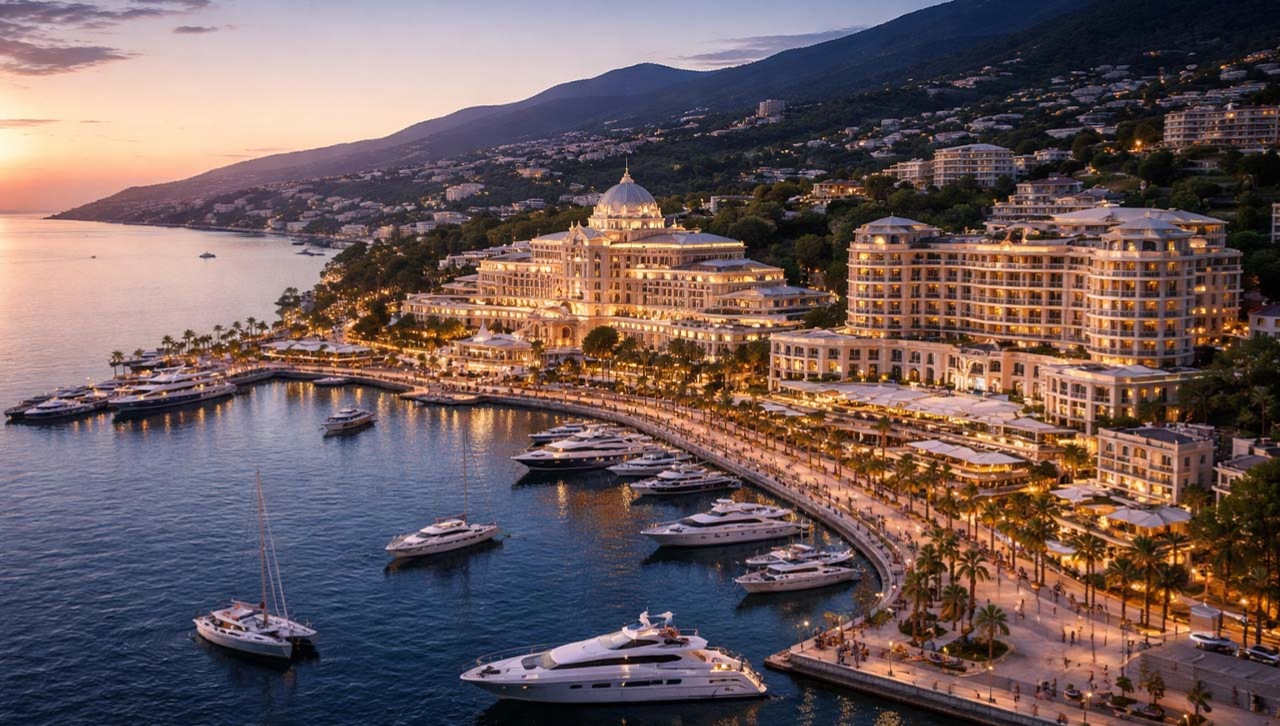
Reports indicate that the Yalta sea passenger terminal in Crimea is slated for demolition and redevelopment into a large entertainment complex featuring casinos and hotels. Construction fencing has already been installed around the port area, suggesting that work on the project may have already begun.
The complex will include casinos, luxury hotels, spa facilities, restaurants and other leisure infrastructure. The project is reportedly linked to Russian billionaire Arkady Rotenberg, who has been involved in several major infrastructure projects in Crimea.
The idea of a gambling zone in Crimea was first proposed in 2019 for a different location before being approved for relocation to the Yalta port area through 2024 legislation.
The project reflects broader discussions about the development of luxury tourism and gaming infrastructure in the region.
A new gambling zone may be established in the Altai region, pending regulatory approval.
The Association of Operators of the Entertainment and Event Tourism Industry (AIRIS) has recently reported that Russia’s gambling zones attracted 602,772 visitors in Q1 2026, a 5.5% year-on-year increase and a new record.
Recent months have also seen a series of wider regulatory discussions and proposed reforms across Russia’s gambling sector.
Russia’s self-exclusion register is set to begin operating on 1 September 2026.
Meanwhile, the State Duma, the lower house of the Federal Assembly, has approved in its first reading a bill that would ban bookmakers and totalizators from accepting bets made with credit cards.
Lawmakers are also considering legalising online casinos. A Public Chamber official has called for a minimum legal gambling age of 21, the introduction of self-exclusion options and stricter oversight of cryptocurrency use.
Krasnaya Polyana was the most visited gambling zone in Q1 2026, welcoming 251,045 visitors, a year-on-year increase of 8.2%