




















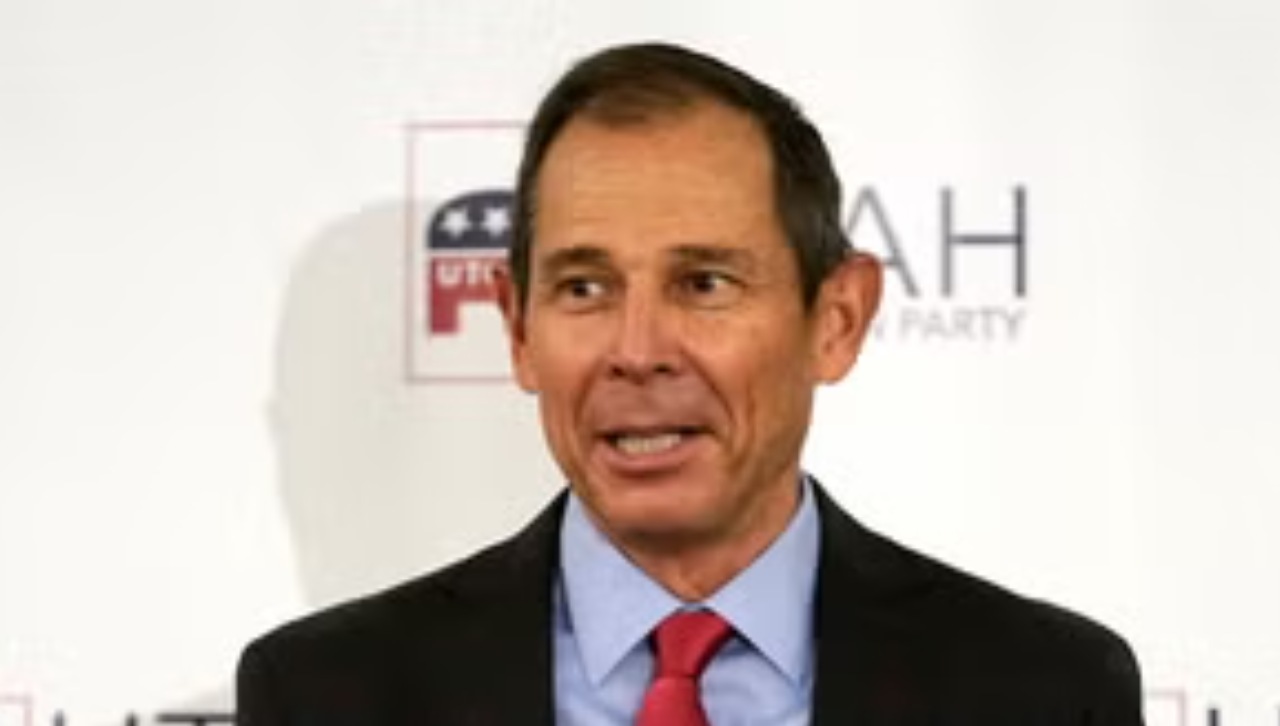
Utah Senator John Curtis has issued a letter to the Senate Judiciary Committee demanding the legislative body subpoena both Donald Trump Jr. and Hunter Biden, in part because of Trump Jr.’s “significant financial and advisory ties to prediction-market platforms.”
“More recently, questions have arisen about the relationships of President Trump’s eldest son, Donald Trump Jr., with foreign business figures and the acceptance of significant gifts. These concerns are compounded by Donald Trump Jr.’s active promotion of family-backed cryptocurrency ventures, his continued pursuit of international real estate deals involving direct meetings with foreign heads of state and his reported investments in defense contracting,” Curtis said.
“This pattern extends to his significant financial and advisory ties to prediction-market platforms that depend on favorable federal regulatory decisions being considered by the Commodity Futures Trading Commission (CFTC).”
Curtis requested the Committee subpoena Trump Jr. and Biden regarding their past business dealings, relationships with foreign individuals, benefits they may have received and “any instances where their relationship to the President was invoked or understood to provide value.”
The Utah Senator continued: “Americans deserve confidence that public institutions serve them – not Presidents, political parties, wealthy interests or members of powerful families. Congress has an obligation to pursue credible concerns wherever they lead and without regard to party.”
Trump Jr. originally received an estimated $300,000 equity stake in Kalshi after joining the CFTC-regulated prediction market platform as a strategic adviser during early 2025.
In March 2026, it was reported Trump Jr. went as far as to tell Republican Attorney Generals not to pursue legal action against prediction markets, and that states were being misled by gambling companies worried about losing their “monopolies.”
Such sentiment failed to reach Utah, however, as Kalshi’s emergency motion for injunction was denied by the 10th Circuit US Court of Appeals on September 8, opening the door for state regulators to begin enforcing anti-gambling laws against the prediction market.
Kalshi previously filed a lawsuit in the US District Court of Utah during February following what the operator described as an “intrusion” into the federal government’s authority to oversee prediction market platforms regulated by the CFTC.
Kalshi suffered a significant legal setback in Utah after a Federal judge ruled state regulators maintain the authority to enforce gambling laws against prediction market operators on August 6