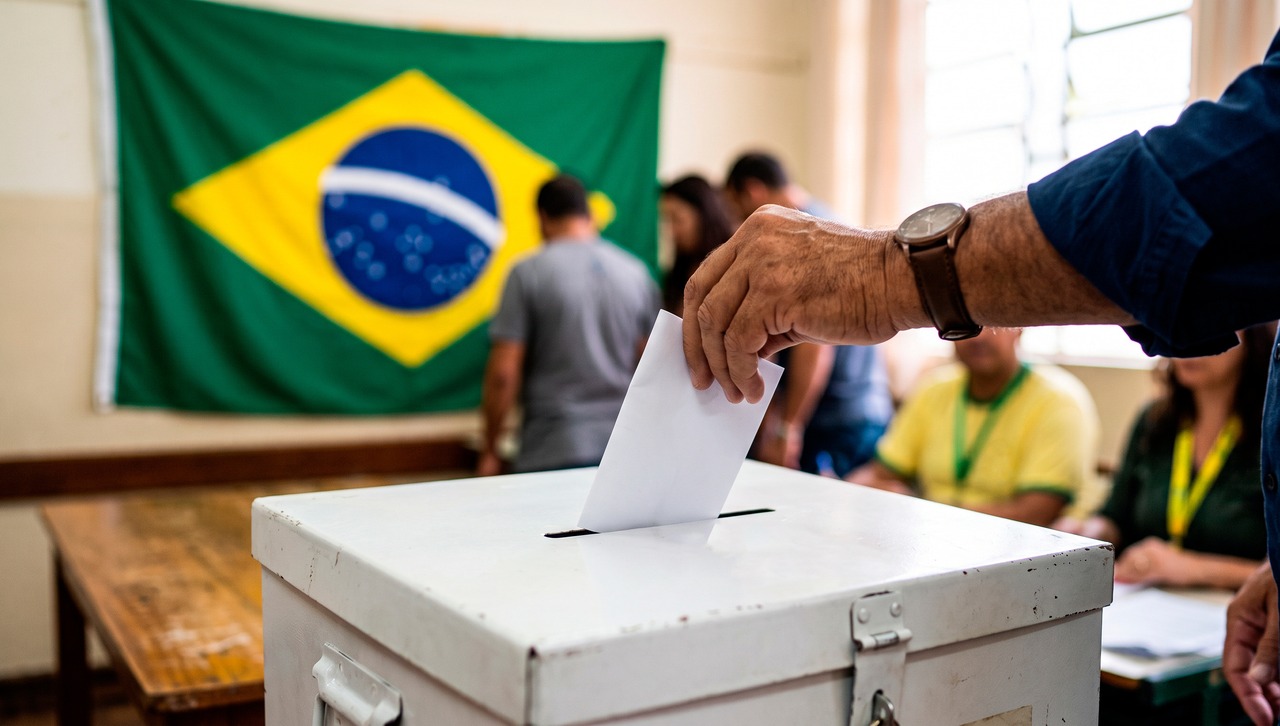
Yesterday's Brazilian elections were unpredictable even for the prediction markets: Kalshi and Polymarket gave Flávio Bolsonaro around an 80% chance of winning before Luiz Inácio Lula da Silva finally won the reelection
By 7:35 p.m. Brasília time, Polymarket priced a Lula victory at 71%, while Kalshi put it at 68%.
As the count progressed, Kalshi raised Lula’s implied probability of winning to 90%. Polymarket also increased its estimate, pricing a Lula victory at 92.8% later in the evening.
The TSE’s final count gave Lula (Workers’ Party, PT) 51.79% of valid votes, compared with 48.21% for Bolsonaro. Lula received 64.26 million votes against Bolsonaro’s 59.83 million, a difference of 4,430,191 votes.
Polymarket’s Brazilian presidential election market recorded $249.1m in total trading volume, compared with around $20m reported on Kalshi during the vote count.
Both platforms are prohibited from offering prediction markets in Brazil following restrictions introduced in April. The government said the products did not comply with the country’s rules governing derivatives and betting.
Kalshi and Polymarket have argued that restrictions on Brazilian participation undermine the quality of their local market forecasts and have sought to return to the market.
Lula’s victory triggered a sell-off in Brazilian financial markets on Monday. The Ibovespa, Brazil’s benchmark stock index, fell 10%, triggering a 30-minute trading halt, while the real weakened around 12% against the US dollar and Ibovespa futures dropped nearly 15%.
Brazil’s Treasury also canceled government bond auctions scheduled for October 27 and 29. Investors had bought Brazilian assets on expectations that a Bolsonaro presidency would bring tighter fiscal policy and lower borrowing costs.
Flávio Bolsonaro led the first round with 47.03% of valid votes, against Lula’s 45.16%. In the runoff, Lula won with 51.79%, compared with Bolsonaro’s 48.21%