













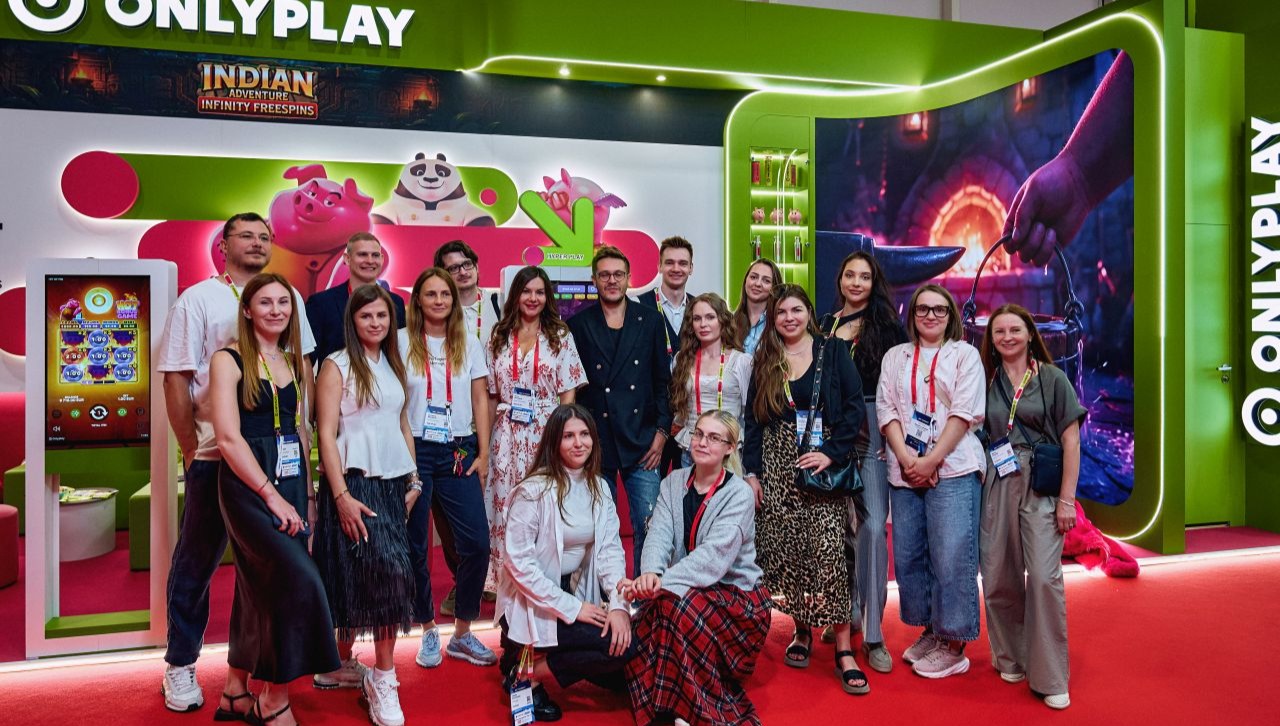
ONLYPLAY arrived at SBC Summit Lisbon with a fairly full agenda: bring the refreshed brand into a major offline setting for the first time, meet partners, review ongoing projects, discuss upcoming launches and, ideally, find a little time to see what was happening across the exhibition floor.
That last part proved harder than expected.
The Partnerships team’s calendar filled up quickly, with meetings running almost back to back. For Iuliia Pelekhata, Partnership Manager, there was barely enough time to take in the scale of the event itself.
“To be honest, I'm not even sure I managed to experience the full scale of the event because almost all my time was dedicated to meetings and conversations with partners.”
That gives a fairly accurate picture of Lisbon for the ONLYPLAY team. Most of the three days were spent moving between scheduled meetings, quick catch-ups, new introductions and conversations that are often difficult to fit into another Zoom call or Telegram thread.
This year, there was another layer to all of that. ONLYPLAY arrived at SBC looking different.
When the brand becomes a place
Before Lisbon, most people had seen the refreshed ONLYPLAY identity on a screen. At SBC, it occupied a physical space for the first time: a large stand, digital displays, characters, merchandise, meeting areas and product visuals all sitting alongside one another.
People came in for meetings, stopped to look at the characters, picked up merchandise and often stayed longer than planned to talk to the team. The refreshed brand was no longer something viewed through a post or a presentation. It had become part of the environment around the conversation.
The reaction started before the team had much chance to bring up the rebrand themselves.
As Anna Serheieva, Head of Partnerships, put it:
“What I loved most was that we didn't even have to point out our rebranding. Partners noticed it themselves.”
Partners commented on the colours, the stand and the overall atmosphere. Several described the space as brighter and more welcoming. Nobody had to be prompted for an opinion. People simply walked in and noticed that ONLYPLAY looked different.
For the team, that spontaneous response carried more weight than a polite “looks nice”. Many of those visitors had seen ONLYPLAY at previous industry events, so they had their own point of reference.
Then everyone sat down, and the conversation moved on fairly quickly.
Hyper Play also made its first appearance
Lisbon was also where ONLYPLAY introduced Hyper Play by ONLYPLAY to the industry. The new strategic product direction brings together ONLYPLAY’s iGaming experience with approaches from mobile and PC game development, with a focus on new game formats, replayability, multiplayer interaction and deeper session design.
At SBC, partners had the chance to see the first Hyper Play demo and discuss the thinking behind the direction directly with the team. It added another layer to the conversations around the stand: alongside the refreshed identity, ONLYPLAY was also showing where part of its product development is heading next.
The direction is led by Eugene Lavrinenko, a game developer and serial entrepreneur with more than 12 years of experience in mobile and PC gaming. Over the course of his career, he has worked with teams on 400+ prototypes and several international hits, and now leads Hyper Play’s product strategy and development. In Lisbon, partners could not only see the first demo, but also discuss Hyper Play’s approach to new formats and mechanics directly with Eugene Lavrinenko.
The most useful feedback had little to do with the stand
Within a few minutes, the topics on the table were usually much more practical: a current integration, results from a previous activity, the next release, marketing plans or a technical issue that was easier to discuss face to face.
Those conversations also brought some of the most encouraging feedback of the event.
Iuliia Pelekhata said:
“What's especially rewarding is that partners know us not only for our games, but also for the quality of our service and the way we approach cooperation.”
Some existing partners went further and said they were happy to recommend ONLYPLAY to others because of their experience working with the team.
In B2B, that kind of recommendation tends to come with history behind it. By that point, a partner has already been through the integration workflow, asked awkward questions, needed something urgently, seen how the team handles a problem and experienced what happens once the first launch is no longer the newest item on the agenda.
That is why this feedback stayed with the team. It reflected months of fairly ordinary work: support chats, follow-ups, launches, operator requests and the sort of day-to-day problem-solving that rarely makes it into a conference recap.
Go-live no longer closes the conversation
Another theme kept returning throughout meetings in Lisbon: operators increasingly want to know what happens to a game after launch.
The integration itself is only part of the discussion. Partners want to understand how the product will be promoted, which marketing tools are available, what can be done jointly with the provider and who will continue to support the game once it is live in the lobby.
Olha Marchenko, Partnership Manager, summed it up this way:
“There's much more focus on what happens next – how you promote that content, engage players, and build long-term relationships with partners.”
That shift was easy to see in the meetings themselves. A conversation about a future integration could move straight into a promotional plan. A discussion about one particular title could quickly become a conversation about what to do with it a month after launch.
Marketing tools, promotional activity, personalisation and joint planning are increasingly entering the discussion earlier in the partnership process. For providers, that means more work around the product itself and a longer relationship with the operator after go-live.
When a contact finally becomes a person
Some of the partners the ONLYPLAY team met in Lisbon had been part of the working week for months without ever having met in person.
Until SBC, they might have been a name in Telegram, an email thread, a familiar square on a video call or a recurring slot in the calendar.
Face-to-face contact adds context very quickly. Half an hour at the same table is often enough to review what has already been done, clear up questions that have been moving between messages for weeks and get a better feel for the person on the other side of the chat.
Olha described Lisbon as a good workation: the team had time to sit down together, review current projects and plan next steps, while also finally meeting people they had been working with remotely for a long time.
These meetings are rarely dramatic. More often, it is coffee between two calendar slots, half an hour at a table and a quick goodbye before somebody has to head to the next appointment. Still, the next Telegram message tends to read differently afterwards.
Tone is easier to judge. Context comes faster. Difficult questions become easier to discuss.
In an industry where a large part of partnership management still happens through messengers, Slack, email and Zoom, that remains one of the most practical reasons to keep meeting in person.
What came back from Lisbon
After three days, the stand came down, the merchandise went into suitcases and the calendar returned to something closer to normal.
The follow-up list did not.
Some conversations now need a proposal. Others need a second discussion around a marketing activity. There are upcoming launches to review, new contacts to write to and partners to follow up with after finally spending proper time together offline.
That is probably the most useful way to measure a conference like SBC.
ONLYPLAY went to Lisbon to present its refreshed brand in person for the first time. The team came back knowing that partners had noticed the change, that service was becoming a reason for them to recommend the company to others, and that expectations around post-launch support and response times continue to rise.
By Monday, the conference had already turned back into regular work: notes to sort through, emails to answer, follow-ups to assign and conversations from Lisbon to move forward.
Since its launch in 2020, Onlyplay has grown from a young company into an international gaming content provider