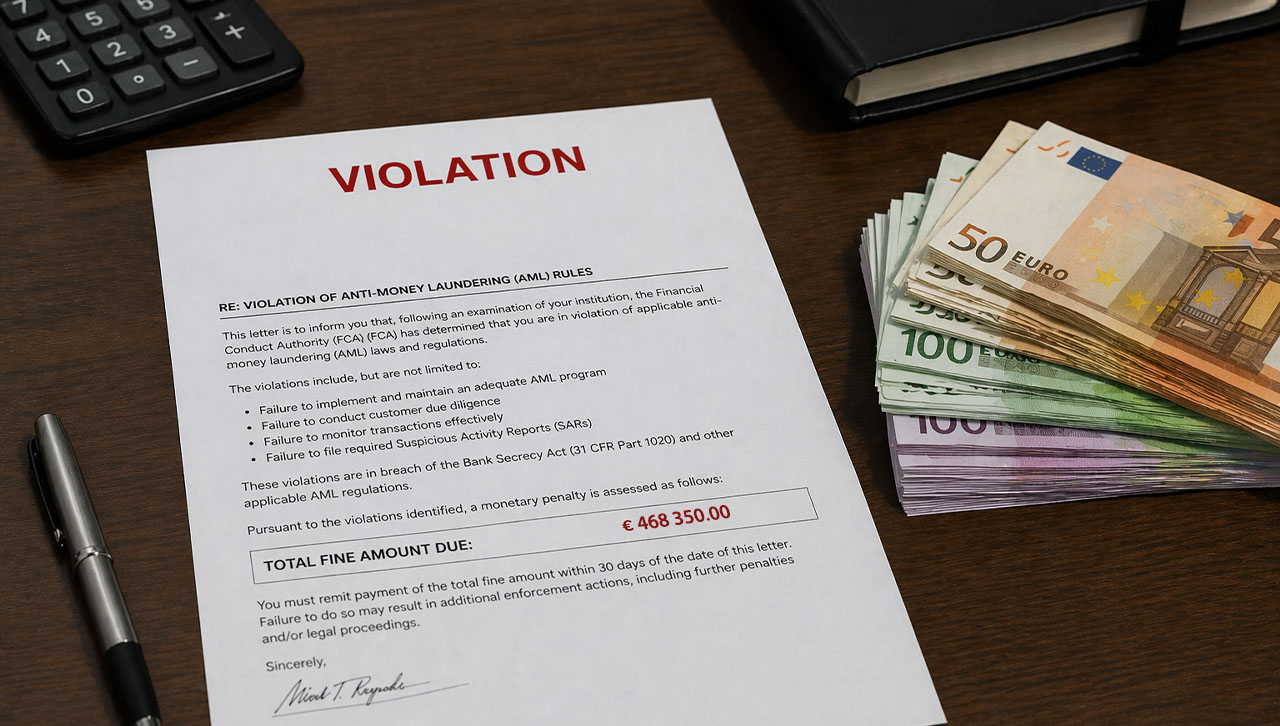
Lithuania’s Gaming Supervisory Authority (LPT) has fined gambling operator Baltic Bet €468,350 ($531,000) after finding failures in how it verified the origin of customer funds and handled suspicious transaction reporting.
The case was opened after the regulator received information that an individual had lost a large amount of money across several gambling businesses, including Baltic Bet.
According to the LPT, Baltic Bet failed to meet requirements under Lithuania’s Law on the Prevention of Money Laundering and Terrorist Financing before allowing the customer to gamble.
The authority said the operator did not collect enough information about the customer or the origin of funds used for gambling.
That, the regulator said, meant Baltic Bet did not have a sufficient basis to monitor the customer’s gambling activity properly or identify transactions that should have raised concern.
The LPT also said Baltic Bet failed to ensure that information on suspicious monetary transactions was submitted to the Financial Crimes Investigation Service, which is responsible for investigating financial crime in Lithuania.
In setting the fine, the authority said it considered both mitigating and aggravating factors. It noted that Baltic Bet had not previously committed breaches linked to anti-money laundering and counter-terrorist financing rules and that there was no indication the violations were intentional.
The regulator also said the operator cooperated during the inspection and provided the requested information.
At the same time, the LPT said the breaches continued for several years and that Baltic Bet received material benefit from the customer’s gambling activity. The decision can still be appealed in court.
The penalty comes as gambling compliance remains under sharper focus across Europe, particularly around affordability checks, customer due diligence and the reporting of unusual financial activity.
In Lithuania, enforcement has increasingly moved alongside broader gambling reform efforts, with policymakers examining both consumer protection measures and tougher supervision tools for the sector.
The enforcement action lands as Lithuania advances a wider overhaul of gambling safeguards. In March, Prime Minister Inga Ruginienė said the country planned to introduce gambling loss limits and a gambler’s card linked to a centralised monitoring system, expanding the authorities’ ability to track play and intervene earlier in cases of harm.
Lithuania also blocked financial transactions to foreign unlicensed operators in 2025 as part of a broader tightening of gambling controls