























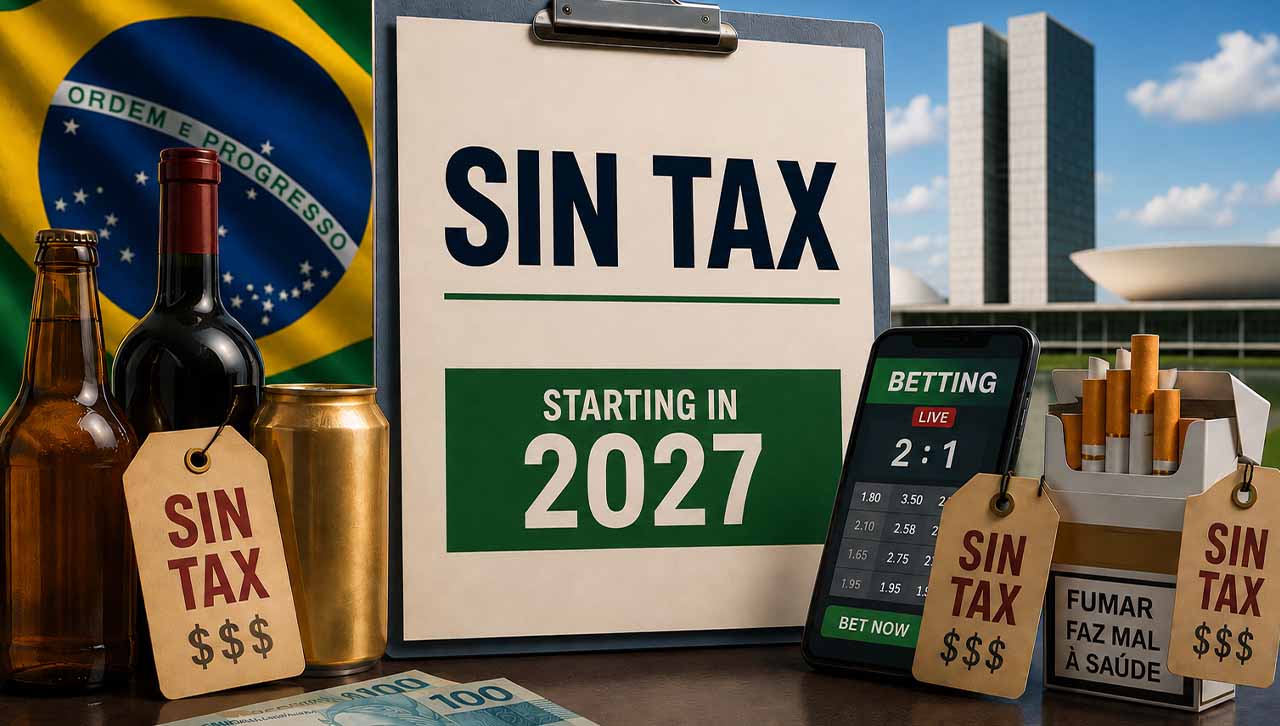
Brazil’s betting industry could face higher costs from 2027 under Brazil’s new Selective Tax (IS), referred to as the country’s “sin tax”.
Created as part of Brazil’s broader tax reform package, the measure will apply additional taxation to products and services considered harmful to public health or the environment. The list includes betting activities, alcoholic beverages, tobacco products and sugary drinks.
While betting operators already face sector-specific taxation under Brazil’s regulated framework, the final rates for the new Selective Tax have yet to be defined, creating uncertainty for businesses attempting to plan future investments and operations.
According to Brazil’s Ministry of Finance, the project remains under technical development and the economic impact cannot be fully estimated until Congress finalises the applicable rates.
Last December, President Luiz Inácio Lula da Silva sanctioned legislation approved by Congress that reduced federal tax exemptions and introduced a progressive increase in taxation on operators, marking another step in the consolidation of Brazil’s regulated gambling market.
Unlike Brazil’s consumption taxes, the Selective Tax will function as an additional levy and will not generate tax credits along the production chain.
Supporters of the measure argue that additional taxation can help offset broader public expenses linked to harmful consumption, while critics have warned that excessive tax burdens could affect the competitiveness of regulated operators.
Recently, former Brazilian Central Bank President Arminio Fraga argued that betting should be treated primarily as a public health issue rather than an economic one, citing concerns about addiction and its social consequences.
Brazil’s First Lady Janja Lula da Silva has defended the regulation of betting while encouraging people affected by gambling-related harm to use the Federal Government’s self-exclusion tools