Brazil's illegal online betting market shrank in the first half of 2026, according to a study released by LCA Consultores.
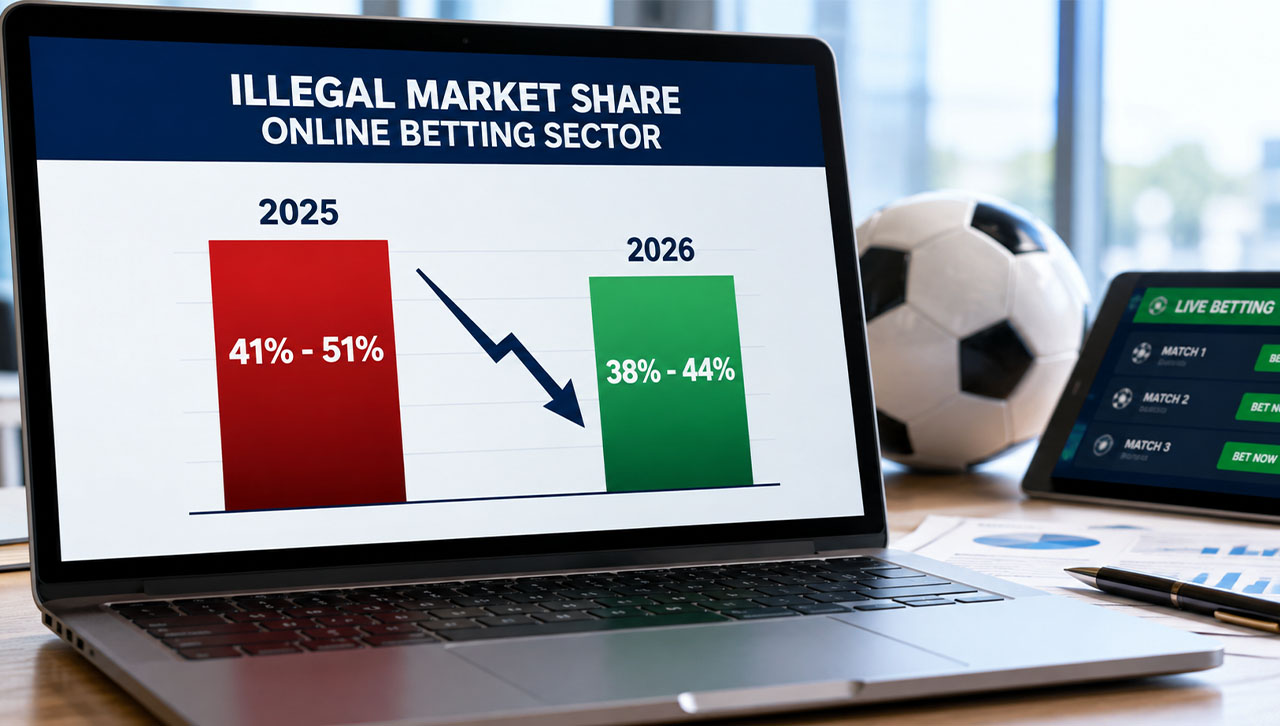
The estimated share fell from a range of 41%-51% in June 2025 to 38%-44% now, according to the research.
The gap between the study's optimistic and pessimistic estimates also narrowed, from 10 percentage points to six, a sign researchers say reflects growing clarity for bettors distinguishing licensed operators from unlicensed ones.
The study, commissioned by the Brazilian Institute of Responsible Gambling (IBJR), still places Brazil's illegal betting share above every country studied except the Netherlands, at 51%.
Ireland, Sweden and the UK posted the lowest shares, at 3%, 6% and 8% respectively.
"The good news is we're managing to reduce the illegal market. But the study doesn't say whether betting is good or bad, the fact is the illegal market is still very large compared to other countries," said Eric Brasil, director of Regulation and Public Policy at LCA Consultores, who also noted Brazil's regulated sector tax revenue keeps rising.
IBJR chief executive Carlos Lima said the findings show that regulation and Federal Government enforcement are starting to deliver concrete results.
"The challenge now is sustaining this progress, strengthening the fight against illegal operators, and ensuring regulatory changes come with legal certainty and predictability, so new measures aimed only at licensed operators don't create imbalances that make the illegal market more attractive to consumers," he said.
Recently, Brazil's gambling associations, including IBJR, have pushed for a phased rollout of technical requirements in an upcoming online gaming ordinance, warning that imposing changes on licensed operators before B2B supplier rules are finalized could give illegal sites a competitive advantage.
58% of Brazilians associate sports betting with match-fixing, according to a different survey