













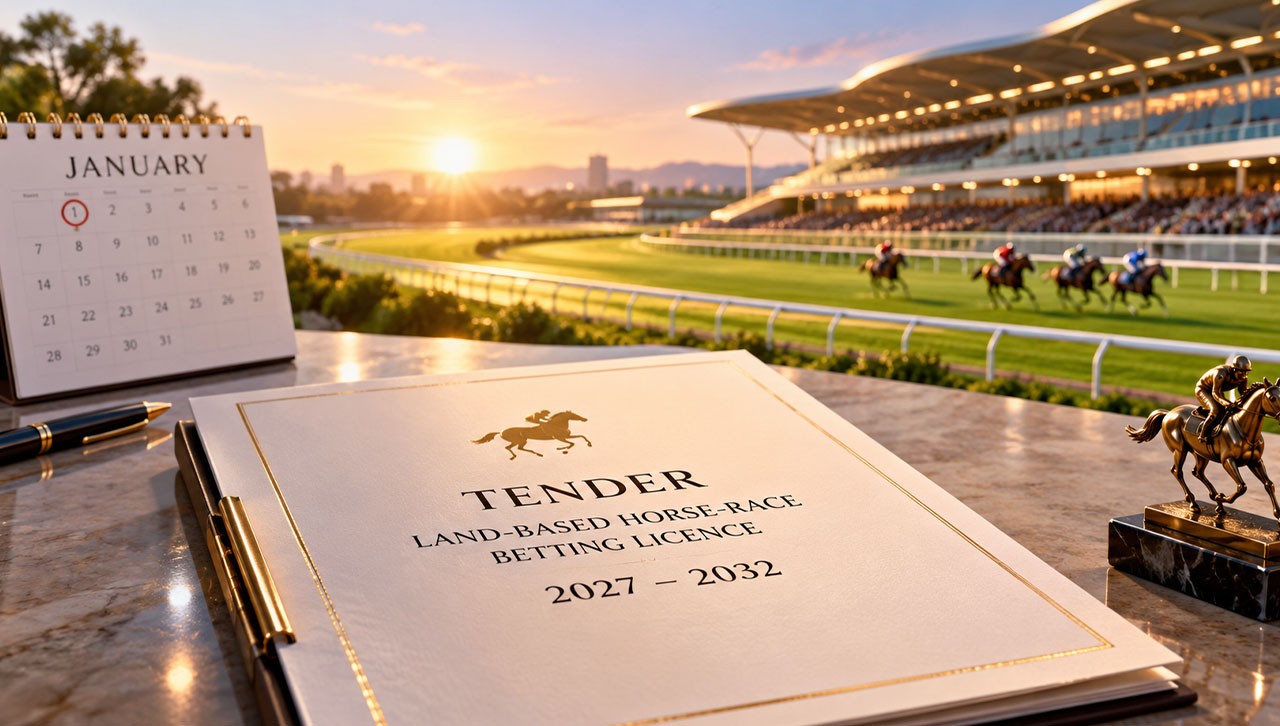
The Netherlands' gambling regulator, Kansspelautoriteit (KSA), has announced the timetable and assessment rules for the country's single offline totalisator licence, which covers pool betting on horseracing. Prospective operators can apply during January 2027 for a permit lasting five years.
The current licence is held by ZEbetting & Gaming Nederland B.V. and expires on 30 June 2027. Its successor will run from 1 July 2027 to 30 June 2032. Because the activity is a statutory monopoly, KSA can issue only one licence for the new period.
The permit covers pari-mutuel betting at racecourses and physical betting shops. Stakes are combined into a pool rather than wagered at fixed bookmaker odds. It does not authorise online gambling, which is governed by the separate remote-gambling licensing system.
Applications can be filed from 4 to 31 January. KSA expects to publish the application form, model permit and other procedural documents in December. Applicants must pay a €40,900 ($45,500) processing fee in advance, and the regulator says the fee will not be refunded.
KSA will first assess each application against requirements covering legal form, location, business continuity, internal supervision, reliability and integrity. It will also examine outsourcing and incident procedures, measures to prevent gambling harm and underage participation, match-fixing policy and demonstrated experience offering offline sports betting.
A second stage is needed only if more than one applicant passes those checks. In that case, a notary will choose the licence holder through an unweighted draw. The process therefore does not automatically award the permit to the current holder.
The winner must transfer 10% of its monthly gross gaming revenue from bets on horse and harness races organised in the Netherlands to the horseracing sector. The contribution applies to that defined category of betting revenue, rather than all of the operator's income.
ZEbetting & Gaming Nederland B.V. obtained the present five-year licence through an open procedure in 2022. It had also held the preceding permit. The current licence requires in-person participation at the sales point, annual IT audits and measures against underage gambling. KSA has not yet published the model conditions for the 2027 to 2032 term.
A September Council of State ruling upheld single-licence models for three other Dutch land-based gambling categories, drawing a legal distinction between those activities and the open licensing system for online gambling.
The present permit caps single-bet stakes at €250 and multiple-bet stakes at €1,000