



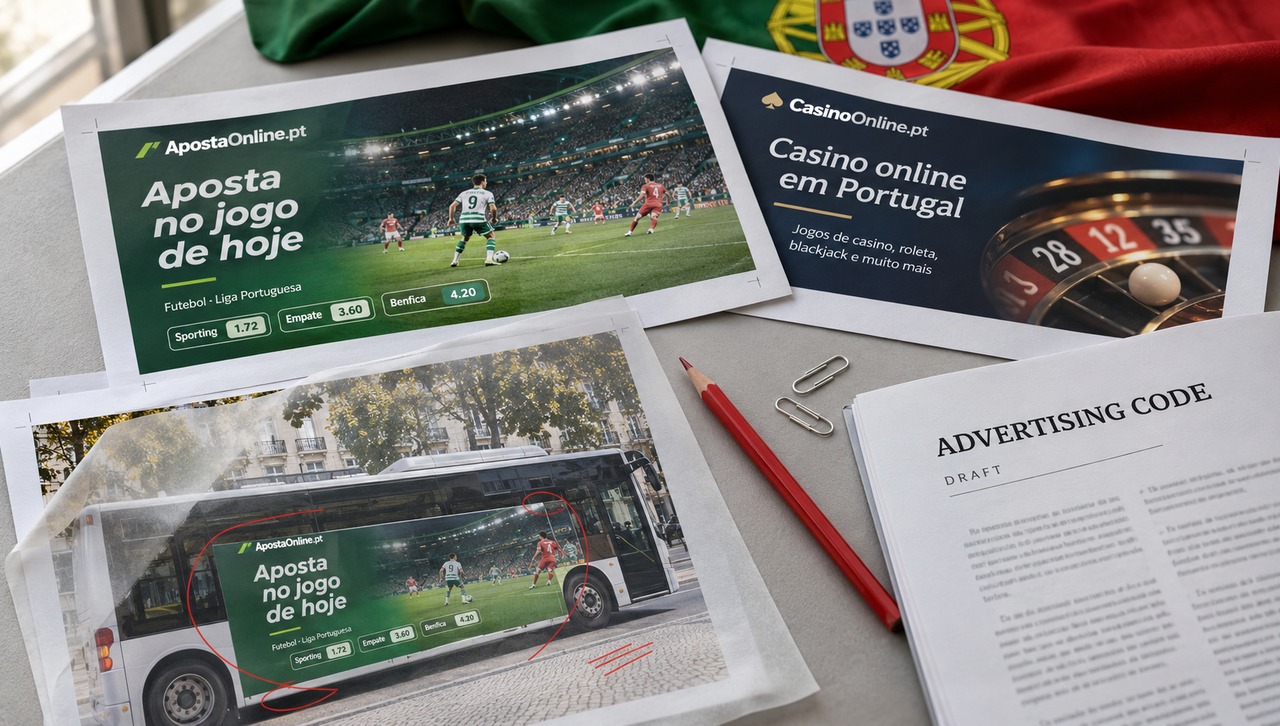
Portugal's online betting association and advertising self-regulator have agreed to develop a voluntary code for licensed gambling campaigns, with proposals covering public transport, promotional offers and content aimed at adults.
The Associação Portuguesa de Apostas e Jogos Online (APAJO) and Auto Regulação Publicitária (ARP) signed a cooperation agreement to draft the sector-specific code. Its measures are proposals, not rules already in force.
An ARP working group must write the text, and the organisation's General Assembly will then decide whether to approve it. No final approval date has been set.
APAJO intends to propose a ban on online gambling advertising on public transport. It also wants television, radio, cinema and outdoor campaigns to stop displaying specific bonus values or betting odds.
The association is calling for clearer restrictions on broadcast and cinema advertising between 07:00 and 22:30, with an exception for static sponsorship cards that do not carry promotional messages.
For digital channels, APAJO proposes limiting advertising to platforms with predominantly adult audiences. Social media advertisers would use available age controls, while influencers would only promote licensed betting to audiences that are predominantly over 18.
Responsible gambling messages would follow a common form and be reviewed each year for effectiveness.
The agreement also envisages ARP reviewing campaigns before publication, with a system expected to launch in early 2027. The associations have not said that the proposed code will be completed by then. The framework would need to be agreed before a pre-clearance process could apply to participating operators.
Portugal already regulates gambling advertising under its Advertising Code. The Gaming Regulation and Inspection Service (SRIJ) monitors compliance and publishes a good-practice manual.
The proposed industry code would add a common process for reviewing participating operators' campaigns, subject to ARP approval.
APAJO joined ARP in 2022 and says the agreement follows more than a year of work. Some members have voluntarily adopted parts of the proposed approach.
The association plans to invite other licensed operators to join. Unlicensed advertisers remain subject to existing law.
During the 2026 World Cup, APAJO identified 500 cases of unlicensed betting promotion over 39 days, most of them on social media. Its earlier monitoring focused on illegal advertisers; the proposed code addresses how participating licensed operators approve and place their own campaigns.
The agreement calls for an internal mechanism to help APAJO members adopt approved measures progressively