




























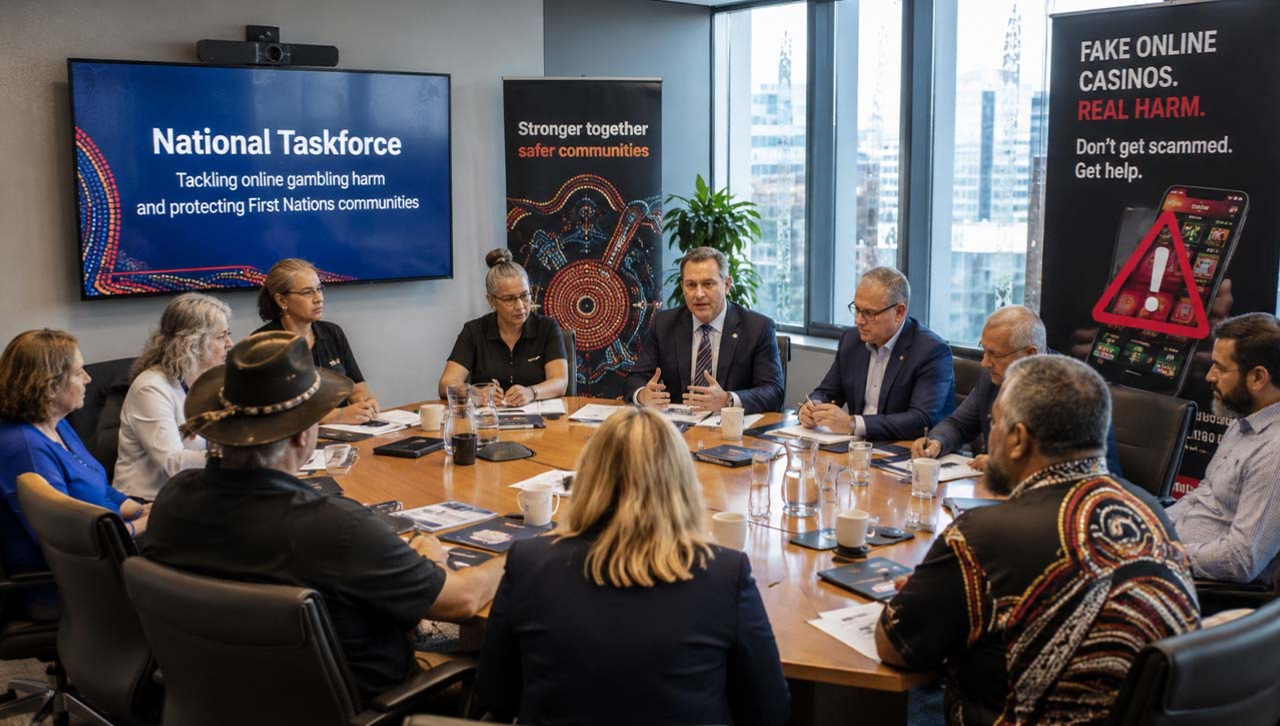
The National Anti-Scam Centre in Australia has announced the establishment of a new cross-sector taskforce to tackle an emerging scam known as “scambling.” The practice involves consumers being lured to fake online gambling platforms that manipulate results, withhold supposed winnings and incentivise users to recruit others.
The taskforce, known as the “scambling fusion cell,” will bring together law enforcement agencies, government bodies, regulators, digital platforms, banks, telecommunications providers and frontline community services.
The group will trial initiatives aimed at disrupting scambling across digital platforms, while also raising consumer awareness and strengthening support pathways for people affected by the scam.
Australian Competition and Consumer Commission Deputy Chair Catriona Lowe stated: “These scams create legitimate-looking online gambling platforms to convince consumers to deposit money for supposed gambling services, often before blocking withdrawals or demanding further payments.
“The National Anti-Scam Centre’s latest fusion cell will seek to better understand these scams which appear to target vulnerable communities and reduce the prevalence of scambling to protect consumers.”
Scamwatch received 806 scambling reports in 2025, up from 677 in 2024. Reported losses more than tripled during the same period, rising from around AU$449,000 (US$311,370) in 2024 to AU$1.6m in 2025.
The harmful trend is disproportionately affecting First Nations Australians. In 2025, over 45% of reported losses came from consumers who self-identified as First Nations
However, the National Anti-Scam Centre warned that these figures likely underestimate the true scale of harm, a view also shared by frontline agencies supporting consumers affected by scambling.
Lowe added: “Given the nature of this scam, we believe scambling is significantly underreported because people may think they have lost money through gambling, rather than through a scam.”
The scambling fusion cell will operate until 9 December 2026, with a report on its outcomes expected to be published in 2027.
Fusion cells are time-limited taskforces designed to bring together expertise from government and the private sector to take action to address specific and urgent scam issues