





















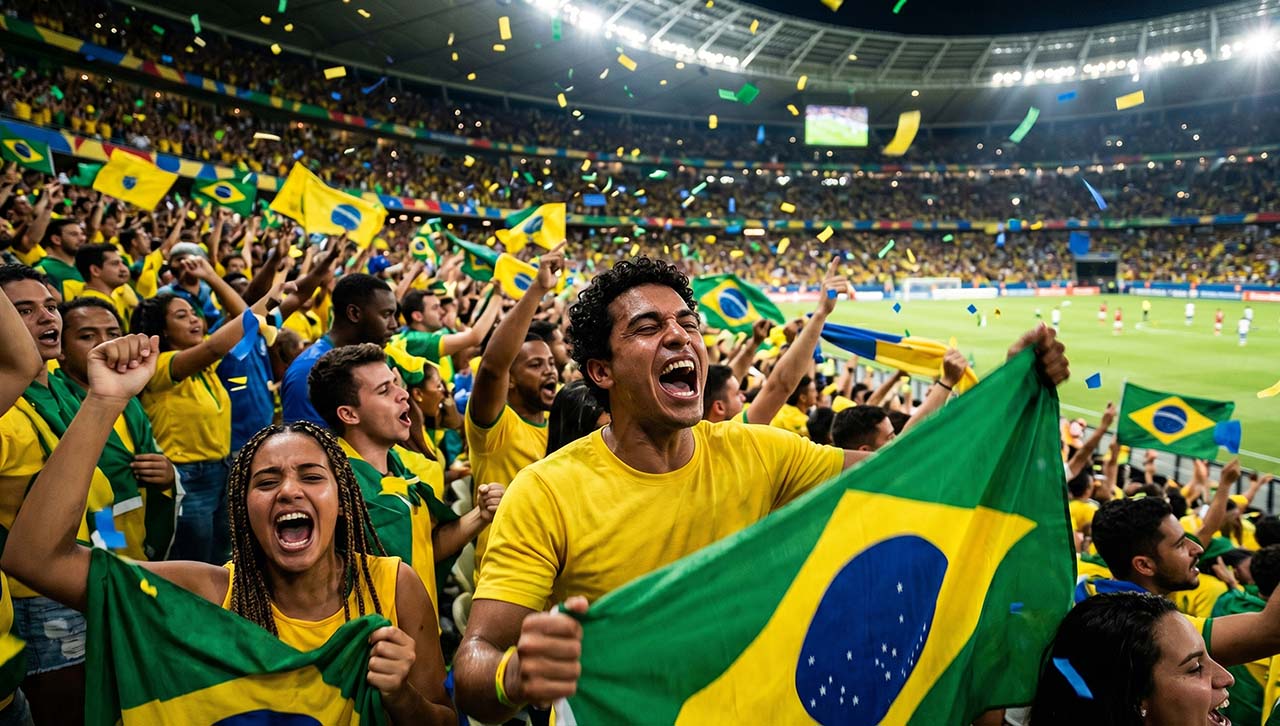
A majority of Brazilians believe betting has a negative impact on football and should no longer be allowed to sponsor clubs.
The results come from a new survey conducted by More in Common in partnership with Ipsos-Ipec.
The research found that 68% of respondents agreed betting sponsorship in football should be prohibited because gambling harms fans and families.
By comparison, only 19% said sponsorship should remain because it provides important financial support to clubs.
Concerns over sporting integrity also featured prominently in the findings: 58% of respondents said betting substantially increases the risk of match-fixing due to growing public unease over the industry's role in Brazilian football.
Researchers noted that these views extend across Brazil's political divide, with respondents intending to vote for both left and right-wing: 65% of left-wing supporters backed banning betting sponsorships in football, compared with 72% of right-wing supporters.
PERCEIVED RISK OF MATCH-FIXING IN BRAZIL
To what extent do sports betting companies increase the likelihood of match-fixing in Brazilian football?
Industry representatives, however, urged caution when interpreting the findings
Bernardo Cavalcanti Freire, legal adviser to the National Association of Games and Lotteries (ANJL), said the research has methodological limitations but acknowledged that it reflects genuine public concern about gambling risks.
“This finding, however, does not lead to the conclusion that the solution is to restrict or prohibit advertising or the activity. On the contrary. It reinforces the importance of responsible and educational advertising, carried out exclusively by authorized operators.”
Carlos Lima, President of the Brazilian Institute of Responsible Gaming (IBJR), also recognized concerns around sporting integrity.
“One of the challenges we face today is how to effectively maintain sporting integrity. Registered operators work constantly to protect the integrity of competitions. It's a concern for everyone. It's a relevant issue for fans and the government," he said.
The survey was conducted between July 4 and 8, interviewing 2,000 people aged 16 and over across 130 municipalities in Brazil