























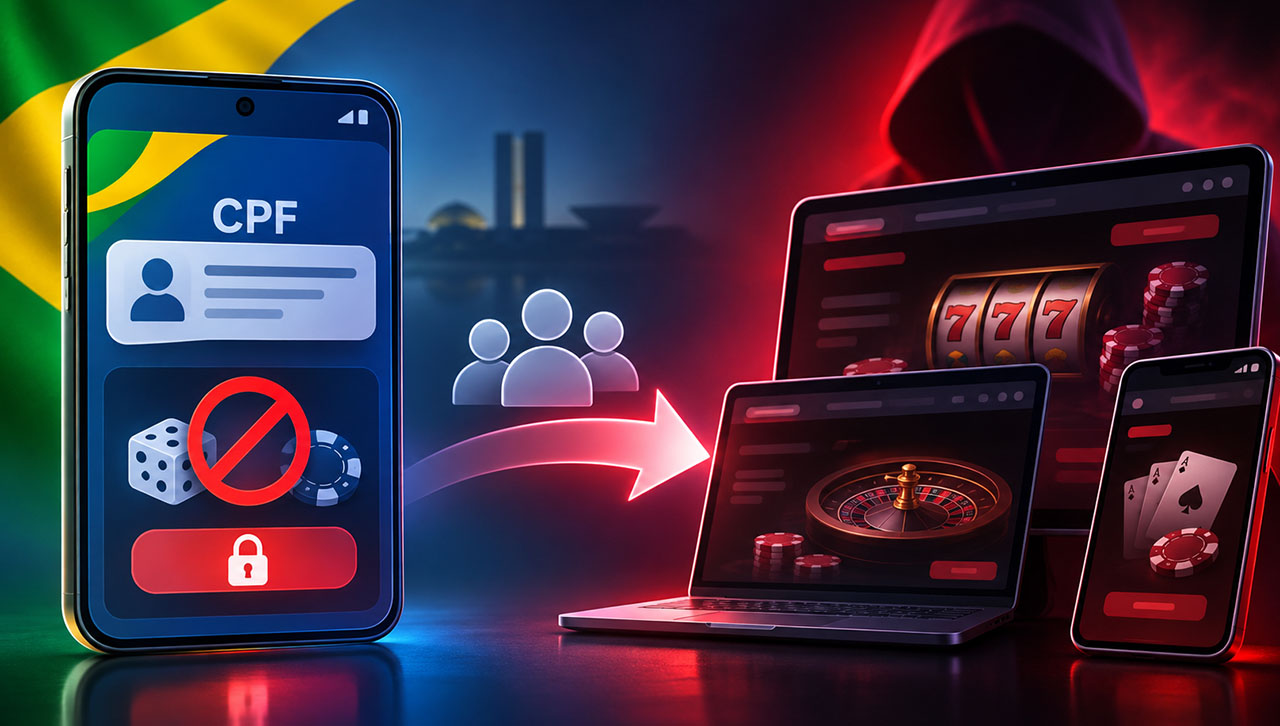
A study by Brazilian digital treatment clinic Emerson Health found that 93% of bettors who blocked their individual taxpayer identification numbers (CPF) through the country’s national self-exclusion system continued gambling on unlicensed platforms.
The survey analyzed records from only 2,219 people who sought medical assistance between May and October 2026. Of the participants, 43% had used the self-exclusion mechanism run by the Ministry of Finance’s Secretariat of Prizes and Betting.
Only 7% of them said they had stopped betting, and none reported more than 10 days without gambling.
Those who had blocked their CPF reported a median debt of BR21,800, compared with BR13,800 among those who had never used the system.
One of the people interviewed said the mechanism alone was insufficient because it only restricts access to licensed operators, while unregulated platforms remain accessible online.
Brazil continues to struggle to restrict unlicensed betting even after the sector was nationally banned.
The National Association of Games and Lotteries (ANJL) said about 34,000 illegal platforms were operating on 3 November and that new domains often replace those taken down within hours.
Across 2,219 people, the median share of monthly income spent on betting was 37.5%, and the median debt was BR17,200. Participants earning up to one minimum wage spent a median 64.4% of income on betting. Women reported median debts of BR26,500, against BR10,700 for men.
Before the ban, a different survey found that 75% of Brazilians believed online betting platforms should be banned in the country.
ANJL has flagged 802 Instagram profiles sharing links to suspected betting sites after the country's ban came into force