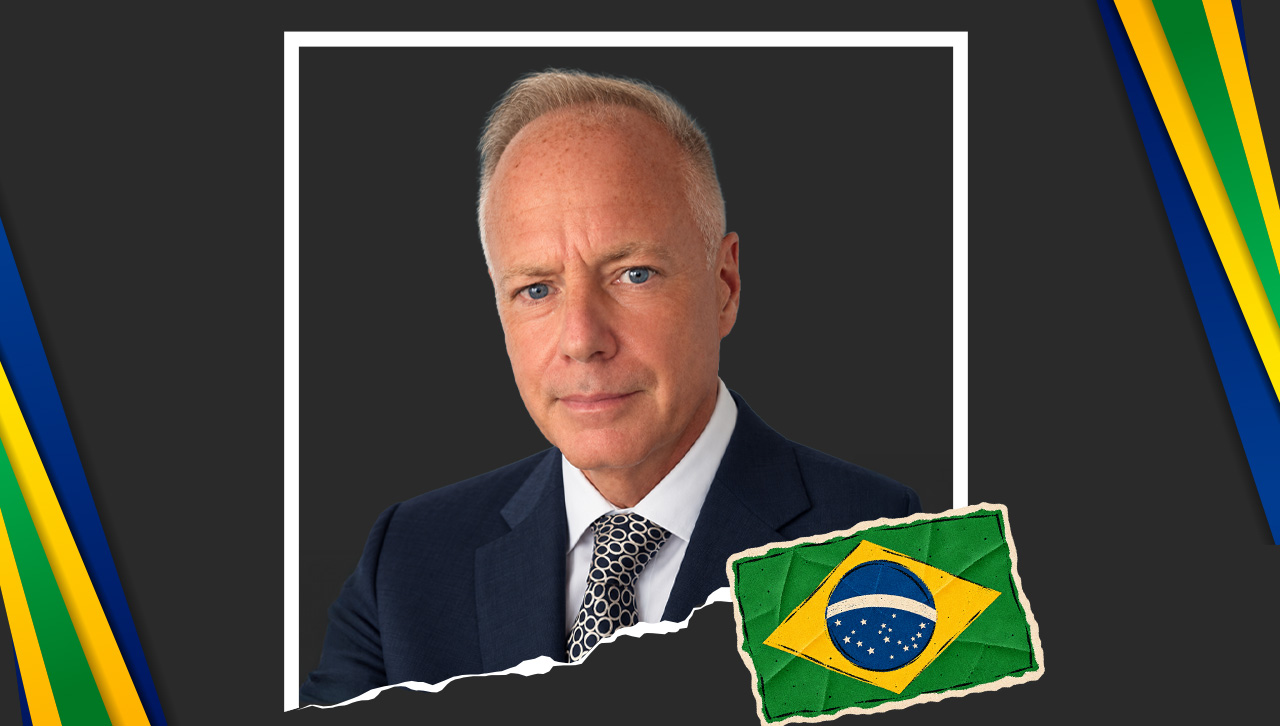
Brazil’s betting regulator is entering a new phase of leadership, with Daniele Correa Cardoso stepping in as Secretary of Prizes and Betting (SPA) at a time when the sector faces increasing regulatory and political pressure.
Who else is new in the house?
The appointment was announced by new Finance Minister Dario Durigan, currently filling in for previous Minister Fernando Haddad.
Haddad was openly critical of the betting sector during his mandate at the ministry, framing it as a source of social concern and signaling support for tighter controls.
Durigan, in confirming the reshuffle, emphasized a technical and collective approach within the Ministry, stating: "No one does anything alone. We are a serious, united, and technically skilled Ministry."
Was Cardoso already working with the SPA?
She had been serving as Deputy Secretary since August 2025 and previously led the General Coordination of Responsible Gaming Monitoring within the SPA.
Her appointment comes after the departure of Regis Dudena to the Secretariat of Economic Reforms, positioning her as a continuity figure within the regulatory structure.
Her career trajectory suggests a regulator shaped more by consumer protection than by traditional gaming oversight.
A law graduate from the State University of Feira de Santana, with a postgraduate specialization in State Law, Cardoso has spent over a decade within Brazil’s public administration.
Her experience includes senior roles at the Ministry of Justice, where she oversaw the National Consumer Information System and platforms such as Consumidor.gov.br, Brazil’s official consumer protection website, as well as a position at the Brazilian Institute of Environment and Renewable Natural Resources (Ibama) focused on human resources management.
This background is particularly relevant as Brazil’s betting framework increasingly intersects with consumer rights, data protection and behavioural oversight. Her prior role monitoring responsible gaming mechanisms places her at the center of one of the sector’s most sensitive areas: player protection.
Against this backdrop, Daniele's leadership is likely to be tested on how effectively the SPA can balance enforcement with market stability
How has the Secretariat affected Brazil?
The SPA’s mandate spans from technical regulation to policy coordination, including ensuring adherence to responsible gaming requirements and financial transparency.
In practice, the SPA has already taken steps to operationalize these responsibilities. One example is the rollout of a national self-exclusion system, which has already seen over 217,000 Brazilians opt out of betting platforms.
Cardoso has already been visible in shaping the SPA’s regulatory stance, including positioning the Secretariat against proposals to ban advertising for licensed operators during interviews.
In recent months, she has also been signing off on multiple formal regulatory acts on behalf of the SPA to establish rules, procedures or operational guidelines, signaling her active role in day-to-day policymaking even prior to her formal appointment.
At the enforcement level, the new Secretary has also worked alongside SPA and Brazil’s telecommunications regulator Anatel to block access to illegal betting websites.
At the same time, the SPA has intensified scrutiny over influencer marketing, targeting digital promotion practices that might expose consumers to misleading or non-compliant content.
Has the Brazilian Government gambled on the betting sector?
Cardoso’s appointment also comes at a moment when the political environment around betting is becoming more complex in the country.
While regulation has formalized the sector and generated tax revenue, it has also triggered backlash from other industries, as well as policymakers concerned about its social impact. The debate now extends beyond legality into questions of visibility, advertising and consumer vulnerabilities.
Against this backdrop, her leadership is likely to be tested on how effectively the SPA can balance enforcement with market stability.
Her profile suggests a continuation of the current regulatory trajectory, with an emphasis on compliance, monitoring and consumer safeguards rather than market expansion.
Sports and tourism received over 60% of betting-generated funds in Brazil in 2025, with approximately BR1.6bn allocated to sport and BR1.2bn to tourism