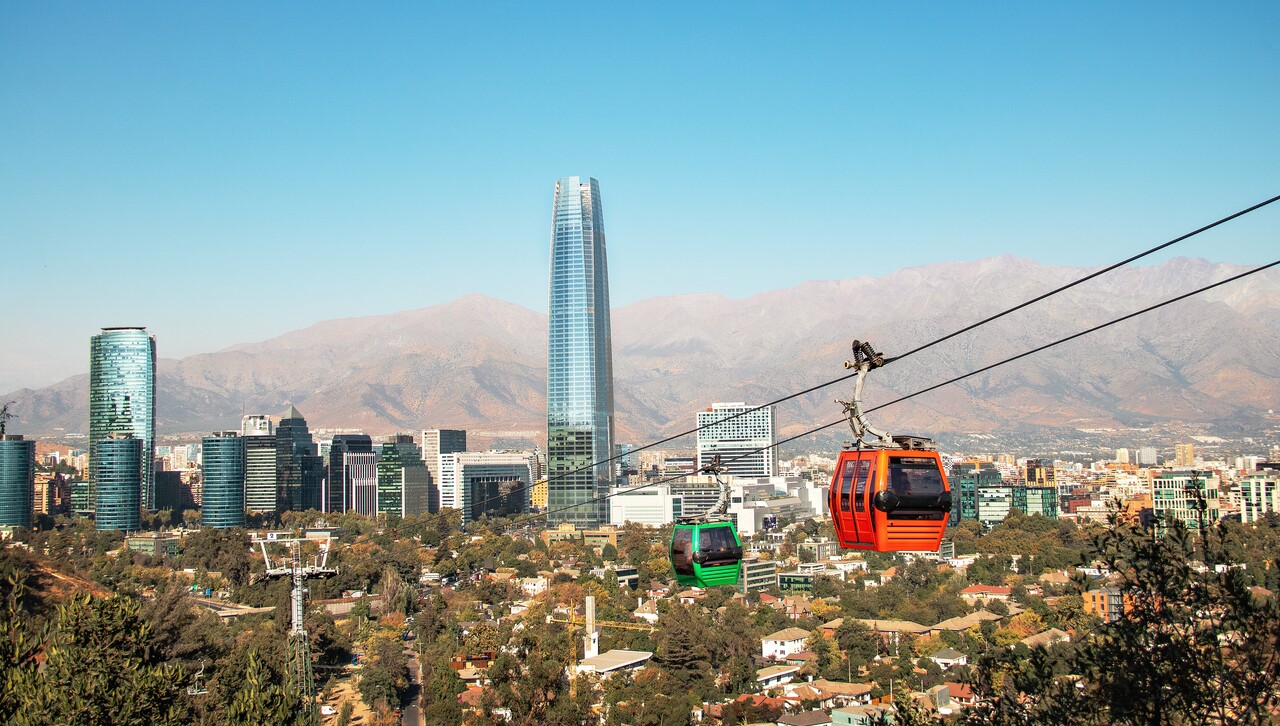
Chile's land-based casino industry has been in a near-constant state of reconfiguration since 2022, driven by a failed merger, the financial collapse of one of its two dominant operators and a historic antitrust case that now threatens to strip multiple companies of licenses they have held for years. The pace of change, new tenders, ownership transfers and court rulings on a near-weekly basis, is unlike anything seen elsewhere in the region.
What hurdles have stood in Chile's way?
The chain of events that set it all in motion starts in January 2022, when Dreams and Enjoy, the country's two largest operators, announced a merger that would have given the combined entity control of around 58% of Chile's casino licenses. Under the agreement, Dreams shareholders would hold 64% of the combined entity, with Enjoy shareholders retaining the remaining 36%. The deal would have created one of the largest gaming operators in Latin America, running 15 of Chile's 26 casinos plus a dozen operations across Argentina, Colombia, Panama, Peru and Uruguay.
The merger never materialized. Chile's Fiscalía Nacional Económica (FNE) never approved the deal and simultaneously began investigating the industry for alleged collusion in casino license tenders. In April 2023, both parties announced they had mutually agreed to terminate the merger agreement after failing to satisfy the required regulatory conditions.
The two companies then diverged. Dreams continued operating its Chilean network, which includes Monticello, Temuco, Valdivia, Puerto Varas, Punta Arenas and Iquique, posting strong EBITDA results and winning a new tender for a casino in the Maule Region worth a $21m investment. Enjoy, by contrast, entered a second financial reorganization process in early 2024, carrying debts of approximately $345m.
In August 2024, Enjoy's creditors approved a reorganization plan that split the company into three new entities. NewCo 1 retained the Punta del Este casino, in Uruguay and two Chilean real estate assets. NewCo 2, renamed Casinos de Chile SpA, grouped the casinos and hotels of Rinconada, Antofagasta, Chiloé, Viña del Mar, Coquimbo, Pucón and the Puerto Varas hotel. The remaining assets, primarily the San Antonio and Los Ángeles operations, stayed under Enjoy.
By January 2025, the FNE approved the transfer of NewCo 2's assets to a creditor consortium comprising Avla Seguros de Crédito, BTG Pactual and WEG Capital, financial entities with no prior exposure to casino operations.
How could new tenders reshape key casino locations?
The wave of new tenders are not isolated events: they are the result of a system where barriers to entry were high, competition was structurally limited and the same players renewed their positions cycle after cycle
Shortly after, Enjoy formally surrendered three of its remaining operating licenses. In October 2025, the SCJ officially accepted Enjoy's decision to give up its permits for Viña del Mar, Coquimbo and Pucón, with the handover to take effect in September 2028. The regulator subsequently opened new tenders for those three locations, along with Iquique, in February 2026.
Those four tender processes, covering Iquique, Coquimbo, Viña del Mar and Pucón, are currently underway. Recently, the SCJ modified the technical bases for all four, clarifying ownership and consolidated property definitions in response to earlier disputes, and extended the bid submission deadline. The revisions are significant: the documentation requirements around shareholder structure had already triggered a separate legal challenge from Dreams, which was excluded from the Coyhaique renewal tender on similar grounds and subsequently took the SCJ to the Santiago Court of Appeals to contest its disqualification.
The antitrust case underpins the situation. In October 2024, Chile’s FNE accused Dreams, Enjoy and Marina del Sol, and five executives, of coordinating bids in the 2020–21 license renewals, effectively avoiding competition. Together, the three firms held 90% of casino revenues and 70% of permits.
The regulator is seeking a record $151.9m in fines and the revocation of the licences awarded, to be replaced via new tenders. After a brief suspension, the case was reactivated and will now move into the evidentiary phase.
For Enjoy's international operations, the picture is similarly complex. The Punta del Este casino, one of the company's flagship assets, was grouped under NewCo 1 and placed on the market as part of the reorganization, with multiple international operators having submitted non-binding proposals for it. In Argentina, Dreams maintains its Mendoza property, where it recently appointed a new General Manager looking to stabilize a market that contracted due to inflationary pressure.
Will Chile pass its regulatory stress test?
What is unfolding in Chile is, at its core, a stress test for a regulatory model that allowed a small number of operators to consolidate control over a licensed market for decades. The wave of new tenders are not isolated events: they are the result of a system where barriers to entry were high, competition was structurally limited and the same players renewed their positions cycle after cycle.
The market that emerges from this period will look, or should look, meaningfully different from the one that existed three years ago. Although the incoming tender processes, already delayed and already amended, may yet determine whether that change runs deeper than a transfer of ownership.
The FNE is seeking a record $151m in fines and potential license revocations, setting a major antitrust precedent for LatAm gaming