

























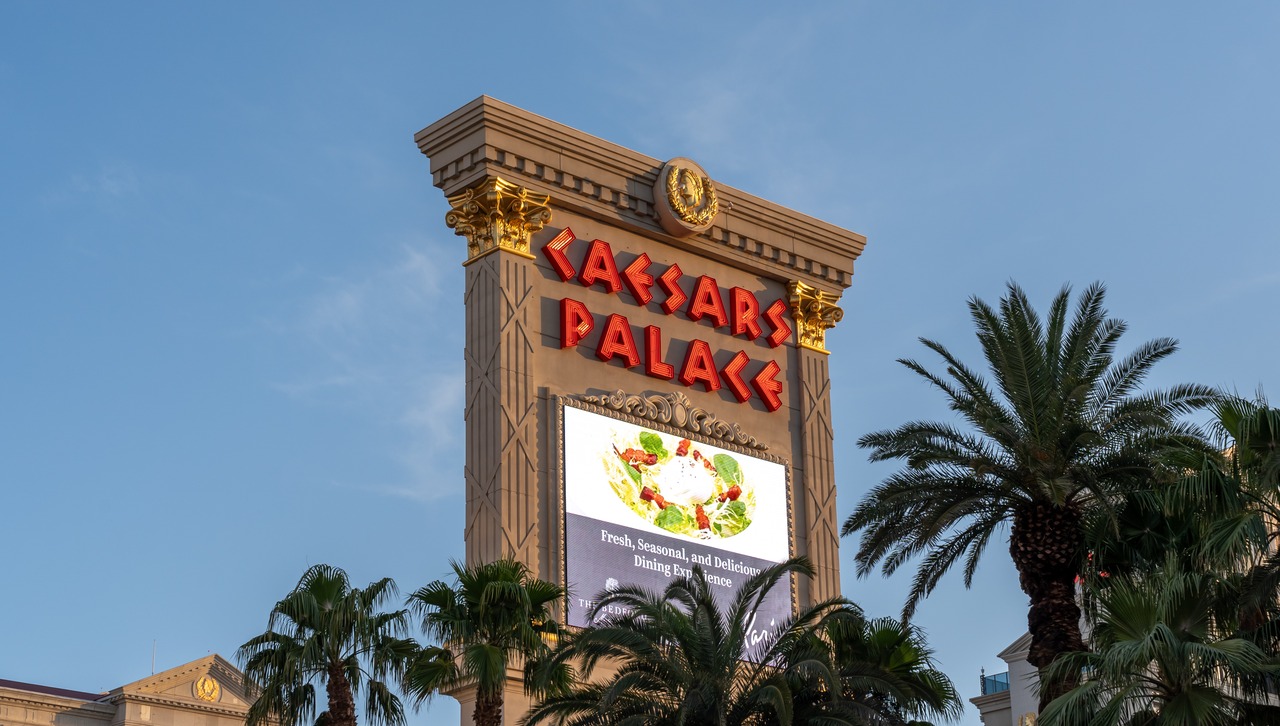
There are few constants in the global gaming industry beyond consolidation. Caesars Entertainment’s agreement to be acquired by Fertitta Entertainment for $17.6bn is the latest reminder that, in modern casino gaming, scale, leverage and strategic restructuring remain inseparable.
The deal sees Fertitta Entertainment acquire Caesars in an all-cash transaction that includes the assumption of approximately $11.9bn in debt, with shareholders receiving $31 per share.
Yet beyond the headline figure lies a much larger story about the future of Las Vegas, the changing economics of casino ownership and the evolution of Caesars itself.
The transaction also marks the culmination of an ambition Tilman Fertitta has pursued for years but failed to execute before Eldorado Resorts ultimately acquired the operator in 2020.
Six years on, Fertitta has finally secured the gaming giant – and may now look to reshape one of the industry’s most prominent brands…
Why Caesars became vulnerable
Despite its scale and brand strength, Caesars entered 2026 in a tricky position.
The operator remains highly cash generative, producing $11.5bn in FY2025 revenue and more than $3.6bn in adjusted EBITDA. However, Caesars is built on decades of M&A activity and now, years of mergers, restructurings and financial engineering have also left the company carrying one of the heaviest debt loads in the sector.
Much of the operator’s modern structure stems from its 2015 bankruptcy restructuring and the subsequent separation of its real estate assets into Vici Properties. While the model reduced capital intensity, it also created significant long-term lease obligations.
The 2020 Eldorado merger briefly appeared transformational. Caesars’ stock surged above $119 in 2021 as investors bought into post-pandemic Las Vegas growth and anticipated cost synergies.
…But market conditions shifted rapidly.
By early 2026, Caesars shares had fallen roughly 40% year-to-date amid softer Las Vegas visitation, higher financing costs and investor concerns surrounding leverage. FY2025 net losses widened to $502m despite revenue growth, while Las Vegas segment performance weakened throughout the year.
Importantly, Caesars remained (and still remains) operationally resilient – generating billions in EBITDA and continuing to grow its digital division. However, it found itself caught between the two market realities of being too leveraged to be viewed defensively during a slowdown, yet too asset-heavy to receive the valuation multiples associated with digital-first gaming companies.
It is this imbalance that created an opportunity for buyers.
Fertitta’s long-term strategy
For Fertitta Entertainment, the strategic rationale extends well beyond simply acquiring casino assets.
Through Landry’s, Golden Nugget Casinos and numerous restaurant brands, Tilman Fertitta already controls more than 600 hospitality venues globally – therein highlighting the most immediate synergy between the pair. Caesars gives him immediate access to one of the largest gaming ecosystems in North America, anchored by Caesars Rewards and an internationally recognized property portfolio.
Another obvious synergy lies in loyalty integration. Caesars Rewards can now potentially extend across Fertitta’s broader dining and entertainment footprint, creating stronger customer retention opportunities across gaming and non-gaming verticals.
Further, there is a clear overlap in premium hospitality strategy. Fertitta’s Golden Nugget properties have traditionally operated between upscale regional gaming and luxury resort experiences, while Caesars controls some of the most recognizable premium casino assets in Las Vegas and beyond.
The result could be a sharper focus on higher-margin flagship properties.
If Fertitta adopts a ‘quality over quantity’ approach, disposals could become inevitable
Asset sales appear likely
The most significant question surrounding the merger is not whether Caesars can remain profitable under Fertitta ownership. It almost certainly can. The more important question is what Fertitta chooses to keep.
Caesars currently operates around 60 gaming properties nationwide, including seven resorts on the Las Vegas Strip. Few industry observers expect that portfolio to remain untouched long term.
Historically, Fertitta Entertainment has operated as a relatively lean organization compared to major publicly traded gaming conglomerates. That raises the possibility that non-core Caesars assets could eventually be sold or repositioned to reduce leverage and streamline operations – not to mention helping ease that hefty $11.9bn debt burden.
Like many large gaming operators, Caesars’ portfolio spans marquee flagship assets, dependable regional properties and smaller locations with more limited strategic importance.
If Fertitta adopts a ‘quality over quantity’ approach, disposals could become inevitable.
Such a move would not necessarily indicate weakness. Instead, it could represent the most logical path toward deleveraging while preserving Caesars’ strongest earnings drivers. Premium Strip assets such as Caesars Palace are unlikely to move, but secondary regional properties may attract interest from REITs, tribal operators and private equity-backed buyers.
Betting on Vegas
Timing is another critical element of the deal.
Las Vegas spent much of 2025 moving from post-pandemic boom conditions into a more normalized market environment. Visitor volumes softened, while Strip gaming revenue and hotel occupancy both declined year-on-year.
Yet recent data also suggests resilience remains intact. Nevada gaming revenue rebounded strongly during March 2026, with Strip revenue increasing 14.4% year-on-year.
This recovery is significant, as Fertitta is effectively making a long-term bet on Las Vegas remaining the centerpiece of American casino entertainment despite some recent short-term volatility.
There are good reasons to believe that view could prove correct. The city’s economy is now significantly more diversified than during previous cycles, supported by sports franchises, musical artist residencies, conventions and large-scale entertainment developments alongside traditional casino tourism.
For an operator with deep hospitality expertise, those dynamics create opportunities that extend well beyond gaming alone.
What comes next?
For now, Caesars’ existing executive leadership – including CEO Tom Reeg – is expected to remain in place, suggesting Fertitta is prioritizing operational continuity in the near term.
Longer term, however, the strategic direction may evolve considerably.
One area to watch closely is Caesars Digital, which generated approximately $1.4bn in FY2025 revenue and remains one of the company’s fastest-growing assets. Given the stronger valuation multiples attached to online gaming businesses, strategic alternatives for the division may eventually emerge.
Equally important will be how aggressively Fertitta pursues deleveraging through operational efficiencies and potential property sales.
Either way, the deal reflects a broader trend across US gaming, where operators are increasingly restructuring ownership models, real estate holdings and digital assets in pursuit of growth and stronger valuations.
Caesars itself has spent decades being reshaped by mergers, restructurings and reinvention. This latest chapter, however, may prove more significant than most – not because Caesars has changed hands again, but because Fertitta now has the opportunity to fundamentally reshape what the company becomes next.
Caesars' share price has remained stable, rising just over 1% 24 hours after the merger announcement - as of the time of writing