Casino games have been dealt by humans since, well, their inception. There was no other way for games to be played without a person physically shuffling the cards, accepting the bets, enforcing the rules and reminding players when it is their turn to act.
But, as technology advanced, so did the tools available to croupiers and casinos. Slot machines were created in the 1890s, then almost exactly one hundred years later, electronic table games would begin to gain popularity in Europe.
Casinos would launch online just a few years afterwards and, in an ironic full-circle moment, live casino games would become one of the top verticals for iGaming platforms. But as technology continues to advance, and in a debate that mirrors current trends in the live dealer sector, do croupiers risk getting dealt out altogether?
What are the most important traits for croupiers to have?
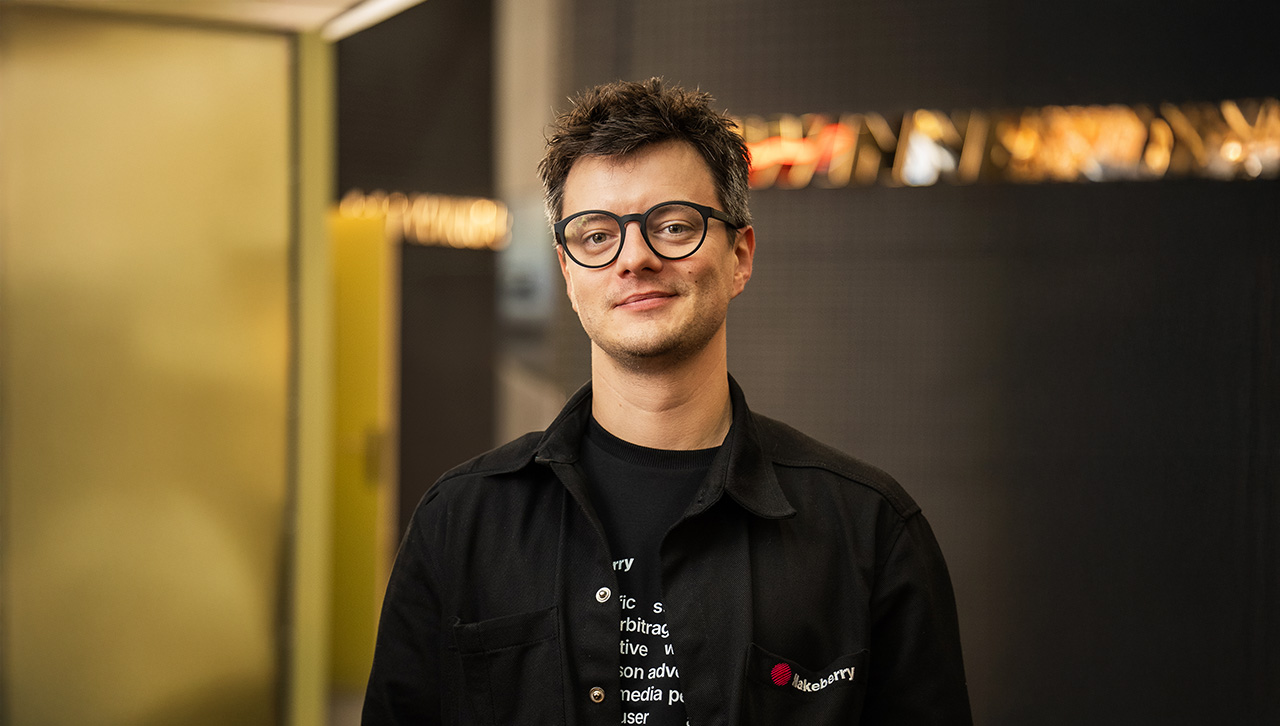
To explore further, Global Gaming Insider sat down with long-time contributor Paul Sculpher, Gaming Recruitment Solutions Director, and Alessandro Colnago, Carlton Entertainment Group Casino Manager, another interviewee to have previously featured in our publications.
To note, both men have significant experience dealing in casinos. Sculpher completed a brief nine-month stint as a croupier in 1995 before transitioning to the managerial side of things, while Colnago has worked and managed several international pits since 2014.
For many customers, croupiers will be the ‘face’ of the casino, or at least the casino experience in that particular location. But as for how much this matters, Sculpher seems pessimistic.
He said: “Casino operators would love to think that connecting with players is a big part of what their croupiers do but, realistically, outside of top-end sites, the process usually feels much more like a machine when you’re actually at the front line.
“There are plenty of exceptions, where gaming staff make it a fun experience but, too often, in a world with constant cost cuts, certainly in the UK, it can be pretty mechanical.
“From a hiring point of view, most people can develop the maths skills needed, but one thing – you can’t be colour blind!”
Colnago, on the other hand, sees things differently.
Colnago explained: “Croupiers are highly skilled hospitality professionals. They manage table games, ensuring that customers get the best from their gaming experience.
“This means dealing games at the right pace, making customers feel welcome and entertained, and educating new players – all while maintaining a professional and safe environment.
“Croupiers, and staff in general, are the most important asset in the gaming industry. In roulette, blackjack and all other casino games, payouts are the same across the country, so what draws customers to one venue rather than another? Customer service – and how it creates a unique and memorable experience.”
There is no way I am tipping a robot...
Could robots work effectively as croupiers?
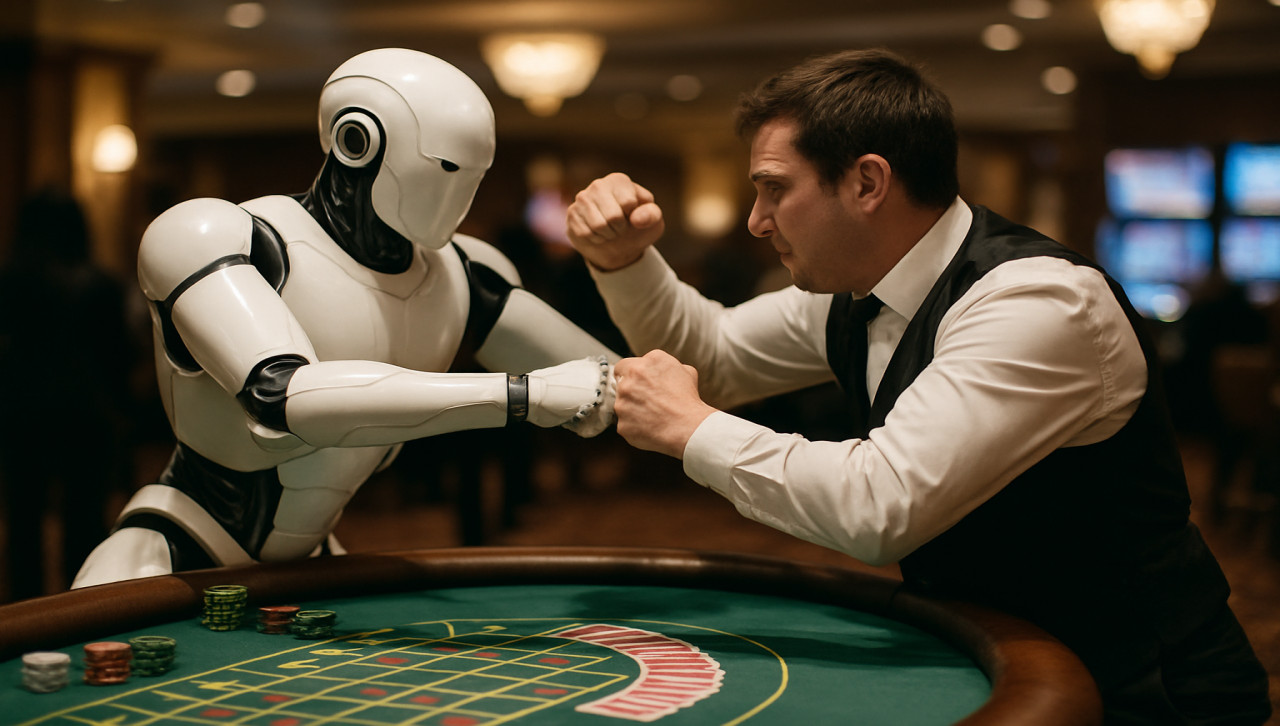
At the recent Asian International Entertainment expo, Chow Tai Fook presented a robotic dealer with the implication that it could replace croupiers in casinos. This led to an immediate response from legislators, who were concerned about Macau’s 24,000 croupiers employed across the sector.
This raises a question as to whether robots could effectively work as a croupier. Sculpher seems to think so.
He said: “I can well imagine it’s headed that direction. There’ll be plenty of pushback from people who can’t see it (not to mention unions), but I clearly remember when electronic roulette was first brought into the UK – casino management laughed at the idea it could work. Now there’s pretty much no UK casino that could survive without electronic table games.”
This time, it was Colnago’s turn to be sceptical, as he balanced this operator perspective with a customer-service one.
He said: “I don't think croupiers can currently be replaced by robots. Some hard skills can be easily replicated, like maths, but the soft skills are harder to implement.
“To be effective, an alternative to the croupier would need a mix of computer maths, rigid procedures, individual personality, good manners, a personal human touch and a bit of performance art.
“Today that sounds like something from Blade Runner or other sci-fi movies – but in the future, who knows?”
How do croupiers impact customer service?
To better understand the role of croupiers amid the overall discussion, Colnago detailed what casino dealers should bring to an establishment.
He said: “Croupiers must excel in three important areas: skills, procedures and customer service.
“Skills related to the technical and mechanical activities, such as chip handling, card handling, maths, and so on. Procedures cover how things are done – the flow of actions – to ensure a secure and safe environment for customers, dealers and the casino.
“Customer service is about making the experience personal and enjoyable for customers. There is the obvious basic courtesy, like welcoming people to the table, but also remembering names, favourite drinks, playing styles, and even personal details from previous interactions.
“Customers are individuals, not numbers, and they recognise when they are treated that way.”
As for how the experience would change for customers being dealt to by robots, we asked Sculpher whether he thinks this would affect tipping.
He replied: “Ooh, good question. I would imagine so, while tipping can feel a bit of an obligation for some, and part of the fun for others, there’s no way I’m tipping a robot.
“Maybe the valet who brings me tea/coffee/beer would feel the benefit instead, at least before they become a delivery droid…”
A robot croupier, today, would be a novelty... like robot waiters in a restaurant. A good reason to visit, a few photos or selfies, but not a loyalty-building experience
What does the future hold for robots and technology in casinos?
The robotic dealer in Macau was not the first instance of croupiers seeing their jobs at risk. Golden Gate Casino hit headlines last August when it removed all live dealers from the property and replaced them with electronic table games.
Sculpher commented: “This is very much already happening, there are more and more casinos without table games (a high-profile recent one to take tables out being Golden Gate Casino in Las Vegas).
“Casino Royale, one of my favourite spots on the Las Vegas Strip, hasn’t had tables for years. There are one or two in the UK too, the question is whether they’re really casinos or not. I think they are, but as an operator you either make it feel like an arcade – a kind of daytime place that feels quite casual, or you try to make it more of a genuine casino just with no tables.
“Casino Royale does a great job of that – it’s low rent, but has a bar, food (kinda) and if you like slots, it’s a fun place. It doesn’t help that we always, always seem to win there…”
As for Colnago, he looked towards how technology could be implemented in casinos in ways that would not necessarily remove jobs.
He explained: “Technology has been used to improve productivity or security rather than to make the croupier's job easier. You could say it has made the supervisors' job easier instead!
“Chipper machines have made it possible to increase the number of games dealt per hour, as have shuffling machines, which also improve certain security aspects. Some Punto Banco shufflers have sensors that recognise the cards and stop dealers from misdealing.
“More recent technology, like RFID and table-analysis software, improves security and speeds up some processes, but it has only a limited impact on the croupiers' work. An interesting tool could be augmented-reality glasses: special lenses that adapt to the light in enclosed environments, with an internal screen showing payouts, bets over the limit and other table data, but it will cover something that croupiers already do.”
What would the advantages or disadvantages of robot croupiers be?
One of the core parts of dealing live games is ensuring the games are run legally and that nothing is underhanded, or under the table – literally.
Sculpher addressed this: “There’s a very long way to go before you’d be as cheat-proof as a human dealer, although given the speed optical tracking is improving, that might be a non-issue – image processing from the casino cameras will soon be good enough to spot many cheat moves.
“For me, the challenge is that you start getting pretty close to online gaming if you don’t have a human dealer, in which case, why would you bother leaving home?
“The advantage is not just cost, but consistency of style, speed, precision etc. But then an experience that’s consistent but not engaging isn’t going to work too well.”
For the first time, both our interviewees were on exactly the same page here.
Colnago said: “I think the disadvantages are mainly connected to security and customer experience. Security-wise, a human croupier can spot odd or dodgy activity taking place not only at the table but also away from it – noticing exchanges of money or chips, for example, or sensing that something isn't right in a given situation.
“Live gaming is about personal experience and interaction. An experienced croupier can take a difficult, frustrated, angry table and turn it into a cheerful bunch of happy people. When it comes to live table games, the human touch is still the key. If gambling were exclusively about numbers and speed, only online and electronic machines would exist.
“A robot croupier, today, would be a novelty – like robot waiters in a restaurant. A good reason to visit, a few photos or selfies, but not a loyalty-building experience.”
The word croupier is borrowed from French, and the earliest evidence of the word being used comes from a 1707 work by playwright William Wycherley