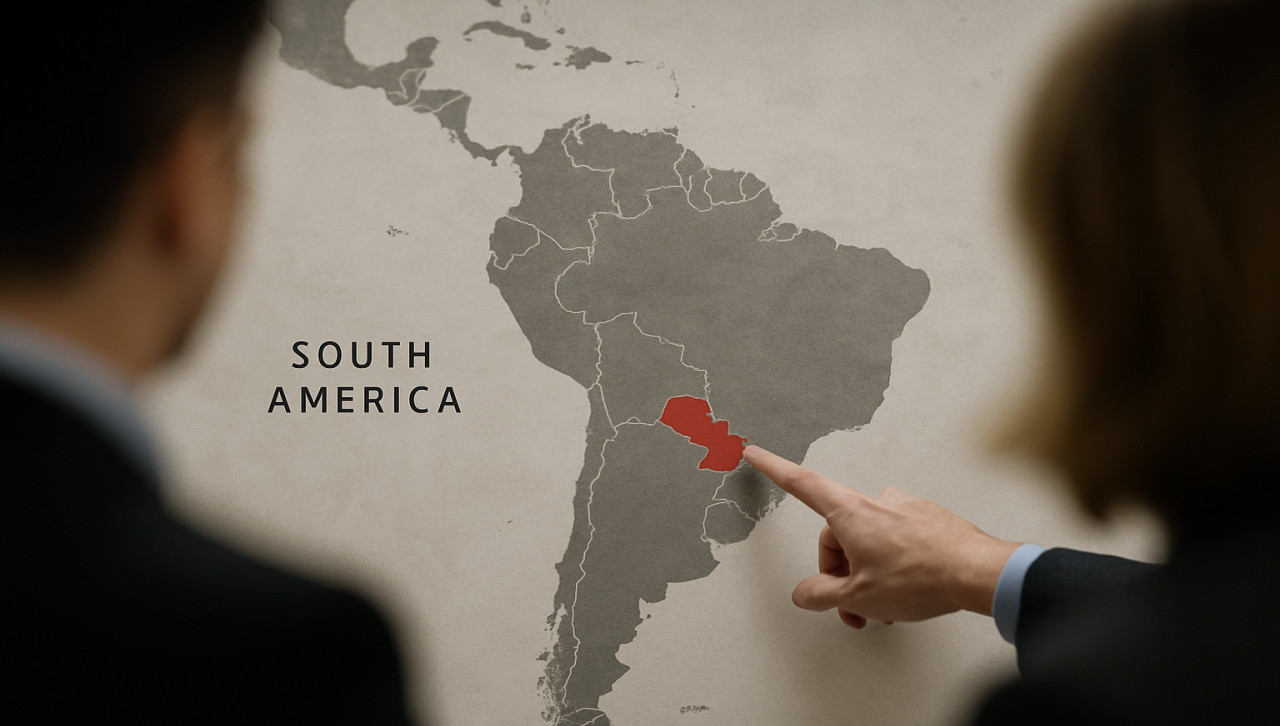
Cirsa this week agreed to acquire a majority stake in Slots del Sol, a leading Paraguayan online casino operator, giving the Spanish gaming group its first foothold in one of Latin America's newest regulated gaming markets.
The transaction gives Cirsa control of slotsdelsolonline.com, along with two land-based casinos and two gaming halls in Asunción and Ciudad del Este. A two-pronged approach.
What are the details of the deal?
Cirsa now operates in 11 markets, alongside Spain, Italy, Portugal and Morocco, and in Latin America in Mexico, the Dominican Republic, Costa Rica, Panama, Colombia and Peru.
This new deal will be funded from available cash, that the multiple paid is consistent with previous transactions and that it is not expected to have a material impact on group leverage. Slots del Sol's founding shareholders will remain involved in day-to-day management.
Cirsa closed the acquisition of four casinos in Peru in December, three in Lima and one in Cuzco, a year after buying Apuesta Total, Peru's leading sports betting and online gaming operator. In Mexico, the company recently extended its Sportium betting brand into sponsorship of a Liga MX club, its first entry into that market's football ecosystem.
In Paraguay, the strategy will continue to be selective growth concentrated on fully regulated markets, as Q1 2026 results show operating profit up 8.5% year-on-year, with management pointing to a strengthened liquidity position that could support further M&A. Cirsa's online gaming and betting division grew net revenue 25.8% in 2025 and 9.4% in the first quarter of 2026, with Peru cited among the markets driving that growth.
Executive Chairman Joaquim Agut framed Paraguay as a platform to keep expanding the company's online capabilities in the region, while CEO Antonio Hostench said the deal should improve online gaming margins.
What are the dynamics of the Paraguayan market?
Paraguay's gambling framework has changed substantially in the past 18 months. Law 7438, promulgated in January 2025, replaced the older Law 1016 of 1997 and ended the state monopoly model that had governed verticals including quiniela and sports betting.
Under the new law, up to three licenses can be granted per vertical; national-scale concessions such as casinos, lotteries and sports betting require public tender, and casino concessions can run up to twenty years without renewal. The Comisión Nacional de Juegos de Azar, CONAJZAR, became a decentralized unit under the Dirección Nacional de Ingresos Tributarios, the national tax authority, which now oversees canon collection while CONAJZAR retains authorization and enforcement powers, including roughly 800 inspectors and the ability to block unlicensed online platforms.
Online casino gaming is explicitly recognized as a legal activity under the reform, though the process for issuing dedicated online casino concessions was still being finalized as of late 2025 according to industry trackers, a point operators and legal advisers will be watching closely as CONAJZAR opens further tenders through 2026. Sports betting remains under an exclusive concession held by Daruma SAM, operating as Aposta.la, until 2028, a legacy arrangement predating the reform.
For now, the transaction confirms that regulatory clarity, even in a comparatively small market, continues to outweigh raw market size as the deciding factor in where international gaming groups choose to deploy capital in Latin America
This is similar to the pattern seen in Peru after online regulation and, more recently, in Brazil's sports betting market.
Paraguay differs in scale; its population and gross gaming revenue are far smaller than those markets, but the regulatory logic is similar: a government moving from an informal or monopolistic structure toward licensed competition tends to reward operators who arrive early with local expertise already in place, rather than those who wait for a mature tender process.
What are the strategic benefits of the deal for Cirsa?
Acquiring an incumbent with two decades of local trading history, such as Slots del Sol, reduces the execution risk that comes with building distribution and player trust from zero, particularly in a market where CONAJZAR's enforcement powers make unlicensed operation increasingly costly. The approach is also consistent with Cirsa's recent expansion in Peru, where the company entered the regulated online market through the acquisition of Apuesta Total.
The deal lands as Paraguay's broader investment and tourism profile strengthens. The country recorded the fastest growth in international tourist arrivals in the world during the first quarter of 2026, up 46% year-on-year, according to the UN Tourism barometer, at a time when South America as a region saw arrivals contract.
Paraguay's national tourism authority has since outlined a 2025 to 2028 strategy focused on meetings, incentives, conferences and exhibitions, alongside new air routes and hotel investment. That strategy is particularly relevant in Ciudad del Este, where Slots del Sol operates two of its four physical venues and where SAGSE Paraguay returns in August for its sixth edition.
This year's edition adopts a closed-door, operators and regulators-only format and is expected to focus on how the post-reform market will function in practice, with CONAJZAR and DNIT officials among the institutional participants in previous editions.
In the near term, the priority for Cirsa will be integrating Slots del Sol's platform and retail footprint into its model, a process the company has repeated across Peru, Morocco and Spain through its Gold Mine renovation program. In the medium term, the more consequential question is whether Slots del Sol, under Cirsa ownership, pursues one of the limited online casino concessions once CONAJZAR formalizes that tender process, a step that would move from legal recognition to a licensed operating model.
Over a longer period, Paraguay's position within Cirsa's network could make it a staging point for further regional interest, though any such move would depend on separate regulatory tracks in Brazil and Argentina that bear little resemblance to Paraguay's national licensing model. For now, the transaction confirms that regulatory clarity, even in a comparatively small market, continues to outweigh raw market size as the deciding factor in where international gaming groups choose to deploy capital in Latin America.
Slots del Sol has been operating in Paraguay for more than 20 years and is part of the country’s long-established casino sector