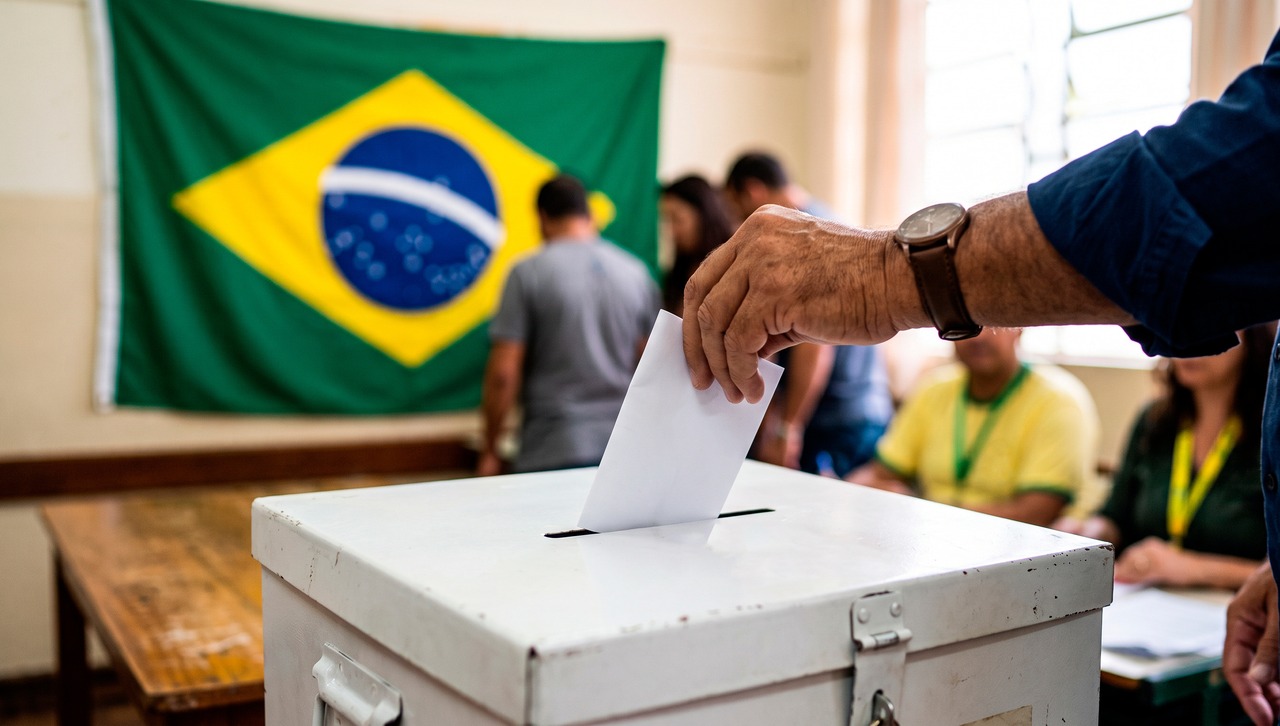
Despite being banned from operating in Brazil since April, prediction market platform Polymarket remains accessible to some Brazilian users.
The country recently ranked as the platform's second-most active topic globally, behind only a football match between PSV and Sparta Rotterdam, with a contract tied to Brazil's presidential election alone drawing $147m in trading volume.
Polymarket lists dozens of markets tied to Brazilian elections, covering the presidential race as well as state races in São Paulo, Rio de Janeiro, Bahia, Minas Gerais and Amapá.
Odds on the presidential contract shifted within a single day: President Lula da Silva was the favorite in the morning, but by early evening, candidate Flávio Bolsonaro had taken the lead.
Prediction markets let users trade contracts tied to future events, including elections, economic indicators and sports results.
Brazil's Finance Ministry said Polymarket remains blocked, along with its associated social media accounts and that some users being able to access the site doesn't mean the company is authorized to operate.
The block was ordered by the Secretariat of Prizes and Bets (SPA) and passed to telecoms regulator Anatel, which notified more than 20,000 providers to implement it; since compliance depends on each provider, sites can become unavailable at different times.
"Even when the page can still be opened, it isn't possible to place bets or make deposits," the Ministry said.
Anatel has blocked nearly 30 prediction market sites, including Polymarket and Kalshi, co-founded by a Brazilian, Luana Lopes Lara. Even so, users can still reach these platforms through VPNs, or because smaller regional providers implement blocks unevenly.
Recently, Lopes Lara said the company is seeking to reverse Brazil's decision to block platforms offering event-based contracts.
Finance Minister Dario Durigan said telecoms regulator Anatel had shut down 27 platforms operating in Brazil before the shutdown, despite the grey area in legislation