











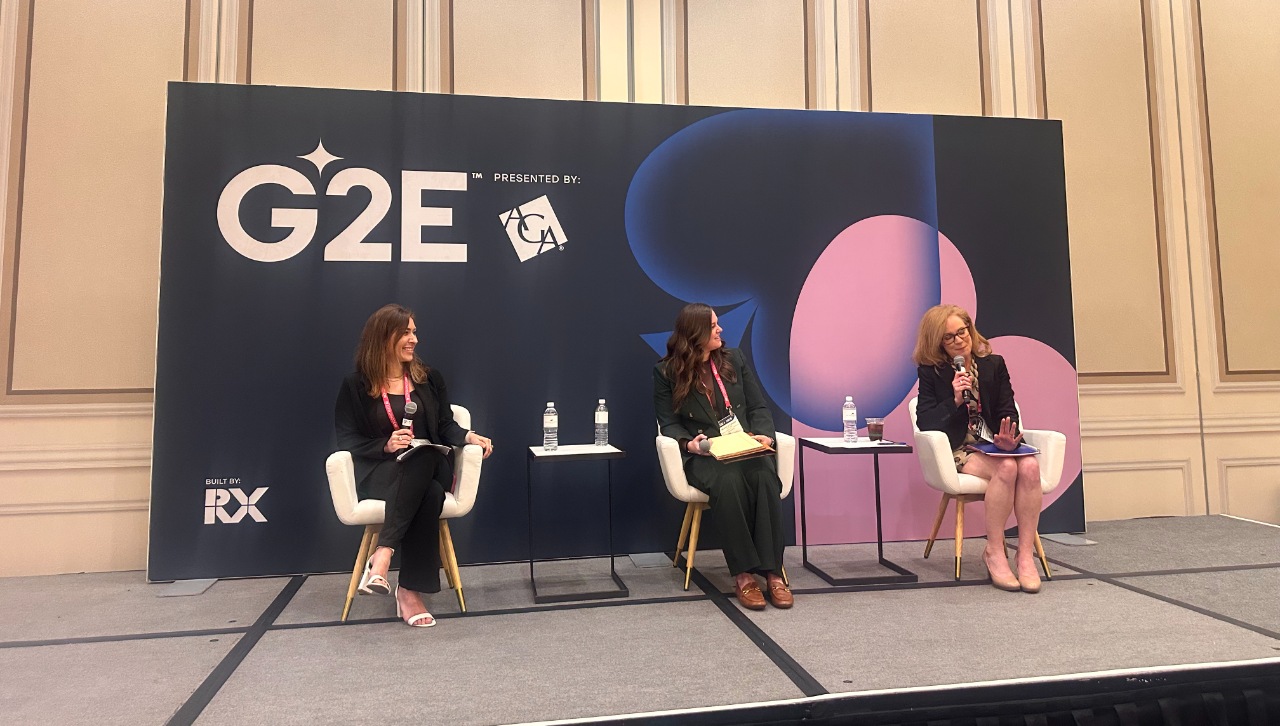
During the Global Gaming Expo (G2E) tradeshow in Las Vegas, Fanatics Betting and Gaming Senior Director of Enterprise Compliance Lauren Lemmer, Tennessee Sports Wagering Advisory Council Executive Director Mary Beth Thomas and Orrick, Herrington & Sutcliffe Public Policy Associate Megan Alvarado took part in a panel to cover the latest standing in operator-regulator collaborations.
Thomas began the panel by stating “there are boundaries and we all recognize we are inherently different,” but “where collaboration really matters is developing a level of trust that when I ask a question, I’m going to get an honest answer.”
When asked how she views the relationship between operators and regulators, Alvarado described collaboration as a “game of cat and mouse” at times, while it “can be dangerous” to move too far into one direction.
“That causes the entire institution of consumer protection to fall apart, and that’s really what this discussion is about,” Alvarado said.
Lemmer believes there is an “art” to operators establishing a positive reputation, while Alvarado continued by stating “when you’re trying to innovate, sometimes the rules don’t answer questions about what is the outer limit.”
Alvarado claimed: “I think time is always important and operators always want immediate answers, but when you’re trying to get the jump on somebody else, I’ve found it really skews everything.”
When asked “how early is early for you,” Thomas confirmed her state regulator has “developed a deeper understanding of what it really means when changes take place.”
“I can say all day long I want your development team to make this priority number one, but sometimes that’s just not realistic. We’re not only looking at the operators, we’re being reviewed and audited closely by our legislative office,” Thomas said.
“What are we going to do? Shut them down? That’s just not a good look for anybody.”
Lemmer described the relationship between both entities as a “give and take,” while also confirming Fanatics has begun instituting self-assessment protocols across its compliance department.
Thomas continued by reviewing the relationship between sports betting operators and regulators, claiming “we have such a deeper level of confidence that when things happen going forward, it’s not because of a lack of effort.”
Lemmer backed the point, having said, “It goes back to that trust, and building that credibility and accountability.” Alvarado jumped in by stating “I think as the industry evolves… the vendors are starting to understand what they are getting themselves into when they want to enter a gaming space.”
Alvarado continued: “I do think that vendors sometimes have certain licensing barriers which can feel really high, and those are conversations regulators are willing to have.”
To close out the panel, Thomas emphasized the importance of state regulators collaborating with one another as well, believing “if there is an issue I’m unfamiliar with, it’s likely a similar problem has occurred somewhere else.”
Recently, the US Court of Appeals for the Sixth Circuit ruled against Kalshi in its disputes with gambling regulators in Ohio and Tennessee, finding the prediction market operator did not establish that its sports event contracts fall exclusively under federal regulation.
The court also considered Kalshi's preemption argument on the assumption that the contracts were swaps and reached the same outcome. It found that the Commodity Exchange Act neither expressly nor impliedly preempts the Ohio and Tennessee gambling laws at issue.
Tennessee Governor Bill Lee signed House Bill 1885/Senate Bill 2136 into law on May 22, as the state became the seventh US jurisdiction to prohibit the operation of sweepstakes casinos