Ethics... and gambling. To the untrained ear, these two words simply don’t relate to one another.
It’s a statement of fact that the gambling industry faces heavy scrutiny. It is also true that some of it is, simply, warranted.
Indeed, much of that scrutiny stems from the idea that the industry hasn’t always been a safe place to be. And in many parts of the world, it’s still a long way off.
Black-market operators, high-profile fines and horror stories of addiction dominate the headlines in tandem with back-to-back sports betting advertisements that dominate every half-time interval.
It’s no wonder many outside of the gambling industry remain so sceptical of the morality that encases it – because this is all they see. There is, however, so much now going on inside the industry that they don’t.
All things ethics in gambling
Broadly, the proliferation of ethical practices in gambling, particularly responsible gambling (RG), stemmed from the recognition of the serious implications that excessive gambling can have on vulnerable individuals.
The decades-long journey ethical gambling has taken more specifically, from the ‘invention’ of responsible gambling through the late 20th century to now, is one that is truly remarkable. Indeed, the fact that this year one of the industry’s leading operators in Flutter gave up two floors of its office facilities in West Yorkshire to host the 2026 Ethical Gambling Forum is testament to how far the field has come.
The origins of responsible gambling can be traced back as far as 1972 with the founding of the National Council of Problem Gambling (NCPG) by Joseph A. Dunne and Robert Custer in the US. The NCPG became one of the first non-profit organisations to advocate for those affected by problem gambling and remains responsible for the establishment of problem gambling awareness month across North America.
A number of years later in 1983, the field took its next major step, with the founding of the Canadian Foundation on Compulsive Gambling – now the Responsible Gambling Council. Pioneered by the late Tibor Barsony, who, after being sent to prison for embezzling large amounts of funds, set up the foundation when he realised he had nowhere to turn for help with his compulsive gambling upon his release.
Canada has, in fact, played a huge role in pioneering firsts for the ethical gambling field, having recently released one of the world’s first centralised self-exclusion systems. The nation also experienced severe difficulties with money laundering through retail casinos in the early 2020s, sparking a drive to implement further safeguards in the land-based sector to help improve financial security.
Digressions aside, through the 1990s the global industry slowly began to adopt the ‘responsible gambling’ term, derived from a widespread ‘responsible drinking’ campaign which had begun to gain pace across the Western hemisphere. Nevertheless, despite more key milestones such as the establishment of the International Center for Responsible Gambling in 1996, a US scientific drive for peer-reviewed research on RG, ethical initiatives continued to bounce insularly around the field without gaining any major traction in the wider industry until the early 2000s.
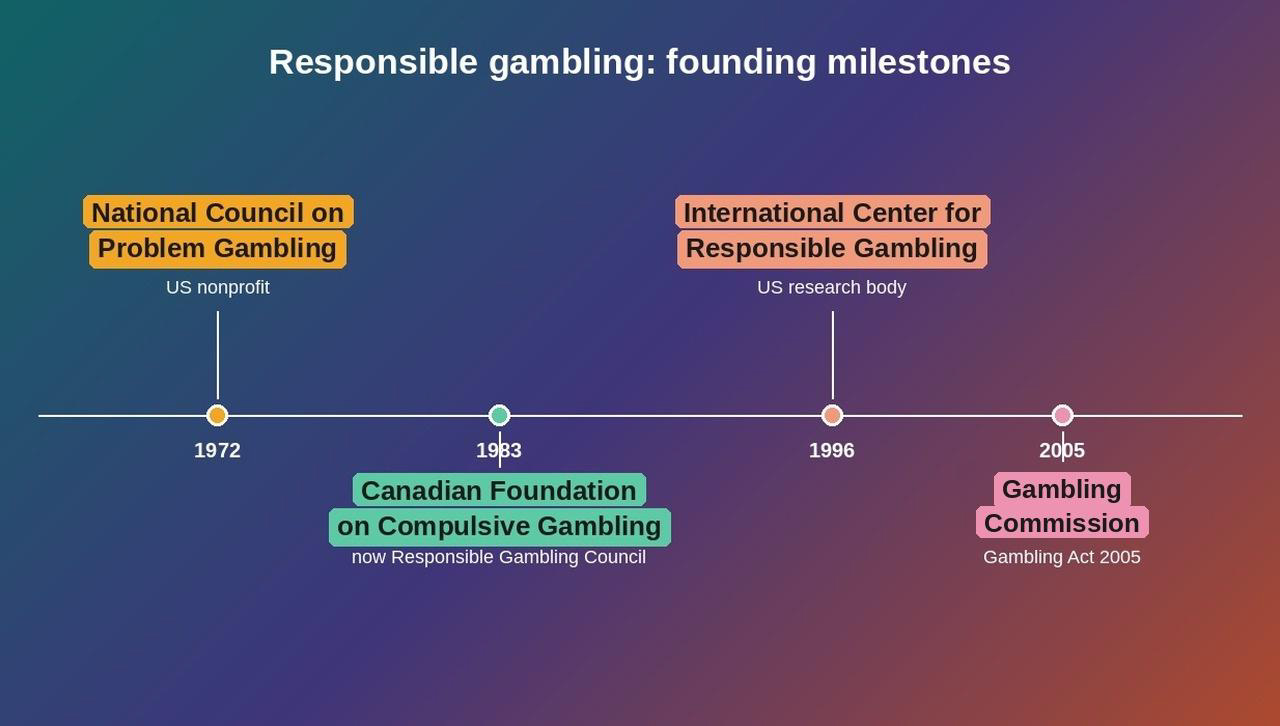
As more organisations continued to take shape gradually around the turn of the millennia, a key turning point for ethical gambling was marked in the UK with the establishment of the Gambling Act 2005, which also saw the formal inception of the Gambling Commission. At this time, the UK’s now infamous regulator came into force not only to oversee regulation and enforce licence objectives – but to also focus heavily on preventing gambling harms for vulnerable people, a first for this fledgling part of the sector.
These movements then sparked further official regulators, non-profit organisations and trade bodies across the globe – such as the International Association of Gaming Regulators or American Gaming Association – to also begin developing their own rules and guidelines related to player protection. And so, the rolling ball began to pick up pace.
Haven’t you heard? It’s all online
A crucial juncture for the industry and the world within which it exists, of course, was the digitisation of – well... everything.
The rise of online gambling moved the goalposts and sparked a complete overhaul in player protection both conceptually and operationally. Casinos began to boom online, with sports betting soon to follow through the 2010s, leaving the ethical field with a lot to catch up on.
If there is one thing this industry does well, however, it is innovate. Industry bodies such as the European Gaming and Betting Association (EGBA) began to form to help transcend geographical borders, in establishing clear and informed guidelines for member operators looking to enhance their player protection strategies online.
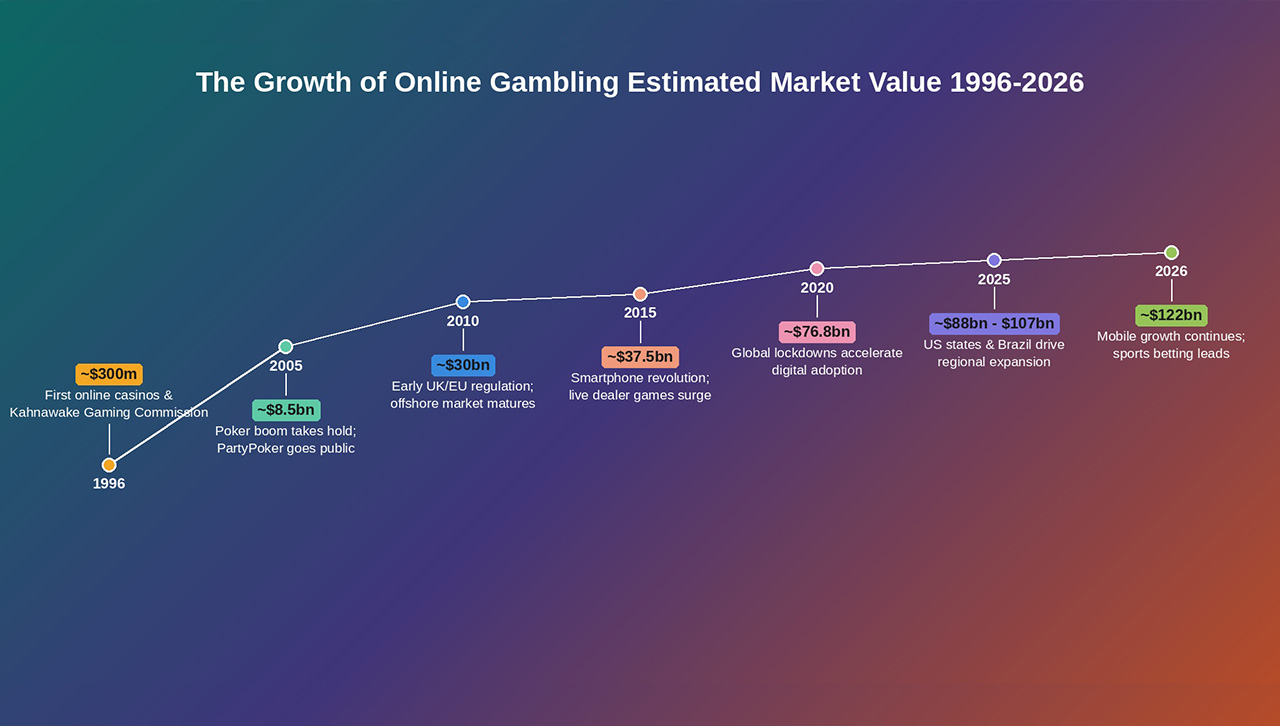
As the digital world took hold, it brought with it the recognition that globalisation was the future, leading trade organisations, operators and regulators alike to mirror the cross-border nature of the online landscape by communication, collaborating and ultimately learning from each other's differing strategies and outlooks. Advertising regulations became a key point of contention as responsible gambling messaging, targeted customer communications and responsible outreach shifted to become part of the fabric of the industry we now recognise.
There are only a select few who have observed the full pipeline of this journey so far. Yet those that have been there from the start have witnessed monumental change both inside and outside of the ethical field. Two individuals who have been part of this journey appeared on a joint panel at the Ethical Gambling Forum 2026, the Responsible Online Gambling Association's Executive Director Jennifer Shatley and BetBlocker CEO & Founder Duncan Garvie.
As part of their panel, they recalled the origins of responsible practices in gaming being a largely top-down practice that had to come from a CEO attempting to reset the culture within their company. For Shatley, that company was Harrah’s (now Caesars), where C-Level executives were sent to properties all over the US to outline that player protection was a new mandate – helping to change the culture from the top. In large part thanks to Shatley, Harrah’s was one of the operators at the forefront of RG innovation and, while changing the narrative was difficult, she recalls at the time an explosion of innovation within a field that had been previously completely untouched.

Jennifer Shatley, Executive Director, Responsible Online Gambling Association
Being the founder of BetBlocker – Garvie himself has helped shape the modern RG landscape by championing practical, evidence-led interventions that place player welfare at the centre of industry policy. He continues to influence operators, regulators and policymakers through his advocacy, thought leadership and commitment to reducing gambling-related harm while promoting a more sustainable future for the industry
As one of the gambling industry's most influential voices on safer gambling and harm prevention, Garvie also outlined while speaking publicly at the Ethical Gambling Forum 2026 that, while improvements still need to be made, it is important to remember how far the field has come. As part of his joint panel with Shatley at the summit he pointed out that, from his experience, 20 years ago gambling addiction was “not considered a serious issue, but RG is now on the footer of every operator’s website and on every advertisement.”

Duncan Garvie, Founder & CEO, BetBlocker
The perception problem: Tell me a story
Perception. It’s a funny thing.
Those in sales and marketing will tell you perception is essentially everything. The name of the game is moulding a client or customer’s perception in your favour – a basic law of business that transcends industry bounds.
Concluding the above-mentioned panel, the pair of ethical veterans concurred that the idea of responsible gambling being automatically paired with problem gambling has been a major obstacle for the field from the very start – and still remains one of the key challenges today.
Nevertheless, the salient fact remains that the tide of perception weighs heavily against gambling – because it is inherently a practice that profits from player losses, as opposed to wins. This subsequently creates a natural bias against the house. Still, what is recognised from inside the business is the fact that the ethical gambling field was born of the industry, itself, with no financial or regulatory impetus whatsoever – making the field a little more difficult to demonise.
The key perception problem, however, is that the ethical field of gambling remains a small sub-sect of a gargantuan industry – swallowed whole by staggering revenue figures that paint garishly over what is ultimately a more balanced picture.
If everyone in the industry does what is in their immediate control, the industry would be a much better place
Over the past decade, particularly, regulators and operators alike have worked tirelessly to develop effective ethics departments, investing in cutting-edge technology to harness a wealth of data on player habits and identify the key pressure points of harm, so they can begin to ask the big questions; where is the line? How are we responsible? How can we help?
One facet of this change has been a drive for enhanced awareness, both around the dangers and implications related to excessive gambling – but also around the growing availability of a wide range of safety tools for players. Yet, while that awareness has now reached near-maximum velocity within the industry, it now needs to break through the barrier to the outside world where 90% of day-to-day players exist. And to do that effectively, it has to come encased in a story.
Indeed, the crossroads at which ethical gambling finds itself are driven by the fact that gambling, as a practice and industry, is still largely demonised. Whether this is fair or not is beside the point. There is nothing wrong with holding any industry accountable when justified. However, a problem arises when players become unwilling to seek help for fear of being judged for participating in gambling.
Combating this by improving the signposting and storytelling of the work being done within the industry is a big challenge, one which leading operators can spearhead through enhanced advertising campaigns. Nonetheless, the negative narrative created by the more neglectful actors in the regulated (and, of course, unregulated) landscape is now preventing good initiatives from getting the attention they deserve – and from providing the help people need.
No one single industry sector can bear this responsibility alone, of course, but to quote Ethical Gambling Forum Founder Jo Abergel, “if everyone in the industry does what is in their immediate control, the industry would be a much better place.”
Perception part two: Shifting ideas within
Speaking exclusively to Global Gaming Insider about the challenge of shifting perceptions in the modern industry, Abergel outlined that, in her opinion, “the biggest perception that needs to change is that ethical gambling is somehow separate from commercial success. Too often, safer gambling is treated as a compliance obligation or a defensive measure, rather than as a core part of building a sustainable business.
“The industry needs to move away from the idea that responsible gambling is about restricting customers and towards the understanding that it is about creating healthier, longer-term relationships with them. Ethical gambling is not anti-growth. It is pro-trust, pro-retention and pro-sustainability.”

Jo Abergel, Co-Founder, Ethical Gambling Forum
As previously outlined, perception is – and always has been – a pressure point in the world of gambling. The perception struggle from sceptics outside of the industry often has the potential to drive adverse knock-on effects within, operators feel as though they’re fighting a losing battle – so when it comes to areas such as responsibility and ethics, they don’t bother striving further than the regulatory minimum. And that hinders innovation.
Travis Sztainert, Director of Research & Education at the International Center for Responsible Gambling, explains that this is one of the key inflection points hindering the progress of ethical gambling going forward: “I think we need to move beyond the idea that responsible gambling and industry success are competing objectives. History shows us that many industries evolve. The automobile industry didn't stop innovating when it embraced seatbelts, airbags and crash testing.
“Instead, the move from a focus on horsepower to safety/reliability led to a more trusted and ultimately stronger industry, and society benefited from this shift. The gambling industry has an opportunity to make a similar shift, where player protection is viewed as a marker of product quality and leadership, not simply a compliance exercise. In addition, I think the industry needs to realise that there's also a business case to be made for consumer protection – having a loyal stream of healthy players with high lifetime value helps to decrease volatility and benefit the industry in the long term.”
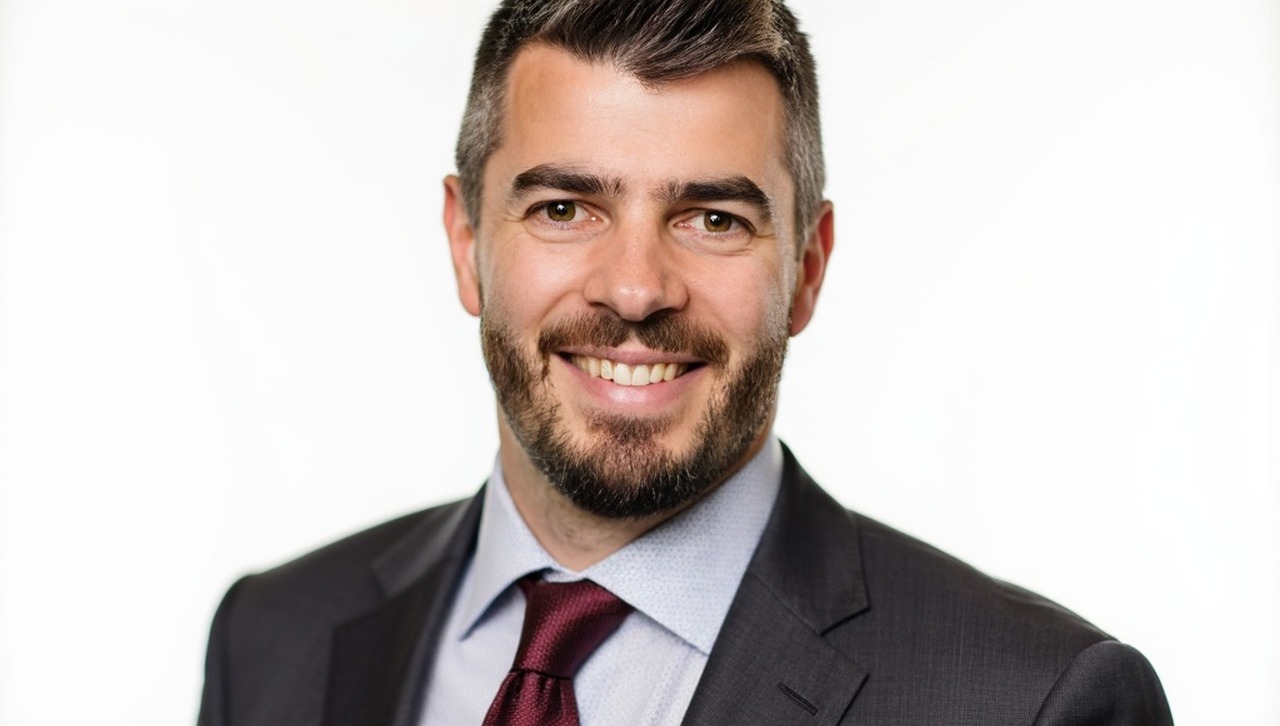
Travis Sztainert, Director of Research & Education, The International Center for Responsible Gambling
Of course, RG initiatives can, to some actors, bring a wealth of additional concerns, typically centred around an incorrect perception that ethics can be bad for the bottom line. The idea that operators would begin prioritising responsibility over revenue is likely a step too far. However, the idea that ethical gambling can be bad for business is a perception that is outdated and subject to increasing change for a number of reasons.
Primarily, new studies in the responsible gambling field have begun to highlight that reliance on high-intensity, high-spend players makes operators more vulnerable to market fluctuations – which can be caused by a plethora of regulatory, economic, financial or other external shifts.
What modern data actually now suggests is that the majority of gambling activity comes from low-to-moderate risk players who, when properly protected through the appropriate RG tools, create more predictable engagement through stable trajectories over longer periods of time.
The automobile industry didn't stop innovating when it embraced seatbelts, airbags and crash testing
Nowadays, there is more discussion and innovation around making players feel valued than ever before. Through the initial mainstream advent of AI in 2024, the word personalisation came up in analytical conversation as much as any industry buzzword. Not much has changed in that regard, but what operators are slowly beginning to recognise is that there is nothing more personal than ensuring every player is individually protected – and that is something proven to resonate with customers in the modern industry. Ultimately, it is basic behavioural science.
Concurring with this conclusion and chiming in harmony with our other contributors was Professor of Psychology and Director of the Gambling Treatment & Research Clinic at the University of Sydney, Sally Gainsbury, who outlined: “For me, the main perception that needs to change is within the gambling industry itself. There is a belief that ethical gambling, responsible gambling, sustainable gambling – or whatever term you want to use – is somehow incompatible with commercial success.
“Research clearly shows that companies that behave ethically and put appropriate checks and balances in place build customer loyalty. People are more likely to remain loyal to a single operator, which creates greater long-term sustainability and profitability.
“I think the gambling industry needs to view safer gambling as a long-term strategy for sustainable success and maintaining its social licence.
“I do think there is a clear operational model in many jurisdictions, including the US, where operators are limiting or banning profitable customers while simultaneously using marketing techniques and claiming they cannot determine whether gambling is affordable for an individual. In reality, they are taking advantage of vulnerable people, which is not consistent with corporate social responsibility or maintaining a social licence.”
Alas, the perception problem remains a two-headed beast, with key challenges befalling the ethical field both in and outside of the gaming industry. Nevertheless, responsible practices were at their core because of the industry itself. And if the industry wants to shift the public's perception of gambling over the long term, it will first have to undertake the groundwork to continue solidifying its ethical position from within. Operators must let go of the idea that there is an ethics vs revenue battle – in reality, it doesn’t exist.
The collaborative effect: What about Google, Amazon, suppliers and affiliates?
The ethical gambling journey is a winding one and, of course, these things take time. In the same vein, great change is rarely achieved by any one individual alone. As was repeatedly stressed by an uncountable number of stakeholders at the 2026 Ethical Gambling Forum, sustainable progress now requires greater alignment between regulators, governments, operators, suppliers, affiliates and – importantly – technology platforms.
“I'm someone who believes cross-sector collaboration is important,” continued Gainsbury: “As an academic, I think working with industry has real value, provided appropriate safeguards exist. These collaborations should involve a range of stakeholders rather than allowing industry to control the conversation. They should remain independent and be willing to examine findings that may be uncomfortable.”
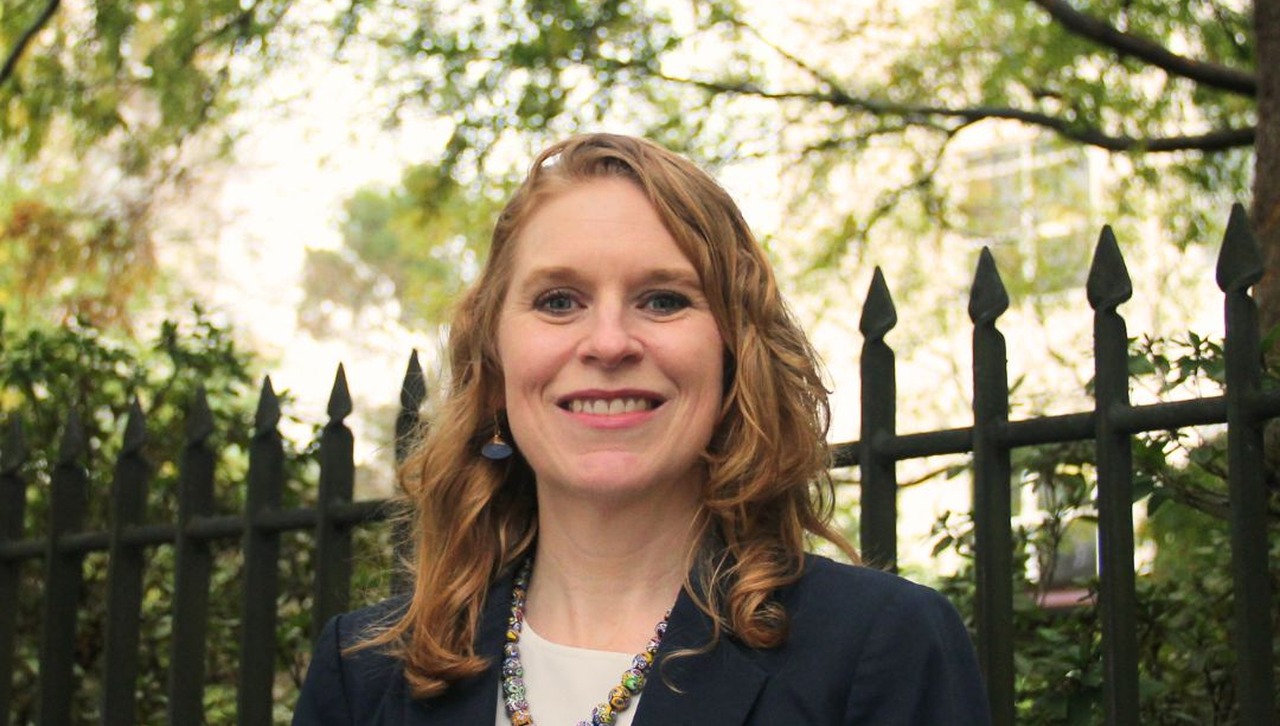
Sally Gainsbury, Director, Gambling Treatment & Research Clinic / Professor of Psychology, University of Sydney
If collaboration is the ethical buzzword – which it appears to be – there is also a strong industry consensus that responsible partnerships can and should extend beyond the bounds of the regulated industry, but also to the payment provider and technology platforms (such as Google, Amazon, etc). There is a growing belief in the industry that these platforms can play a more active role in geo-blocking and innovating non-invasive financial checks, helping to prevent illegal gambling, protecting younger users and helping keep track of vulnerable individuals' habits.
While there will be more on the black market later, many within the regulated market have emphasised the role of suppliers and affiliates as particularly important in future collaboration efforts for ethical gambling. Indeed, suppliers, influencers and affiliate marketers are often closer to consumers than regulators or operators realise, yet historically have been underrepresented in ethical gambling discussions despite their significant influence on player behaviour. Still, cross-collaboration between all the above remains fundamentally paramount to a safe and thriving gaming ecosystem.
A major point of consensus in recent years within the RG field, specifically, has been that player protection should not begin only after markers of harm emerge. Instead, responsible gambling tools and messaging should be integrated into the customer journey from the outset, normalising safer play in the same way that seatbelts became a standard expectation in automotive culture. To ensure this, many different industry faculties must collaborate honestly and effectively, with player safety remaining at the forefront of the discourse.
Looking ahead, Abergel believes more can be done here: “I would like to see collaboration become more practical and less performative. The next five years should be about shared standards, better data-sharing frameworks, independent evaluation and cross-industry learning.
“Operators, regulators, researchers, treatment providers, banks, technology firms, platform providers and lived-experience experts all see different parts of the same picture. The opportunity is to connect those insights in a way that respects privacy but improves prevention.
“For example, we should be collaborating on common markers of harm, effective intervention design, evidence-based messaging, and ways to identify risk earlier without creating unnecessary exclusion or stigma.”
Walking hand-in-hand with collaboration is the ever-present need for better education, which over the years has been repeatedly identified as one of the industry’s strongest collaborative tools. Training frameworks such as those discussed by the International Problem Gambling and Gaming Certification Organisation seek to move safer gambling beyond “box-ticking” exercises by embedding consistent competencies, frontline understanding and trauma-informed approaches across global markets. Naturally, these types of cross-collaborative educational initiatives help to build the foundation of a sustainable ecosystem centred around trust, which is built incrementally through transparency, protections and low-friction player experiences. Once lost, however, it is extremely difficult to regain.
Ultimately, the future is not AI versus people, it is combining the strengths of both
Anyone who has ever run a business will understand that trust is the lifeblood that keeps things ticking. And, on the subject of trust, an additional emerging consensus around AI reflects the broader principle underpinning ethical gambling discussions; technology should enhance human care, not replace it. The future of safer gambling is one that is now consistently framed as one of collaboration between human expertise, behavioural science and technological innovation.
The uses of AI span far beyond operator to consumer relationships, though, as it can also assist with internal collaboration between departments at a given operator – an issue consistently cited by RG advocates as a key barrier to progressing ethical initiatives, although one that has improved drastically in recent years. Indeed, operators must collaborate with each other and additional industry counterparts, but internal collaboration remains equally important.
With global innovation moving at breakneck speed, there is unlikely to be a singular sector of any industry untouched by AI innovation. Its place within ethical gambling can be paramount, so long as operators don’t become too distracted. Tracking consumer habits and flagging troublesome gambling traits is an excellent use that has not been discussed half as much as it could have been in the AI gambling conversation in recent years.
Sztainert outlined that he thinks the RG and ethical fields can still benefit greatly from new technology: “I think AI has enormous potential, although some may argue the promises of AI have been overstated as of late. However, we've seen that AI may be particularly useful for identifying patterns of risk earlier, personalising interventions and helping evaluate which approaches work best for different players. But AI should augment human expertise rather than replace it.
“Ultimately, it's important that we keep the human in the loop, especially when it comes to decision-making. The most difficult conversations, particularly when someone is experiencing significant gambling-related harm, still require empathy, judgment and trust. AI can help us recognise who might need support and when, but the human element remains essential for delivering meaningful care.
“We don't want to respond to real suffering with fake empathy. Ultimately, the future isn't AI versus people – it's combining the strengths of both.”
No such thing as grey?
Within the context of the modern industry, it’s rare to get this far into any analytical discussion without explicit mention of gambling’s black market. Indeed, it’s rare that any discussion at all manages to skirt the subject completely. And with good reason.
To say the illegal gambling market is on the rise globally would be an understatement. Naturally, when an industry continues to innovate and expand as rapidly as gaming has in the last decade, there will be a few caveats accumulated along the way – an expanding and innovative unregulated landscape being one of them. However, in the UK – a nation often hailed for its regulatory effectiveness and with a ‘gold standard’ regulator at the helm – the national black market has recorded 300% growth since 2019, with over £16.5bn ($21.8bn) now being wagered via illegal operators according to research from H2 Gambling Capital.
Elsewhere, in late 2025 the AGA released a market report which highlighted that players now wager $673.6bn with illegal operators in the US on an annual basis – up 22% since 2022. Most recently, Gaming Compliance International (GCI) estimated in Q2 2026 that the global value of the unregulated online gambling market reached $5.9trn in 2025, up 4% from 2024 and almost 16% from 2023. The same study also estimated that 78% of global gaming revenue in 2025 came from the black market.
The best way to compete with the black market is by offering a genuinely better product and better customer service
Needless to say, this is a topic firmly trodden in modern discourse. Yet the threat posed by the black market on a global scale to the field of ethical gambling cannot be underplayed. Aside from being void, in many cases, of any RG strategies, protections or safeguards, player financial security on unlicensed platforms – especially those optimised for crypto gambling – is severely jeopardised. Reports of players losing winnings, as well as suffering uncapped losses, stack up in their thousands. Modern IP technologies utilised by hackers can lead to the breach of personal data – and all of this can happen without a user necessarily being able to recognise the fact that they are in the illegal market.
One of the key and previously discussed initiatives to help combat gambling addiction has been self-exclusion. But one of the most common instances of problem gamblers finding their way to the black market is searching for unregulated online operators precisely because they have self-excluded from all regulated options. This and many other instances of compulsion vastly restrict the ability of ethical actors within the regulated industry to promote safer strategies and ensure sustainable pipelines of engagement.
Discussing the black-market conundrum, Sztainert explained: “The black market is a genuine concern because it typically operates without the consumer protections, transparency and accountability expected of regulated operators. At the same time, it shouldn't become a reason to stop improving the regulated market. These aren't competing priorities. The regulated market should continue raising the standard for player protection while also recognising that regulations need to be practical and evidence based. The goal should be to create a regulated environment that is both attractive to consumers and demonstrably safer than the alternatives.”
Operators, regulators and lobbyists all have a key role to play in raising the alarm of the black market and ensuring customers know the difference – and this is a job that is being taken increasingly seriously by all the above actors in the modern industry. Other regulated industry participants, including payment providers and technology providers (such as search engines) can play a crucial role in prohibiting access to the black market and blocking the transfer of funds to illegal operators. One of the key challenges befalling the battle against the black market is ensuring major players in these two particular sectors understand the gravity of the issue and subsequently implement necessary safeguards.
Another facet of the black-market conundrum is, of course, the regulation risk. There have been numerous documented instances where, following tightened regulatory restrictions on advertising and promotion of the regulated industry, black-market activity has risen – and channelisation has fallen.
One of the most notable recent examples came from the Netherlands, where the Kansspelautoriteit (KSA) reported that regulated market channelisation fell below 50% after mandatory rules included deposit limits for 18–24-year-olds. Evidently, the balancing act regulators must perform involves a thin line – but effective communication and collaboration with industry stakeholders will surely help the issue in years to come.
Perhaps one of the key dangers of the black market, though, is the phenomenon that has seen some operators in the industry overuse the black market as a justification for resisting stronger safer gambling measures and more restrictive regulations.
Of course, excessive or poorly implemented interventions risk pushing consumers toward unregulated markets, while targeted and transparent protections can improve both trust and long-term retention. However, modern debates around friction serve only to further illustrate the importance of balanced collaboration between regulators and operators.
Gainsbury agrees, saying: “I think it's sometimes used as a simplistic argument. Yes, black-market gambling exists everywhere, but ultimately it's about customer choice. Customers turn to unregulated operators when regulated ones fail to meet their needs.
“If regulated operators provide a sustainable model and treat customers appropriately, they'll attract those customers. This shouldn't be an arms race to maximise revenue. Instead, operators should focus on building loyal customer bases.
“Licensed operators already have significant advantages. They can advertise legally, operate within regulated frameworks and build trust and credibility in ways offshore operators never can. The best way to compete with the black market is by offering a genuinely better product and better customer service.”
The black market remains a singular, albeit important, element of a wider ethical discussion in gambling. One overarching conclusion that remains consistent is that ethical gambling cannot be achieved through isolated action or adversarial relationships. Sustainable progress depends on continuous collaboration, honest conversations about revenue origins, shared accountability and collective responsibility across the entire gambling ecosystem.
The lay of the land: Data meets geography
Adopting a geographical view, two of the world’s most influential and mature markets lie, of course, on either side of the Atlantic. Drawing comparisons between the US region, being the world’s biggest, and the UK, being one of the world’s most mature markets, provides a telling viewpoint of how culture and region can affect the ethical strategies a given marketplace chooses to adopt.
While the overturning of PASPA in 2018 revolutionised gambling in the US, European markets – and the UK especially – have matured over a lengthier period of time. What this has led to is, in many ways, a gestation of differing approaches to ethical gambling within each region. The UK market was one of the jurisdictions that led the way in safer and responsible gambling regulation through the 2000s, but not without some pitfalls along the way.
As a growing field through the 2000s and 2010s, ethical gambling outreach was something that wasn’t always executed efficiently in large-scale regulated markets such as the United Kingdom. Indeed, what we now know is it is simply not enough to throw a safer gambling message on a given advertisement – especially when advertising was at its peak around a decade ago. A manifestation of poorly executed advertising regulations across Europe – which did in fact contribute to evidence of black-market growth – led many in the US to believe this was an ineffective way to regulate and approach safety strategies; with experts preferring to view advertising restrictions as a ‘last resort’ strategy.
What has manifested differently in the US overall is a growing push for self-exclusion and educational strategies across the nation – something that is also mirrored in the Ontario market across the Canadian border.
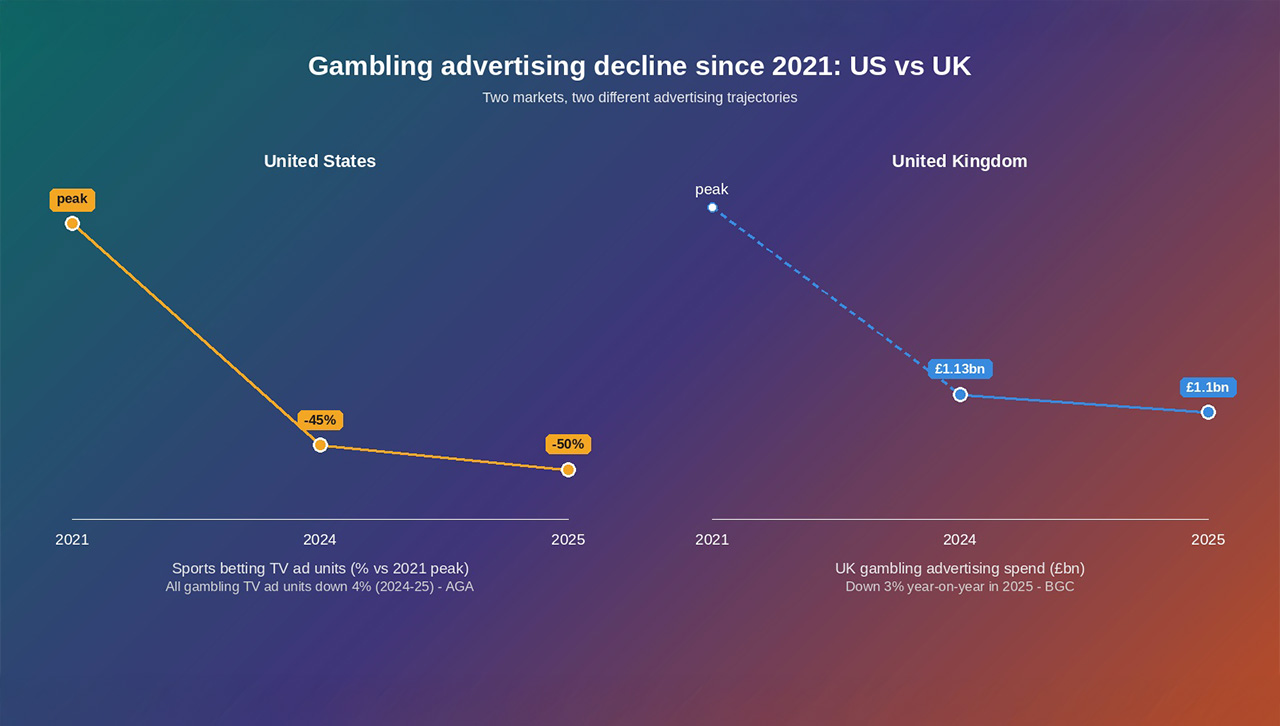
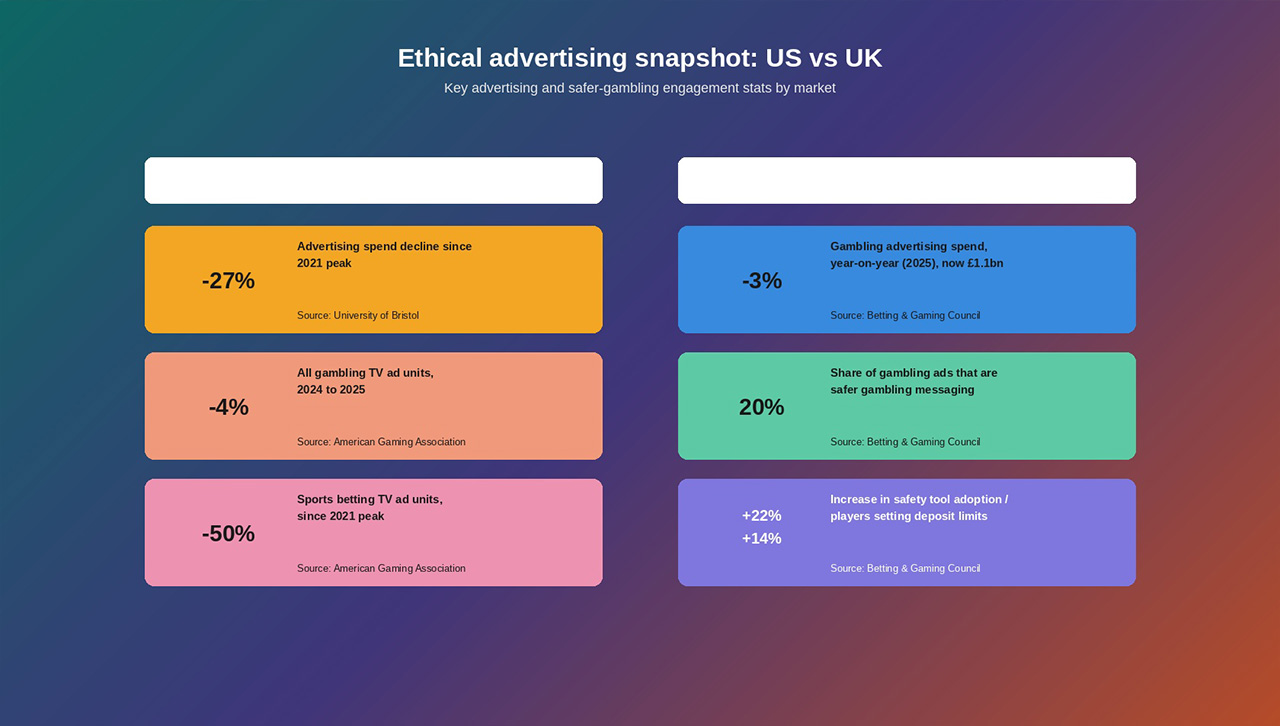
Nevertheless, as North America has continued to develop into maturity, advertising has begun to reduce, with the University of Bristol reporting a 27% decline in advertising spend since its peak in 2021. More broadly, gambling-related TV advertising units dropped 4% between 2024 and 2025, according to the AGA, and sports betting-related TV advertising units down 9% in the same time frame – down 50% since 2021.
This mirrors a trend that is also evident in the UK. According to statistics from the Betting & Gaming Council (BGC), 2025 advertising spend in the UK dropped 3% year-on-year to £1.1bn and has been falling steadily each year since 2021 in the regulated market.
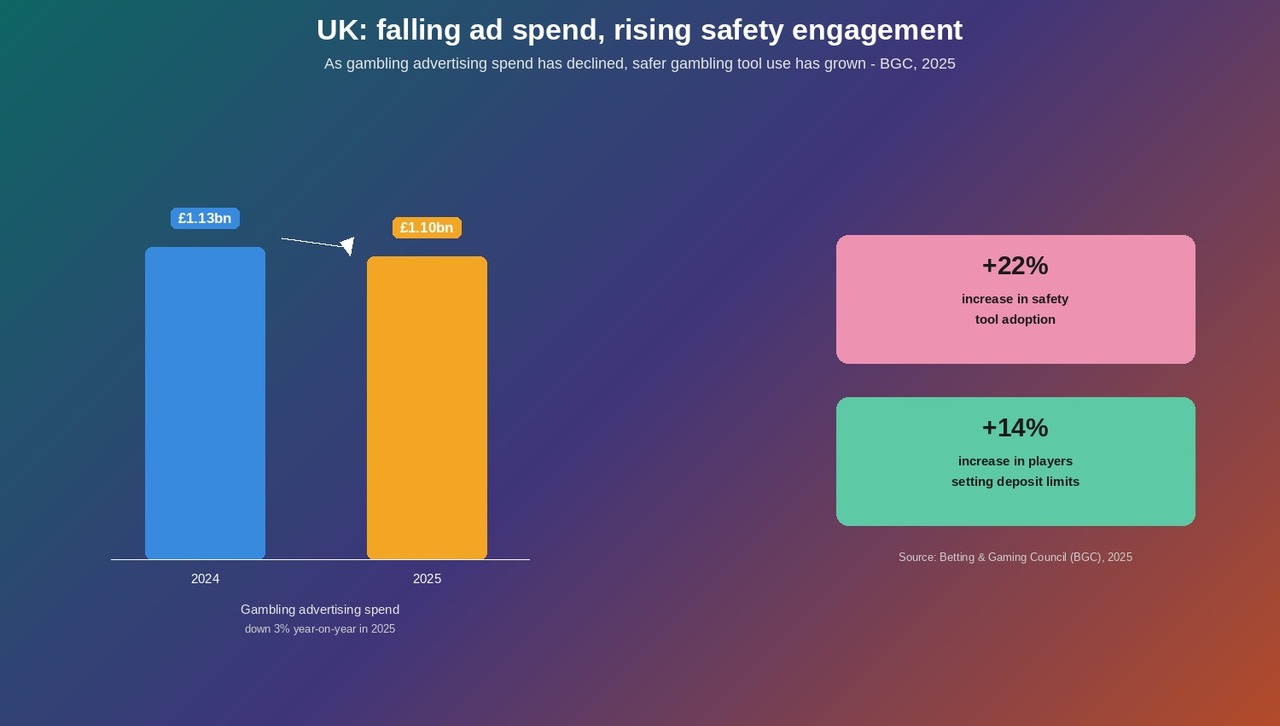
One way in which the UK differs, though, is that around advertising 20% of all gambling advertising is now focused on safer gambling messaging. As such, additional initiatives such as safer gambling week have driven a concrete upswing of safer gambling engagement, with the BGC also reporting a 22% increase in tool adoption and a 14% increase in players setting deposit limits.
What this data shows us is that the way gambling operators advertise is changing. While the volume of adverts shown to be decreasing across UK, with the US seemingly following suit behind, the British approach shows us that careful and considered regulations around advertising can spark an upswing in safety tool engagement despite a fall in ads overall – a huge win for the ethical side.
Where do we go from here?
It would appear 2026 represents an inflection point for ethical gambling on a global scale. The field sits in the awkward ‘middle-phase’ between grass root and mainstream – and all the while, harm continues to affect many across the globe. Each sector of the industry now knows its responsibility and can no longer pretend otherwise; it’s the acceptance and acting upon that knowledge that will turn ethical gambling from a developing concept into actionable reality.
Ethical gambling is not a destination. It never has been. The path ahead is promising, but narrow – and inherently reliant on selfless, cross-sector collaboration.
If anything, the sector’s progression in the last decade particularly demonstrates that ethics in gambling is a process of continuous adaptation. Broadly, though, the discussion is now being shaped by changing technology, shifting consumer expectations, regulatory evolution and, perhaps most importantly, a growing willingness within the industry to confront difficult questions about itself.
But the challenge extends beyond technology and regulation.
The reality emerging from more advanced modern data is considerably nuanced. Sustainable player relationships, long-term trust and effective protections are increasingly proving themselves to be commercially viable – as well as socially responsible. And the notion that ethics and revenue exist in direct opposition is becoming increasingly difficult to defend.
Perception remains one of the defining battlegrounds of ethical gambling. Outside the industry, much of the public conversation continues to be shaped by stories of harm, addiction and regulatory failure. Inside the industry, outdated assumptions around the relationship between responsibility and profitability still linger in some corners. Both perceptions do nothing except create barriers to crucial progression in the field.
Elsewhere, as new technologies continue to spearhead innovation in almost every facet of life – let alone the gambling industry – fascinating new horizons have also begun to emerge in the ethical gambling field. Providing the conclusive contribution from our expert analysts, Gainsbury discusses that she is currently developing a new AI screening tool – the Gambling Satisfaction Scale: “It's a single-question screening tool, making it much shorter than most existing questionnaires. It's not a diagnostic tool, meaning it can't diagnose someone with a gambling problem. The question simply asks: ‘Overall, how satisfied are you with your gambling, where zero means completely unsatisfied and ten means completely satisfied?’
“We've found this aligns very closely with established measures such as the nine-item Problem Gambling Severity Index. What's valuable about this question is it doesn't suggest an obvious right or wrong answer. Traditional questions like 'Do you lie about your gambling?' or 'Do you spend more than intended?' are very direct and easy for people to answer 'no' if they want to avoid further discussion.
“Using a numerical satisfaction scale makes it less obvious what response might trigger further intervention. While there are scores that may indicate further follow-up is appropriate, the question naturally opens a conversation. Someone might say they rated themselves a five. You can then ask, ‘Why a five rather than a six?’ Or, ‘Last month you said three, now you've said two. What changed?’ It allows operators – and importantly, people – to have meaningful conversations over time in a way that's non-stigmatising, non-judgmental and neutral.
“It also allows someone to say, ‘I'm 10 out of 10. I'm spending a lot of money, but I'm completely satisfied with that.’ The tool doesn't judge; it simply creates the opportunity for a better conversation.”
AI technologies such as this could, in time, become a pivotal point in what is still a developing conversation. However, at present the actionable implementation of the technology for RG remains fraught and – while fast moving in the right direction – somewhat murky.
One of the clearest conclusions to emerge from the ethical gambling movement is that collaboration is no longer optional. Whether through education, data sharing, technological innovation, cross-border regulation or stronger engagement with suppliers, affiliates and technology platforms, meaningful progress now depends on collective action. The industry's ability to work together may ultimately determine the speed at which ethical gambling moves from aspiration to expectation.
That necessity becomes increasingly apparent when adding in the troubling issue of a growing black market. The threat illegal operators represent perhaps to both consumer protection and ethical progress globally is very real. Crucially, addressing that challenge requires a healthy dose of honesty about how the regulated market can improve itself to become the unequivocally more reliable and desirable options for players.
And so, the industry finds itself at another inflection point.
The foundations have been built. The tools and knowledge exist. Responsibility is beginning to be understood.
The question is no longer whether ethical gambling belongs within the industry, but rather how committed the industry is to what is now a non-negotiable.
A 2026 study published by France’s Autorité Nationale des Jeux (ANJ) found that high-risk and excessive players – around 5% of players overall – accounted for 60% of the market’s total operator gross gaming revenue