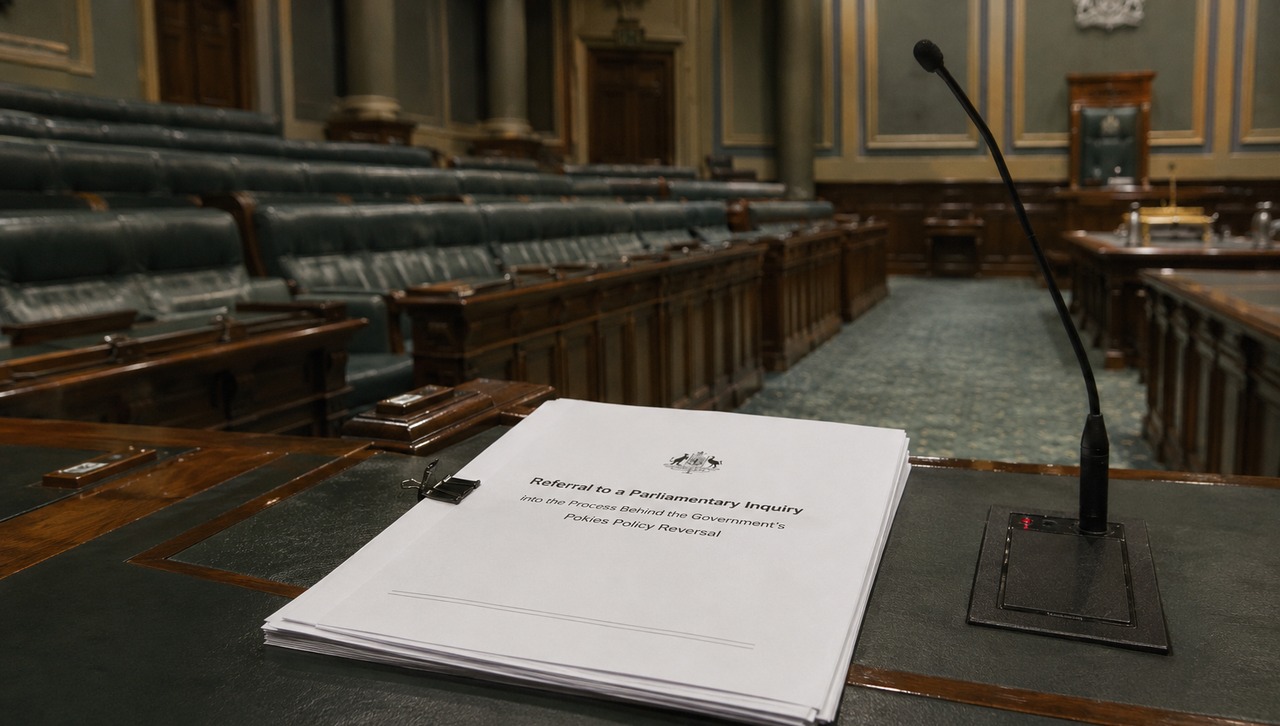
A Tasmanian Parliamentary inquiry has been established to examine the processes behind the state Government’s decision to move away from a mandatory poker machine pre-commitment card and adopt alternative harm minimisation measures.
The Legislative Council’s Government Administration Committee A appointed a sub-committee on 11 August, with its first meeting held on 25 August. Independent Member for Nelson Meg Webb is deputy chair.
The inquiry follows a change in gambling policy announced in January. The Government replaced the planned mandatory card with measures including a ticket-in ticket-out (TITO) system, facial recognition for people registered for self-exclusion, longer mandatory gaming-room closures and the introduction of ATMs in venues.
The pre-commitment proposal had included default loss limits of AU$100 (US$71.95) per day, AU$500 per month and AU$5,000 per year. Development of the system had already been delayed before the Government moved to an alternative approach.
Scrutiny of the replacement package increased in July when correspondence obtained under right-to-information laws showed the Tasmanian Liquor and Gaming Commission had not been consulted before the measures were taken to Cabinet.
The regulator subsequently warned that several proposals could increase gambling-related harm, particularly the introduction of ATMs and TITO.
The policy shift also came alongside a Government-commissioned Deloitte Access Economics study of the abandoned card system. Under its central scenario, Deloitte estimated the reform would generate AU$230m in additional Gross State Product through 2030 and support an average of 209 additional full-time equivalent jobs. It also projected reduced gambling-related harm and lower demand for public health, social support, justice and policing services.
The inquiry comes as poker machine expenditure continues to rise in Tasmania. Players lost more than AU$208m during 2025/26, setting a state record and increasing from AU$193.9m in the previous financial year.
Webb said the inquiry would examine “any policy work undertaken or data utilized to inform the Rockliff Government’s decision-making processes” and the consequences of the revised approach.
In July, Global Gaming Insider reported that the Tasmanian Liquor and Gaming Commission had warned the Government’s reforms could increase gambling-related harm. The regulator also confirmed it had not been consulted before the policies were submitted to Cabinet.
Tasmania’s Responsible Gambling Mandatory Code of Practice has operated since 2012 and sets harm minimisation requirements across the state’s gambling sector