





















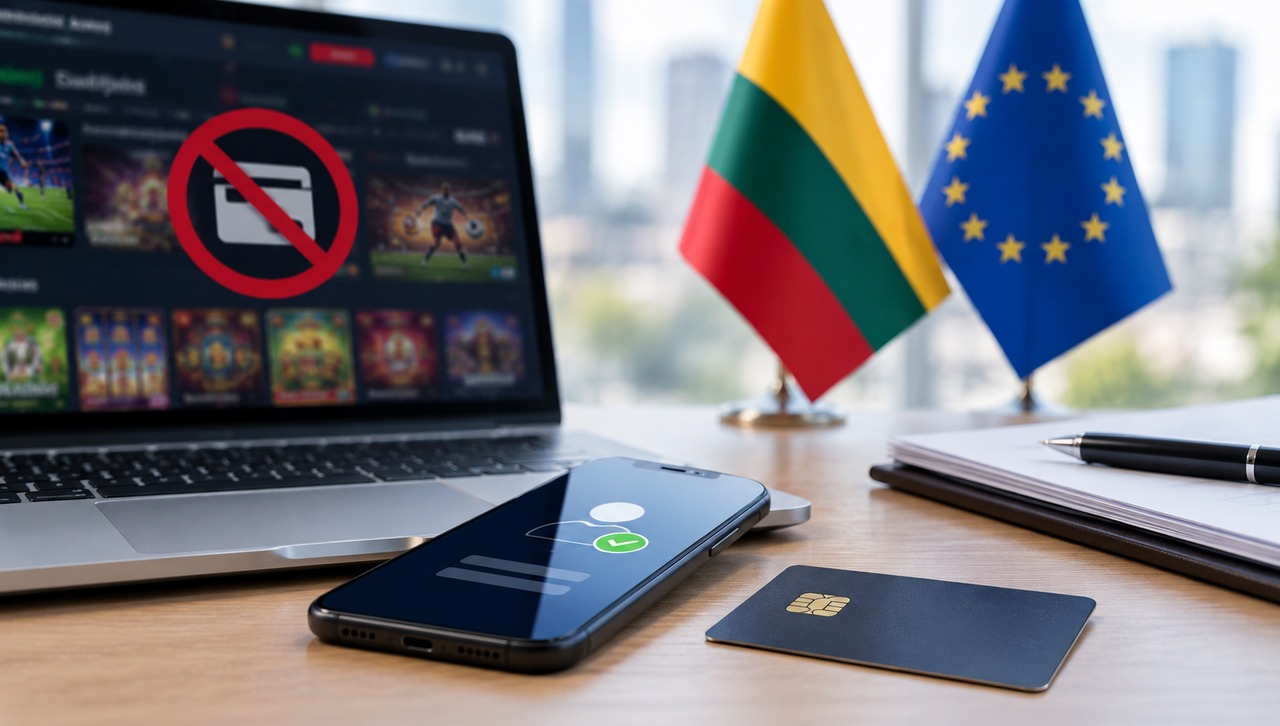
Lithuania has notified the European Commission of technical provisions supporting its proposed centralised player-card system and wider reform of gambling supervision.
The notification, submitted under Directive (EU) 2015/1535, covers requirements affecting remote gambling services and the information systems used by licensed operators. The procedure allows EU member states and the Commission to examine national technical rules before their adoption.
Under the draft, a personal player card would become mandatory across land-based venues and remote gambling. Operators would have to connect their systems to a central platform containing player identification data, gambling limits and exclusion records.
The connected systems would exchange information in real time. Operators would be required to verify a customer’s identity and eligibility before each gambling session while applying limits across different operators and gambling sectors.
Lithuania’s Ministry of Finance first presented the reform in April as part of its responsible gambling policy. The original proposal envisaged introducing the player card and moving land-based gambling away from cash from 1 January 2029.
Certain supervisory changes are scheduled to take effect from May 2027, giving operators time to adapt their equipment and information systems.
The latest notification also defines categories of remote gambling, including live-dealer games, and establishes criteria for assigning products to particular gambling types.
Lithuania’s Gambling Supervisory Authority would receive powers to conduct control gambling remotely through automated technical tools and software scripts. The draft would also establish a mechanism for blocking websites that promote unlicensed gambling, alongside requirements governing operator information systems.
The reforms extend a regulatory programme that has already raised the minimum gambling age to 21 and introduced tighter advertising controls. Since July 2025, online betting advertisements have been subject to restrictions covering their format, placement and share of available advertising space. A broader prohibition is scheduled for 2028 under the country’s phased advertising framework.
Lithuania’s Ministry of Finance also opposed further increases to gambling taxes and licensing fees this month, arguing that future changes should account for operator performance and the cost of responsible gambling obligations.
Lithuanian operators generated GGR of €65.7m ($76.3m) during Q1 2026, representing growth of 6% year-on-year