



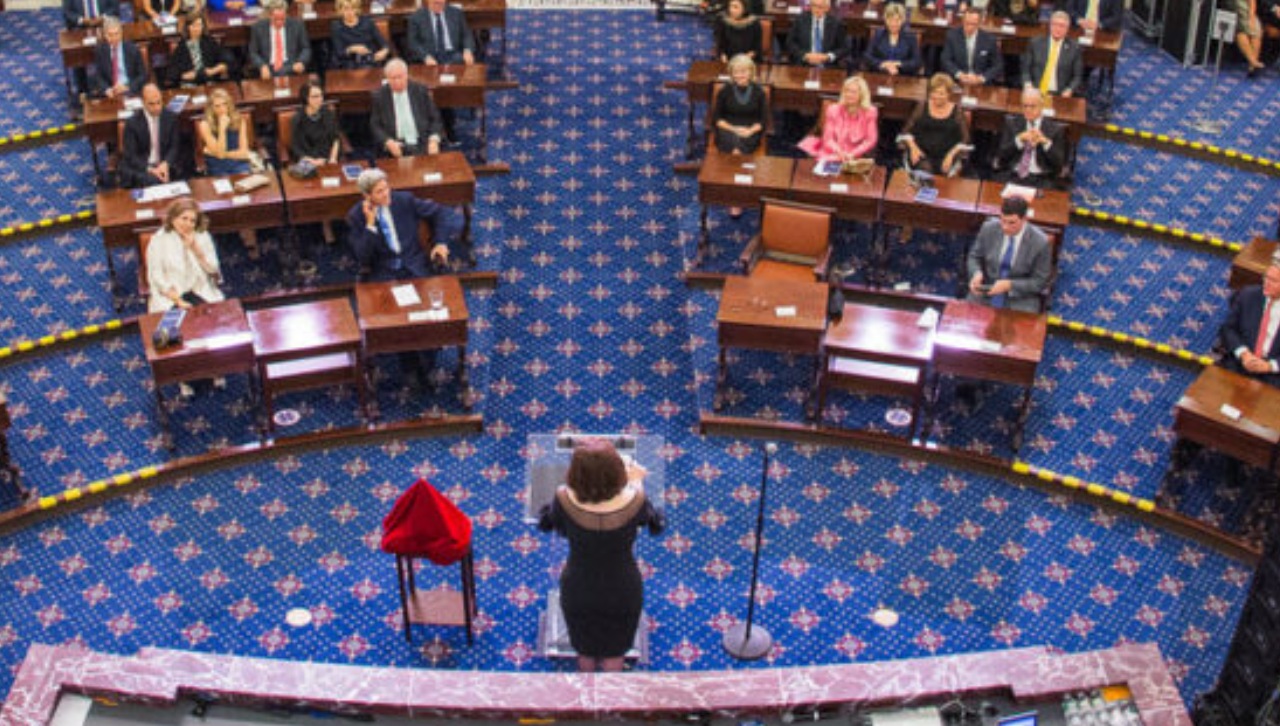
The US Senate has voted 49-50 to reject the procedural motion required for the Clarity Act to advance, as ethics language aimed at preventing federal officials from profiting off cryptocurrency remained as an uncompromising hold-up in negotiations.
The Clarity Act fell short of the 60 votes required to advance on September 15, as all Democratic Senators and four Republican Senators voted against the cryptocurrency bill.
Primarily intended to create a federal framework for digital assets, the Clarity Act would also have defined the respective jurisdictions of the Securities and Exchange Commission (SEC) and Commodity Futures Trading Commission (CFTC).
Indian Gaming Association (IGA) Chairman David Bean celebrated the result, having said, “Today, Indian Country’s voice was heard. The Senate did the right thing by refusing to advance legislation that could have expanded CFTC commodities authority without providing the clear protections Tribal Nations have demanded.
“This is an important victory for Tribal sovereignty, but it is not the end of this fight. We have said from the beginning that this issue is bigger than one bill. The fundamental question is whether the federal government will respect the sovereign authority of Tribal Nations and the gaming framework Congress established through IGRA.
“No federal agency and no new financial marketplace should be allowed to create a back door for nationwide gambling that ignores Tribal sovereignty.”
Prior to the vote on September 15, President Donald Trump agreed to provisions in the Clarity Act, granting state Attorney Generals a “meaningful role” in enforcing cryptocurrency measures.
The updated Clarity Act also required elected officials with a significant financial interest in a cryptocurrency issuer or exchange to either divest their holding or place the funds in a blind trust.
The Senate had previously chosen to postpone its vote on the Clarity Act until lawmakers returned from an August recess, as the legislation could have potentially altered the regulatory framework of prediction markets.
Illinois Representative Travis Weaver introduced HB 5811 on September 9 to eliminate the state’s prediction market tax and terminology used to describe certain sports event contracts